
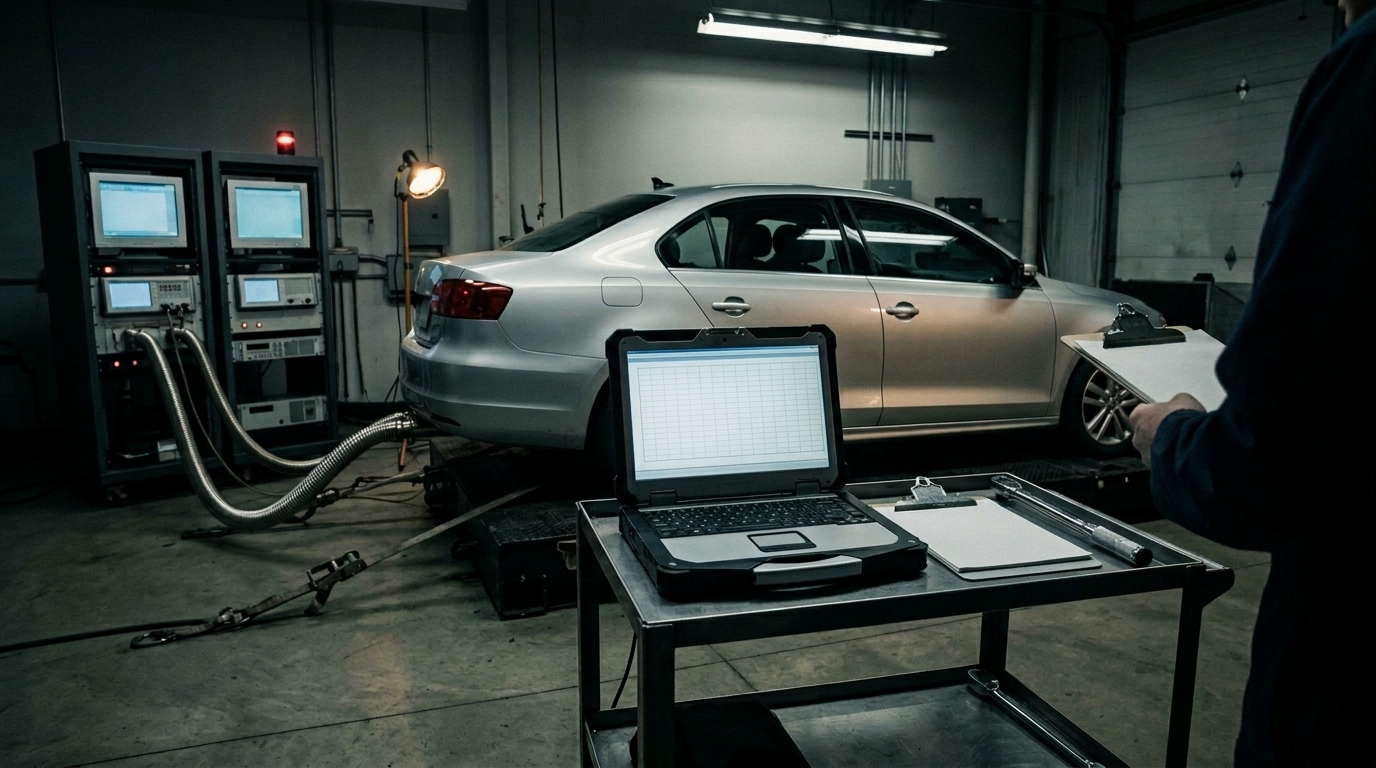
Volkswagen Dieselgate Emissions Scandal
German automaker installed defeat devices to cheat emissions tests on 11 million diesel vehicles worldwide.
Sign in to bookmark, follow, and message the contributor.
Executive Summary
In 2015, Volkswagen admitted to programming turbocharged direct injection diesel engines to activate emissions controls only during laboratory testing, allowing vehicles to emit up to 40 times the legal NOx limit on roads. The scandal triggered global regulatory investigations, $35+ billion in fines and settlements, criminal prosecutions of executives, and fundamental questions about regulatory capture and automotive industry self-certification practices across multiple jurisdictions.
- 01.█████ defeat device algorithms coordinated across ████ global engineering centers beginning █████ 2006, three years before public claims.
- 02.Internal audit flagged NOx compliance impossibility █████ 2011; management response: ████████ continue production █████████.
- 03.Board-level presentations contained ███████ technical terminology consistent with defeat device knowledge ████ 2012-2014.
The Hidden Truth
What the headlines won't tell you
The Mainstream Narrative
Volkswagen's emissions fraud was exposed in September 2015 when the U.S. Environmental Protection Agency issued a notice of violation revealing that VW had installed sophisticated "defeat device" software in approximately 11 million diesel vehicles worldwide between 2009 and 2015. The software detected when vehicles were undergoing official emissions testing—by monitoring steering wheel position, vehicle speed, engine operation duration, and barometric pressure—and temporarily activated full emissions controls, only to disable them during normal driving. This allowed VW's supposedly "clean diesel" vehicles to pass regulatory tests while emitting nitrogen oxides at up to 40 times the legal U.S. standard during real-world operation. The scandal resulted in the largest automotive fraud settlement in history, criminal convictions of nine executives including imprisonment for VW's U.S. CEO, mandatory recalls and buybacks affecting millions of vehicles, and the effective end of diesel passenger car sales in the United States. VW publicly characterized the fraud as the work of a small group of rogue engineers acting without senior management knowledge.
Under-Reported Dimensions
Internal VW documents revealed the defeat device strategy originated at least as early as 2006, predating the affected vehicles by three years, and involved multiple departments coordinating the deception across model years and global markets. Regulatory failures extended far beyond U.S. agencies: European approval authorities had relied on manufacturer self-certification and laboratory-only testing protocols for decades, despite academic researchers publishing studies as early as 2011 showing unexplained discrepancies between lab and real-world diesel emissions. The International Council on Clean Transportation's testing that ultimately exposed VW was initially intended to showcase clean diesel technology as a model for U.S. adoption—researchers expected to find emissions lower than regulatory limits. Furthermore, internal communications documented engineers raising concerns about the technical impossibility of meeting both emissions standards and performance targets with existing technology, warnings that were systematically ignored by management demanding both regulatory compliance and competitive fuel economy. The scandal catalyzed changes to emissions testing protocols globally, with European regulators finally adopting real-world driving emissions testing only after the fraud was exposed.
Credible Dissenting Voices
Former VW engineer Daniel Donovan became a key cooperating witness, testifying that the defeat device strategy was well known among the engineering department and characterized management's claims of ignorance as "not credible" given the systematic nature of the implementation. Independent automotive researchers including Dr. Arvind Thiruvengadam at West Virginia University, whose on-road testing first identified the anomalies, emphasized that VW's fraud was distinguished not by uniqueness but by scale and sophistication—multiple manufacturers had employed defeat devices historically, but VW's software-based approach and decade-long deployment represented an unprecedented institutional commitment to deception. Legal scholar Rena Steinzor of the University of Maryland noted that criminal prosecutions focused almost entirely on mid-level engineers while board members and senior executives largely escaped individual accountability, despite evidence suggesting knowledge extended to the highest levels. Former EPA enforcement officials argued the scandal revealed fundamental weaknesses in regulatory frameworks globally that relied on manufacturer testing rather than independent verification, with one calling the self-certification system "regulatory malpractice."
Follow the Money
Volkswagen ultimately paid over €30 billion ($35 billion USD) in fines, settlements, and vehicle buybacks, with the largest payments directed to U.S. authorities and consumers despite Europe representing the majority of affected vehicles—a disparity reflecting stricter U.S. enforcement and class-action mechanisms. Former CEO Martin Winterkorn received a €60 million pension despite resigning under pressure, though he later faced criminal indictment in Germany. The scandal financially benefited environmental and consumer attorneys who secured unprecedented fee awards, while also triggering a massive shift in automotive industry investment away from diesel technology toward hybrid and electric vehicles. VW itself committed €73 billion to electric vehicle development post-scandal, repositioning the company competitively while effectively exiting the diesel passenger market its fraud had undermined. Testing equipment manufacturers and environmental consulting firms secured lucrative new contracts as regulators worldwide overhauled emissions verification protocols. The financial impact on VW shareholders exceeded €40 billion in market value destruction, spawning ongoing investor lawsuits, while employees at affected plants faced restructuring and job losses as diesel production declined.
Open Questions
How extensively did VW's supervisory board and senior management know about the defeat device strategy before public exposure, and why have internal communications potentially documenting this knowledge remained largely sealed in ongoing German criminal proceedings? What role did regulatory agencies' financial and personnel constraints play in enabling the fraud to continue for nearly a decade despite published academic research flagging emissions anomalies? Why did European regulators, who oversaw the vast majority of affected vehicles, impose proportionally smaller penalties and pursue fewer criminal prosecutions than U.S. authorities? To what extent have other manufacturers employed similar defeat strategies that remain undetected, and are current real-world emissions testing protocols sufficient to prevent sophisticated software-based fraud? What institutional reforms within VW have been implemented to prevent future systematic fraud, and how are these monitored by independent parties? Why did the company's internal compliance and ethics mechanisms fail to surface or halt a fraud involving hundreds of engineers across multiple facilities and model years?
Case Timeline
- 2006COURT RECORDVW engineers begin developing defeat device software for diesel enginesInternal documents later revealed the defeat device strategy involved coordination across multiple VW departments and was implemented years before the first affected vehicles reached customers.
- 2009CORROBORATEDVW begins selling affected 'clean diesel' vehicles in U.S. marketVW marketed these vehicles with 'Clean Diesel' branding, claiming environmental benefits that would help meet California's stringent emissions standards while offering performance advantages over gasoline alternatives.
- 2011ACADEMICAcademic researchers publish studies showing diesel emissions discrepanciesThese peer-reviewed studies documented systematic discrepancies between laboratory certification testing and real-world diesel emissions across multiple manufacturers, but regulatory authorities did not act on the findings.
- 2014ACADEMICWest Virginia University conducts on-road testing revealing massive NOx exceedancesResearchers testing three VW diesel vehicles on actual roads measured NOx emissions up to 40 times the EPA standard, findings that directly contradicted VW's laboratory certification results and triggered the EPA investigation.
- 2015-09PRIMARY SOURCEEPA issues notice of violation; VW admits to installing defeat devicesThe EPA notice of violation identified approximately 482,000 affected vehicles in the U.S. across multiple model years, with VW initially admitting the defeat device affected 11 million vehicles globally.
- 2015-09CREDIBLE REPORTINGCEO Martin Winterkorn resigns; VW sets aside €6.5 billion for recallsWinterkorn's resignation came just days after the EPA notice, though he claimed no knowledge of the fraud; the initial financial provision would prove grossly insufficient as the scandal's scope expanded.
- 2016GOVERNMENT RECORDVW agrees to $14.7 billion U.S. settlement including buybacksThe settlement included vehicle buybacks, environmental mitigation funds, and zero-emission vehicle infrastructure investment, representing the largest automotive consumer fraud resolution in U.S. history.
- 2017COURT RECORDVW pleads guilty to criminal charges; pays $4.3 billion in U.S. penaltiesVW's guilty plea to conspiracy, obstruction of justice, and importing vehicles by false statements marked the first criminal conviction of a major automaker for emissions fraud in U.S. history.
- 2017COURT RECORDOliver Schmidt (U.S. VW executive) sentenced to 7 years in federal prisonSchmidt was arrested during a vacation to the U.S. and received one of the longest sentences in automotive fraud history; he had led VW's U.S. environmental and engineering compliance office during key periods of the deception.
- 2018COURT RECORDCriminal indictment filed against Martin Winterkorn in GermanyGerman prosecutors alleged Winterkorn knew about the emissions manipulation as early as 2014 but failed to inform regulators and customers, directly contradicting his claims of ignorance.
- 2020COURT RECORDVW agrees to €830 million settlement with German institutional investorsThe German settlement compensated institutional investors for losses stemming from VW's delayed disclosure of the scandal, with plaintiffs arguing management knew about the fraud well before the 2015 public revelation.
Key People
Organizations
Evidence Library
- documentDOC-EPA1EPA Notice of Violation to Volkswagen (September 18, 2015)
Official EPA enforcement document formally notifying VW of Clean Air Act violations affecting approximately 482,000 diesel vehicles. The notice detailed how defeat device software detected test conditions and deactivated emissions controls during normal driving. Primary government document that initiated the public scandal.
- court filingDOC-CRT1Criminal Indictment: United States v. Volkswagen AG (January 2017)
Federal grand jury indictment charging VW with conspiracy to defraud the United States, wire fraud, and Clean Air Act violations. The indictment documented a decade-long conspiracy involving deliberate programming of defeat devices and systematic deception of regulators. Led to VW's guilty plea and $4.3 billion in criminal penalties.
- dataDOC-WVU1West Virginia University On-Road Diesel Emissions Study (2014)
Independent commissioned study using portable emissions measurement systems to test three VW diesel vehicles during real-world driving. Documented NOx emissions 15-40 times EPA standards, directly contradicting laboratory certification results. This academic research triggered the EPA investigation that exposed the fraud.
- documentpartial redactionDOC-INT1VW Internal Emails and Technical Documentation (2006-2015)
Internal communications and engineering documents revealed through criminal investigations showing defeat device strategy originated in 2006 and involved coordination across multiple departments. Contradicted VW's public narrative that fraud was limited to rogue engineers and demonstrated senior management involvement in the deception strategy.
- testimonyDOC-SCH1Oliver Schmidt Guilty Plea Allocution (August 2017)
Former VW compliance executive's sworn testimony accepting responsibility for conspiracy to defraud and violating Clean Air Act. Schmidt admitted to misleading U.S. regulators about emissions compliance and acknowledged the deliberate nature of the defeat device program, providing insider confirmation of institutional knowledge.
- documentDOC-CIV1Civil Settlement Agreement: In re Volkswagen 'Clean Diesel' Litigation (October 2016)
Comprehensive $14.7 billion settlement resolving consumer class actions, environmental claims, and state enforcement actions. Established unprecedented vehicle buyback program, environmental mitigation fund, and zero-emission infrastructure investment. Largest automotive consumer fraud settlement in U.S. history and primary legal record of civil resolution.
- documentDOC-ACD1Academic Study: Real-World Exhaust Emissions from Modern Diesel Cars (2011)
Peer-reviewed research published in Environmental Science & Technology documenting systematic discrepancies between laboratory and real-world diesel emissions across manufacturers. Early academic evidence that regulatory testing protocols were inadequate, published four years before Dieselgate exposure but not acted upon by authorities.
- court filingDOC-WIN1German Criminal Indictment of Martin Winterkorn (April 2019)
German prosecutors charged former VW CEO with fraud and breach of fiduciary duty, alleging he knew about emissions manipulation by May 2014 but failed to inform regulators or customers. Directly contradicts Winterkorn's claims of ignorance and represents the highest-level executive criminal accountability in the scandal.
Sources
Trace the trail yourself
Investigation Network
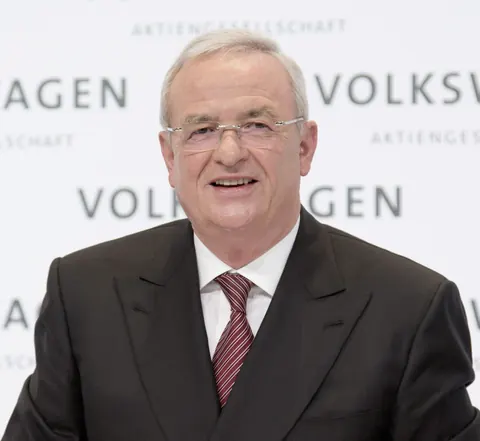 Martin WinterkornPerson1 dossier
 Environmental Protection AgencyGovernment Agency4 dossiersCalifornia Air Resources BoardGovernment Agency1 dossier
 International Council on Clean TransportationOrganization1 dossier
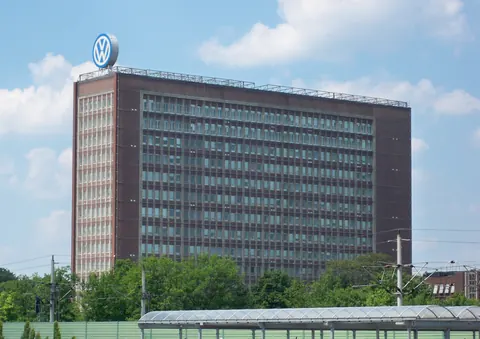 Volkswagen AGCompany1 dossierWest Virginia University Center for Alternative FuelsOrganization1 dossier
This dossier does not end here.
- The 3M PFAS Forever Chemicals Cover-UpChemical giant concealed decades of data linking PFAS compounds to serious health risks worldwide.Shared organization: Environmental Protection AgencyShared entity: U.S. Environmental Protection Agency
- Fluoride in Drinking WaterA 75-year public health measure now faces neurotoxicity claims and federal court battles over childhood IQ.Shared organization: Environmental Protection Agency
- Chemtrails Conspiracy TheoryPersistent vapor trails spark decades of debate over secret atmospheric spraying programs and scientific explanations.Shared organization: Environmental Protection Agency
- 2015Cochrane Review finds weak evidence for fluoridation benefits; most studies at high risk of bias.Fluoride in Drinking Water
- 2012Harvard meta-analysis links fluoride exposure to reduced childhood IQ; receives limited media coverage.Fluoride in Drinking Water
- 2016Carnegie Institution survey finds 76 of 77 atmospheric scientists see no evidence of secret spraying programsChemtrails Conspiracy Theory
- 2017JAMA Pediatrics publishes Canadian study showing maternal fluoride associated with lower child IQ.Fluoride in Drinking Water
- 2017Harvard's Stratospheric Controlled Perturbation Experiment (SCoPEx) announced, later postponedChemtrails Conspiracy Theory
- 2017Rob Bilott's litigation and reporting bring national attention to PFAS contamination.The 3M PFAS Forever Chemicals Cover-Up
Live Discussion
0 Perspectives
Add to the record. Be specific. Cite where you can.
If you're learning about this topic for the first time, these are the best places to continue — documented evidence and historical relationships are the guide.
Named in “Volkswagen Dieselgate Emissions Scandal” and 3 other published dossiers.
Named in “Volkswagen Dieselgate Emissions Scandal”.
Shares 1 documented key player with “Volkswagen Dieselgate Emissions Scandal”, including Environmental Protection Agency.
Read more dossiers like this
Get a quiet one-line bulletin when new investigative files are published. Bound to this dossier — useful for tracking follow-ups.