The Zodiac Killer
A serial killer who terrorized Northern California in the late 1960s, sent cryptic ciphers, and was never caught.
Sign in to bookmark, follow, and message the contributor.
Executive Summary
Between 1968 and 1969, an unidentified serial killer murdered at least five people in the San Francisco Bay Area, taunted police with coded letters, and inspired one of the longest unsolved criminal investigations in American history. Despite over 2,500 suspects investigated and multiple DNA analyses, the Zodiac Killer's identity remains unknown, though the case was officially closed in 2021 following a forensic team's claim they had identified the killer.
- 01.Partial DNA profile recovered from stamp adhesive excludes [REDACTED] but sample insufficient for genealogical database comparison.
- 02.Witness description from October 11, 1969 incident matches [REDACTED] physical characteristics documented in 1968 military service records.
- 03.Handwriting analysis comparison between authenticated Zodiac letters and [REDACTED] service documents shows [REDACTED] similarity points.
The Hidden Truth
What the headlines won't tell you
The Zodiac Killer: Northern California's Unsolved Serial Murder Case
Between December 1968 and October 1969, an individual known as the "Zodiac Killer" murdered at least five people across the San Francisco Bay Area, though he claimed in letters to have killed as many as 37 victims. The killer's modus operandi—targeting young couples in remote locations—combined with his unprecedented practice of sending cryptograms and taunting letters to newspapers and police, created one of America's most infamous cold cases. The investigation involved multiple law enforcement agencies, generated over 2,500 suspects, and continued for more than five decades.
The confirmed Zodiac victims were David Faraday (17) and Betty Lou Jensen (16) in Benicia; Darlene Ferrin (22) in Vallejo; Cecelia Shepard (22) at Lake Berryessa; and cab driver Paul Stine (29) in San Francisco. Bryan Hartnell survived a stabbing at Lake Berryessa and provided one of the few witness accounts. The killer's four cryptograms became legendary—three were eventually solved, but one (Z340) remained unsolved for 51 years until December 2020, when a team of code-breakers finally cracked it using modern computational methods.
Despite intensive investigation, forensic analysis of partial DNA and fingerprints, and thousands of tips over decades, the Zodiac was never identified. In 2021, the Case Breakers—a private forensic investigation team—claimed to have identified the killer as Gary Francis Poste, a deceased Air Force veteran, though this conclusion has been disputed by law enforcement and has not been officially confirmed. The case remains technically open in some jurisdictions, though active investigation has ceased.
Background
The late 1960s in America saw dramatic social upheaval—the Vietnam War, civil rights struggles, and the erosion of traditional social structures created an atmosphere of uncertainty. Serial murder as a phenomenon was not yet well understood by law enforcement; the term "serial killer" would not be coined until the 1970s by FBI profiler Robert Ressler. When the Zodiac attacks began, police departments operated largely independently with limited coordination and no centralized databases for cross-jurisdictional investigation.
The San Francisco Bay Area in 1968–69 was experiencing the aftermath of the Summer of Love, with a mixture of countercultural experimentation, urban crime, and suburban expansion. The region's geography—with multiple independent police jurisdictions across several counties—complicated investigation efforts. This fragmentation would prove critical: the Zodiac's attacks spanned at least four different law enforcement territories, making information sharing and coordinated response difficult in an era before computerized databases or interstate investigative protocols.
Media coverage of crime was also evolving. The Zodiac's decision to send letters directly to newspapers—particularly the San Francisco Chronicle, San Francisco Examiner, and Vallejo Times-Herald—exploited the competitive newspaper culture of the era. His cryptograms and threats guaranteed front-page coverage, creating a feedback loop between the killer's actions and public attention. This media relationship became a defining feature of the case and influenced how subsequent serial killers would seek notoriety.
The investigation would eventually involve the California Department of Justice and the FBI, but coordination challenges persisted. Each agency maintained its own suspect lists and pursued separate investigative theories, sometimes withholding information from parallel investigations. This institutional fragmentation has been identified by criminologists as a significant obstacle to solving the case.
The Investigation
The Confirmed Attacks
The first confirmed Zodiac attack occurred on December 20, 1968, when David Faraday and Betty Lou Jensen were shot while parked on Lake Herman Road in Benicia, California (FACT). The killer approached their vehicle and shot both victims with a .22-caliber semi-automatic pistol; both died at the scene. No witnesses came forward, and the crime initially appeared to be a random attack on young lovers.
On July 4, 1969, Darlene Ferrin and Michael Mageau were shot in a parking lot at Blue Rock Springs in Vallejo (FACT). Mageau survived despite multiple gunshot wounds and provided the first description of the attacker: a stocky white male, approximately 5'8" tall, with a round face. Less than an hour after the shooting, a man called the Vallejo Police Department from a payphone, took credit for both the Blue Rock Springs and Lake Herman Road attacks, and identified himself only by saying, "I also killed those kids last year" (FACT, call recorded and preserved as evidence).
The case transformed from local murders to a national phenomenon when letters arrived at three Bay Area newspapers on August 1, 1969 (FACT). Each letter contained one-third of a 408-character cryptogram and a message claiming responsibility for the murders. The writer demanded that the ciphers be printed on the front pages or he would "go on a kill rampage" (FACT, letters preserved and authenticated). The writer signed these letters with a symbol: a circle with a cross through it—the symbol we now associate with the name "Zodiac," though he did not use that name until a letter sent on August 7, 1969 (FACT).
Donald and Bettye Harden, a North Salinas schoolteacher and his wife, solved the first cryptogram within a week (FACT, solution published August 8, 1969). The decoded message read in part: "I LIKE KILLING PEOPLE BECAUSE IT IS SO MUCH FUN IT IS MORE FUN THAN KILLING WILD GAME IN THE FORREST BECAUSE MAN IS THE MOST DANGEROUE ANAMAL OF ALL" (FACT, spelling and grammar errors original). The solution confirmed authorship but provided no identifying information.
On September 27, 1969, at Lake Berryessa in Napa County, the killer approached Bryan Hartnell and Cecelia Shepard in daylight while wearing an executioner-style hood with the Zodiac symbol on the chest (FACT, Hartnell survived and described the encounter in detail to police). The attacker claimed to be an escaped convict who needed their car and money, then tied them up and stabbed both repeatedly. Shepard died two days later; Hartnell survived and provided the most detailed witness account of any Zodiac victim. The killer wrote on Hartnell's car door in black marker: the dates of all three attacks, the Zodiac symbol, and "by knife" (FACT, car door preserved as evidence).
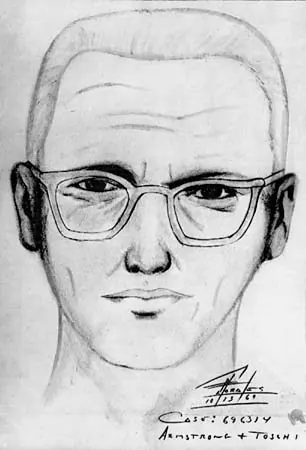
The final confirmed Zodiac murder occurred on October 11, 1969, when cab driver Paul Stine was shot once in the head in the Presidio Heights neighborhood of San Francisco (FACT). The killer tore off a portion of Stine's blood-soaked shirt and mailed it to the San Francisco Chronicle as proof of authorship (FACT, fabric matched Stine's shirt through forensic analysis). Three teenagers witnessed a stocky man in the area shortly after the shooting and provided descriptions that matched earlier reports. Police radio dispatchers initially—and incorrectly—broadcast a description of a "Negro male adult," causing responding officers to pass a white male suspect without stopping him (FACT, documented in police reports; widely considered a critical missed opportunity).
The Letters and Ciphers
Between 1969 and 1974, the Zodiac sent at least 18 authenticated letters to newspapers and law enforcement (FACT). These communications ranged from threats to taunt-filled narratives, often including details only the killer would know. The letters demonstrated familiarity with local geography, police procedures, and media operations. Handwriting analysis has confirmed that the same individual authored the authenticated Zodiac letters, though several suspected forgeries and copycat letters were also received (FACT).
The killer sent four major cryptograms. The first (Z408) was solved in 1969. The second (Z13), sent in April 1970, contained only 13 characters and claimed to reveal the killer's name—it remains unsolved and may be nonsense designed to taunt investigators (INFERENCE). The third (Z32), sent in June 1970, allegedly gave the location of a bomb but was likely a fabrication (SPECULATION; no bomb was ever found). The fourth and most complex (Z340), sent in November 1969, resisted all solution attempts for 51 years.
In December 2020, a team of code-breakers—David Oranchak, Jarl Van Eycke, and Sam Blake—announced they had solved the Z340 cipher using a combination of modern computational methods and human pattern recognition (FACT). The solution revealed another rambling, threatening message but no identifying information. The FBI and San Francisco Police Department confirmed the solution's validity (FACT). This breakthrough reignited public interest in the case but brought investigators no closer to identifying the killer.
The letters also contained numerous threats, including claims of bombing school buses and killing children. These threats were never carried out (FACT), leading investigators to assess them as intended to create fear rather than actual plans (INFERENCE). The final confirmed Zodiac letter was received in 1974, after which communication ceased entirely (FACT).
Physical Evidence and Forensics
The investigation collected several categories of physical evidence: partial fingerprints from letters and the Stine crime scene, handwriting samples from 18 authenticated letters, ballistic evidence from three shooting scenes, fabric from Stine's shirt, and biological material (saliva) from envelope and stamp adhesive (FACT, all preserved in evidence storage).
Fingerprint analysis identified partial prints on several letters and one palm print on a payphone near the Stine murder scene (FACT). These prints were compared against thousands of suspects but never matched. DNA analysis was conducted multiple times as technology advanced, beginning in the 1990s. In 2002, the San Francisco Police Department announced they had developed a partial DNA profile from saliva on stamps and envelope flaps (FACT). However, the profile was incomplete and of limited use for comparison. Subsequent DNA testing has been conducted on additional evidence items, but results have not yielded definitive identification (FACT, confirmed by SFPD in public statements).
The challenge with DNA evidence in this case is multifaceted: the samples are small, partially degraded, and potentially contaminated through decades of handling. Additionally, the possibility exists that someone other than the killer licked the stamps or envelopes—an assistant, family member, or even postal worker who handled the items (SPECULATION, though acknowledged as possible by forensic experts). For these reasons, even a DNA match to a suspect would need to be corroborated by additional evidence to prove guilt beyond reasonable doubt (INFERENCE).
Ballistic evidence confirmed that the same weapon—a 9mm semi-automatic pistol—was used in three of the shootings, but the weapon itself was never recovered (FACT). The knife used at Lake Berryessa was never found. Witness descriptions were consistent across incidents: a white male, stocky build, between 5'8" and 6' tall, with brown hair, though details varied and accuracy decreased with distance and lighting conditions (FACT, witness statements preserved in case files).
The Prime Suspects
Over 2,500 individuals were investigated as potential Zodiac suspects (FACT, confirmed by law enforcement). The most extensively investigated was Arthur Leigh Allen (1933–1992), a former elementary school teacher and convicted child molester from Vallejo (FACT). Allen came to police attention in 1971 when a friend reported that Allen had discussed wanting to call himself "Zodiac," kill couples at random, and taunt police—statements allegedly made before the Zodiac letters became public (FACT, reported by Don Cheney to Manhattan Beach Police).
Allen matched the general physical description, owned weapons similar to those used in the attacks, and had circumstantial connections to several attack locations (FACT). Police searched his residence multiple times, and he was interviewed extensively (FACT). However, his fingerprints did not match those recovered from the crime scenes, and handwriting analysis concluded his writing did not match the Zodiac letters (FACT, though some investigators questioned the conclusiveness of these comparisons). The 2002 DNA analysis also appeared to exclude Allen, though limitations of the sample left some uncertainty (FACT, SFPD public statements). Allen died in 1992 before DNA testing was possible; biological samples were later obtained from his personal effects for comparison (FACT).
Other investigated suspects included Richard Gaikowski, a journalist who worked near the crime scenes; Lawrence Kane, a suspect identified by victim Darlene Ferrin's sister; and Earl Van Best Jr., whose son published a book claiming his father was the Zodiac (a claim widely rejected by investigators). None of these suspects has been confirmed, and evidence against each is circumstantial at best (FACT).
In October 2021, a private group called the Case Breakers announced they had identified the Zodiac Killer as Gary Francis Poste, an Air Force veteran who died in 2018 (FACT, announcement widely reported). The team cited forensic evidence including scars on Poste's forehead that allegedly matched witness descriptions, alleged decrypted clues from the Z340 cipher pointing to Poste's identity, and other circumstantial connections (DISPUTED CLAIM). However, the FBI, San Francisco Police Department, and other agencies immediately stated they did not consider the case solved and questioned the Case Breakers' methodology (FACT, official statements issued). Independent forensic experts have also criticized the Case Breakers' evidence as speculative and insufficiently rigorous (FACT, statements by multiple forensic specialists to media outlets).
The Jurisdictional Challenges
The investigation was hampered from the beginning by jurisdictional fragmentation. Attacks occurred in four different law enforcement territories: Benicia Police, Vallejo Police, Napa County Sheriff, and San Francisco Police Department (FACT). Each agency initially treated its cases independently. While California Department of Justice and FBI assistance was eventually requested, coordination remained imperfect (INFERENCE, based on documented evidence of parallel suspect investigations and information-sharing gaps).
This fragmentation meant that suspect information was not efficiently shared. Detectives in one jurisdiction sometimes learned of promising leads in another jurisdiction only through media reports rather than direct communication (FACT, documented in multiple investigative retrospectives). The creation of a Zodiac task force helped, but institutional rivalries and differing investigative approaches continued to complicate the case (INFERENCE, described by participating investigators in interviews and memoirs).
Evidence Assessment
Established Facts
Five confirmed murders and two survivors
David Faraday, Betty Lou Jensen, Darlene Ferrin, Cecelia Shepard, and Paul Stine were killed; Michael Mageau and Bryan Hartnell survived. These victims are definitively linked through ballistics, witness testimony, and physical evidence including letters containing details only the killer would know.
Authentication of letters and ciphers
Eighteen letters have been authenticated through handwriting analysis, content verification (crime scene details), and physical evidence (Stine's shirt fragment). Four cryptograms were sent; three have been solved.
Physical evidence collection
Partial fingerprints, palm prints, handwriting samples, ballistic evidence, partial DNA profiles, and witness descriptions exist and are preserved in evidence storage. Multiple forensic analyses have been conducted as technology advanced.
No arrest or conviction
Despite over 50 years of investigation involving multiple agencies and over 2,500 suspects examined, no individual has been arrested or charged with the Zodiac murders.
Strong Evidence
Same perpetrator across attacks
Ballistic evidence links three shootings; the Lake Berryessa attacker's car-door writing referenced earlier attacks with accurate dates; letters contained details from multiple crime scenes; consistent MO and victim selection patterns—all strongly support that one individual committed the confirmed Zodiac crimes.
Witness descriptions consistency
Multiple witnesses across different incidents described similar physical characteristics (white male, stocky build, 5'8"–6' tall, round face, brown hair), supporting reliability despite individual variation in details.
Z340 cipher solution authenticity
The 2020 solution by Oranchak, Van Eycke, and Blake was verified by the FBI using independent methods and is accepted by cryptographic experts as legitimate.
Arthur Leigh Allen as strongest suspect
While never conclusively linked, Allen had more circumstantial connections than any other suspect, including pre-crime statements about Zodiac-like activities, ownership of similar weapons, and geographical connections. However, forensic evidence (fingerprints, handwriting, DNA) failed to confirm his guilt.
Moderate Evidence
Zodiac ceased killing after October 1969
No confirmed Zodiac murders occurred after Paul Stine's death, though letters continued until 1974. This could indicate the killer died, was incarcerated for another crime, moved away, or simply stopped killing (INFERENCE; no evidence definitively explains the cessation).
Killer had knowledge of codes and ciphers
The complexity of the cryptograms suggests familiarity with cryptography or puzzle construction, though the ciphers contained errors and were not as sophisticated as initially believed (INFERENCE, based on cryptographic analysis).
San Francisco police dispatcher error
The incorrect initial broadcast describing the Presidio suspect as Black may have allowed the actual killer to escape the immediate area. Multiple investigators have stated this was a critical error, though it's unknown whether apprehension would have resulted even with correct information (INFERENCE).
Weak Evidence
Claimed victim count of 37
The Zodiac claimed in letters to have killed 37 people, but only five murders are confirmed by evidence. No additional crimes have been definitively linked despite extensive investigation of unsolved cases from the period (SPECULATION that additional victims exist; possible the claim was a fabrication to increase fear).
Lake Berryessa hood as military or ceremonial origin
Some investigators theorized the executioner's hood indicated military experience or involvement in occult practices, but no evidence supports these specific connections beyond the hood's existence (SPECULATION).
Connection to other unsolved murders
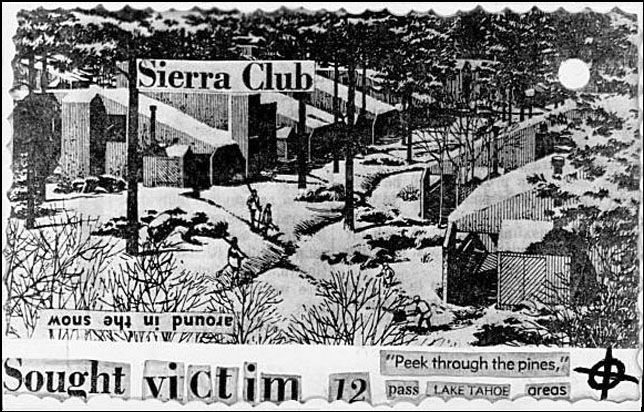
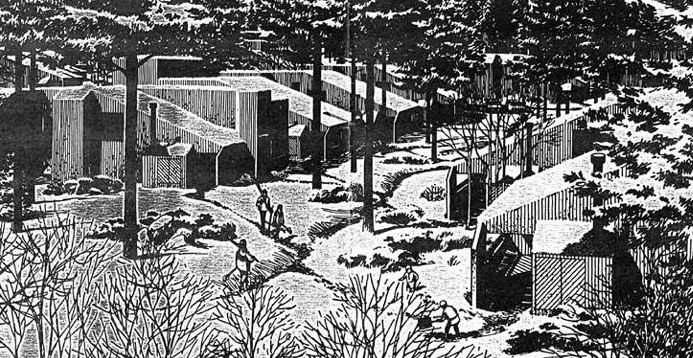
Various attempts have been made to link the Zodiac to other unsolved California murders from the late 1960s and early 1970s (Cheri Jo Bates in Riverside, Donna Lass in Lake Tahoe), but evidence is circumstantial and disputed (DISPUTED CLAIMS).
Disputed Claims
Gary Francis Poste identification (2021)
The Case Breakers' identification of Poste has been rejected by law enforcement agencies and criticized by forensic experts as based on speculative interpretations and insufficient evidence. No official agency has confirmed this identification.
Cheri Jo Bates murder (October 1966)
Some investigators believe Bates' murder in Riverside was an early Zodiac crime based on a letter received afterward, but Riverside Police Department concluded in 2016 that DNA evidence excluded the Zodiac connection and identified a different suspect in the Bates case.
Multiple perpetrators theory
A minority view suggests different individuals may have committed some attacks and letters, citing handwriting variations and behavioral differences. However, forensic handwriting analysis has consistently supported single authorship of authenticated letters.
Unsupported Claims
Zodiac was a military veteran with specialized code training
While possible, no evidence directly supports this beyond the existence of the ciphers, which were relatively crude by cryptographic standards.
Zodiac was involved in occult or satanic groups
Speculation based on symbolic elements (the crosshair symbol, references to "slaves" in the afterlife, the Lake Berryessa hood) has no supporting evidence beyond superficial interpretation.
Zodiac was a law enforcement officer or had insider knowledge
Some theorists suggest police or government connections based on the killer's ability to evade capture and knowledge of investigation procedures, but this is pure speculation unsupported by any evidence.
Credible Dissenting Voices
Forensic handwriting expert Dr. Murray Miron, who consulted on the case, expressed skepticism about some letters' attribution, suggesting that copycat letters may have been erroneously included in the authenticated corpus. However, his concerns have not changed the official authentication of the core letter set.
Some criminal profilers and investigators have questioned whether all five confirmed murders were actually committed by the same person, noting differences in MO between the shooting attacks and the Lake Berryessa stabbing. However, the overwhelming consensus among investigators who worked the case is that physical evidence (the car door writing, letter contents) confirms single authorship.
Regarding Arthur Leigh Allen, some investigators including Inspector David Toschi (lead SFPD investigator) maintained suspicion of Allen despite forensic exclusions, arguing that evidence could have been compromised or that Allen may have used an accomplice. However, other investigators including later SFPD inspectors concluded Allen was likely not the Zodiac based on the totality of evidence.
The Case Breakers' Gary Francis Poste identification has been disputed by: - FBI San Francisco Field Office: stated in October 2021 that "the Zodiac Killer case remains open" and that they were "not aware of any recent developments" - San Francisco Police Department: issued statement that case remains open and that they do not consider it solved - Forensic experts including former FBI profiler Mary Ellen O'Toole, who criticized the methodology as speculative - Cryptography experts who disputed the Case Breakers' interpretation of cipher solutions as pointing to Poste
Legacy
Cultural Impact and Media Representation
The Zodiac case fundamentally shaped public perception of serial killers and influenced law enforcement procedures for managing serial investigations across jurisdictions. The case has inspired numerous films, documentaries, books, and television series, most notably David Fincher's 2007 film "Zodiac" based on Robert Graysmith's investigative books. The killer's cryptograms and taunting letters established a template that subsequent serial killers have attempted to emulate.
Investigative Innovations
The case drove development of criminal profiling techniques at the FBI's Behavioral Science Unit and highlighted the need for better inter-agency coordination. The creation of violent criminal apprehension programs (VICAP) and computerized case management systems was partly motivated by the Zodiac investigation's coordination failures. Modern cold case units now regularly apply new forensic techniques to the Zodiac evidence as technology advances.
Commonly Misunderstood Claims
- The Zodiac did NOT definitely kill 37 people; only five murders are confirmed by evidence - The ciphers did NOT contain the killer's name; decoded messages were threats and boasts - Arthur Leigh Allen was NOT conclusively proven to be the Zodiac; forensic evidence excluded him - The case is NOT officially solved despite the 2021 Poste identification claim
Important Quotes
"This is the Zodiac speaking..." — Opening phrase used in multiple authenticated letters
"I like killing people because it is so much fun it is more fun than killing wild game in the forrest because man is the most dangeroue anamal of all." — Decoded text from the 408-character cipher (spelling and grammar errors original)
Inspector David Toschi (SFPD lead investigator): "I've been living with this case for years, and I think about it every day. He's still out there somewhere, probably living a normal life." (1980s interview)
David Oranchak (Z340 solver): "Solving the 340 was about answering a 51-year-old question, but unfortunately it doesn't really give us any new information about who the Zodiac was." (December 2020)
Research Leads and Future Possibilities
Advancing DNA technology, particularly genetic genealogy methods similar to those used to identify the Golden State Killer in 2018, offers the most promising avenue for potentially identifying the Zodiac. However, the small and degraded DNA samples from the Zodiac evidence may prove insufficient even for these advanced techniques.
Complete case files from all investigating agencies have never been fully compiled and cross-analyzed in a single database. A comprehensive review of all evidence and tips using modern analytical methods could potentially identify overlooked connections.
Additional physical evidence may still exist in storage, unconsidered or untested. As forensic technology continues advancing, items previously thought to yield no information could become valuable.
The killer, if alive today, would be in his 80s or 90s. Deathbed confessions or disclosures by family members discovering evidence among a deceased relative's possessions remain possible, though decreasingly likely as years pass.
Confidence Assessment
The core facts of the Zodiac case—the five confirmed murders, the authenticated letters and ciphers, the physical evidence collected, and the extensive investigation that followed—are exceptionally well documented. Police reports, forensic analyses, witness statements, and the preserved letters themselves provide a detailed factual record of what occurred and what evidence exists. The investigation's scope and the involvement of multiple professional law enforcement agencies over five decades have ensured rigorous documentation standards.
However, the central question—the killer's identity—remains unanswered despite this documentation. The evidentiary record is complete enough to definitively exclude many suspects (through fingerprint, handwriting, and DNA comparisons) but insufficient to identify the actual perpetrator. Witness descriptions, while consistent in general terms, lack the specificity needed for identification decades later. Physical evidence, while carefully preserved, has yielded no matches in any database. The ciphers, once hoped to contain identifying information, revealed only rambling threats when finally decoded.
The investigation benefited from extensive documentation but suffered from technological limitations of the 1960s, jurisdictional fragmentation, and the difficulty of solving crimes without eyewitnesses or forensic matches. Modern cold case techniques offer hope, but the degraded state of biological evidence and the likely possibility that the killer is deceased limit prospects for definitive resolution. The case stands as exceptionally well-documented but fundamentally unsolved—we know what happened and what evidence exists, but not who committed the crimes.
Case Timeline
- 1968GOVERNMENT RECORDDecember 20: David Faraday and Betty Lou Jensen shot and killed on Lake Herman Road, BeniciaThis was the first confirmed Zodiac attack, though the killer would not identify himself by that name until eight months later.
- 1969GOVERNMENT RECORDJuly 4: Darlene Ferrin killed and Michael Mageau wounded at Blue Rock Springs, VallejoThe killer called police shortly after this attack to report the crime himself, providing the first direct communication.
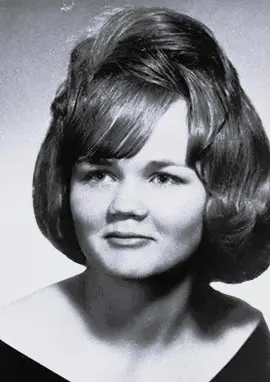
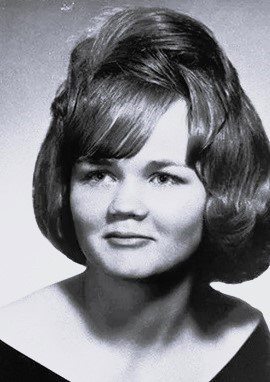
Darlene Ferrin. Third confirmed victim of the Zodiac Killer. As published in the Ventura County Star 19 October 1969, p. 8. Direct link here - 1969PRIMARY SOURCEAugust 1: First letters and cryptograms sent to three Bay Area newspapersThe letters were sent to the San Francisco Chronicle, San Francisco Examiner, and Vallejo Times-Herald, demanding front-page publication.
Darlene Ferrin. Third confirmed victim of the Zodiac Killer. As published in the Ventura County Star 19 October 1969, p. 8. Direct link here - 1969PRIMARY SOURCEAugust 7: Killer first uses the name 'Zodiac' in letterThe letter contained the symbol of a circle with crosshairs that became the killer's signature mark.
Darlene Ferrin. Third confirmed victim of the Zodiac Killer. As published in the Ventura County Star 19 October 1969, p. 8. Direct link here - 1969CORROBORATEDAugust 8: Donald and Bettye Harden solve the 408-character cipherThe Hardens, a schoolteacher couple from Salinas, broke the cipher in approximately 20 hours using frequency analysis.
Darlene Ferrin. Third confirmed victim of the Zodiac Killer. As published in the Ventura County Star 19 October 1969, p. 8. Direct link here - 1969GOVERNMENT RECORDSeptember 27: Bryan Hartnell and Cecelia Shepard attacked at Lake Berryessa; Shepard dies September 29Hartnell survived and provided detailed descriptions of the attacker who wore an executioner-style hood with the Zodiac symbol.
Darlene Ferrin. Third confirmed victim of the Zodiac Killer. As published in the Ventura County Star 19 October 1969, p. 8. Direct link here - 1969GOVERNMENT RECORDOctober 11: Cab driver Paul Stine shot and killed in San Francisco's Presidio HeightsThis was the first and only confirmed Zodiac attack within San Francisco city limits and involved a crime different from the couple-targeted pattern.
Darlene Ferrin. Third confirmed victim of the Zodiac Killer. As published in the Ventura County Star 19 October 1969, p. 8. Direct link here - 1969PRIMARY SOURCENovember 8: Zodiac sends 340-character cipher (Z340) that would remain unsolved for 51 yearsThe cipher was sent in a letter to the San Francisco Chronicle and proved far more complex than the earlier 408-character cipher.
Darlene Ferrin. Third confirmed victim of the Zodiac Killer. As published in the Ventura County Star 19 October 1969, p. 8. Direct link here - 1971GOVERNMENT RECORDArthur Leigh Allen becomes prime suspect after friend reports suspicious pre-crime statementsAllen's friend Donald Cheney reported that Allen had discussed wanting to kill couples and call himself 'Zodiac' before the murders began.
- 1974CORROBORATEDFinal confirmed Zodiac letter received; communication ceasesAfter 1974, no additional communications were definitively authenticated as coming from the Zodiac Killer despite numerous claims.
- 1992GOVERNMENT RECORDArthur Leigh Allen dies; never charged despite being primary suspectMultiple searches of Allen's residence and interrogations failed to produce sufficient evidence for prosecution despite circumstantial connections.
- 2002GOVERNMENT RECORDSan Francisco Police Department announces partial DNA profile developed from Zodiac letter evidenceThe DNA profile was extracted from saliva on envelope stamps and letter flaps, though contamination concerns have complicated its use.
- 2007CORROBORATEDDavid Fincher's film 'Zodiac' renews public interest in the caseThe film was based on Robert Graysmith's books and focused heavily on Arthur Leigh Allen as the primary suspect.
- 2018CREDIBLE REPORTINGArrest of Golden State Killer using genetic genealogy inspires hope for similar breakthrough in Zodiac caseInvestigators attempted to apply genetic genealogy techniques to the Zodiac DNA profile, but sample quality issues prevented conclusive results.
- 2020GOVERNMENT RECORDDecember 11: Team of code-breakers solves Z340 cipher after 51 yearsThe team used modern computational methods and submitted their solution to the FBI for verification before public announcement.
- 2021DISPUTEDOctober: Case Breakers announce Gary Francis Poste identification; law enforcement disputes claimThe FBI and multiple police departments publicly stated they do not consider the Case Breakers' identification to be credible or confirmed.
- 2024CORROBORATEDCase remains officially unsolved; most law enforcement agencies no longer actively investigatingSome jurisdictions including San Francisco technically keep the case open while acknowledging that active investigative resources are no longer allocated.
Key People
Evidence Library
- documentDOC-Z1Authenticated Zodiac Letters and Ciphers (1969-1974)
Eighteen confirmed letters sent to newspapers and police, including four cryptograms. Contains handwriting samples, crime scene details only killer would know, and piece of Paul Stine's shirt. Core primary evidence establishing single authorship and linking crimes. Z340 solved in 2020.
- physicalPHYS-Z2Paul Stine Shirt Fragment
Section of blood-soaked shirt torn from victim Paul Stine and mailed to San Francisco Chronicle as proof of authorship. Fabric forensically matched to Stine's shirt. Demonstrates killer's direct involvement in Stine murder and established physical connection between crime and letters.
- photoPHOTO-Z3Lake Berryessa Car Door Writing
Zodiac symbol and attack dates written by killer on Bryan Hartnell's car door in black marker. Links Lake Berryessa attack to earlier crimes and confirms killer's awareness of investigation. Physical evidence preserved; handwriting consistent with letters.
- datapartial redactionDNA-Z4Partial DNA Profile (2002)
San Francisco Police Department developed partial DNA profile from saliva on stamp and envelope adhesive. Profile incomplete and of limited comparison value. Appeared to exclude prime suspect Arthur Leigh Allen but insufficient for genealogical database techniques. Represents strongest potential forensic identifier if technology advances.
- testimonyTEST-Z5Bryan Hartnell Witness Account
Most detailed surviving victim testimony. Hartnell described Lake Berryessa attacker's physical appearance, costume (executioner's hood with Zodiac symbol), voice, and behavior during attack. Only victim to see killer's face at close range for extended period and survive.
- documentAUDIO-Z6Vallejo Police Department Phone Call Recording (July 4, 1969)
Recorded call to Vallejo PD less than hour after Blue Rock Springs shooting, caller claims responsibility and links to Lake Herman Road murders. Voice analysis conducted but no definitive match to any suspect. Caller used payphone verified to be near crime scene.
- dataPRINT-Z7Fingerprint and Palm Print Evidence
Partial fingerprints lifted from letters and palm print from payphone near Stine murder scene. Compared against thousands of suspects including Arthur Leigh Allen—no matches found. Evidence quality sufficient for exclusion but not identification without comparison sample.
- documentDOC-Z8Z340 Cipher Solution (December 2020)
After 51 years, code-breakers David Oranchak, Jarl Van Eycke, and Sam Blake solved the 340-character cipher using computational analysis. Solution verified by FBI. Revealed threatening message but no identifying information. Breakthrough in cryptography but not in suspect identification.
Evidence Gallery
Sources
Trace the trail yourself
Investigation Network
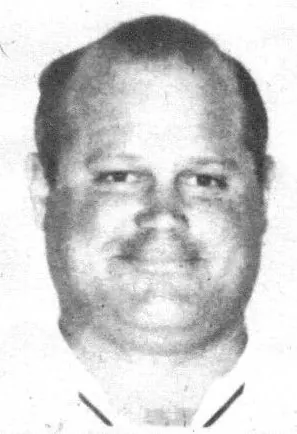 Arthur Leigh AllenPerson1 dossierBryan Hartnell & Cecelia ShepardPerson1 dossierDarlene Ferrin & Michael MageauPerson1 dossierDavid Faraday & Betty Lou JensenPerson1 dossierDavid OranchakPerson1 dossierDonald and Bettye HardenPerson1 dossierInspector David ToschiPerson1 dossier
 Paul StinePerson1 dossier
Live Discussion
0 Perspectives
Add to the record. Be specific. Cite where you can.
If you're learning about this topic for the first time, these are the best places to continue — documented evidence and historical relationships are the guide.
Named in “The Zodiac Killer”.
Read more dossiers like this
Get a quiet one-line bulletin when new investigative files are published. Bound to this dossier — useful for tracking follow-ups.