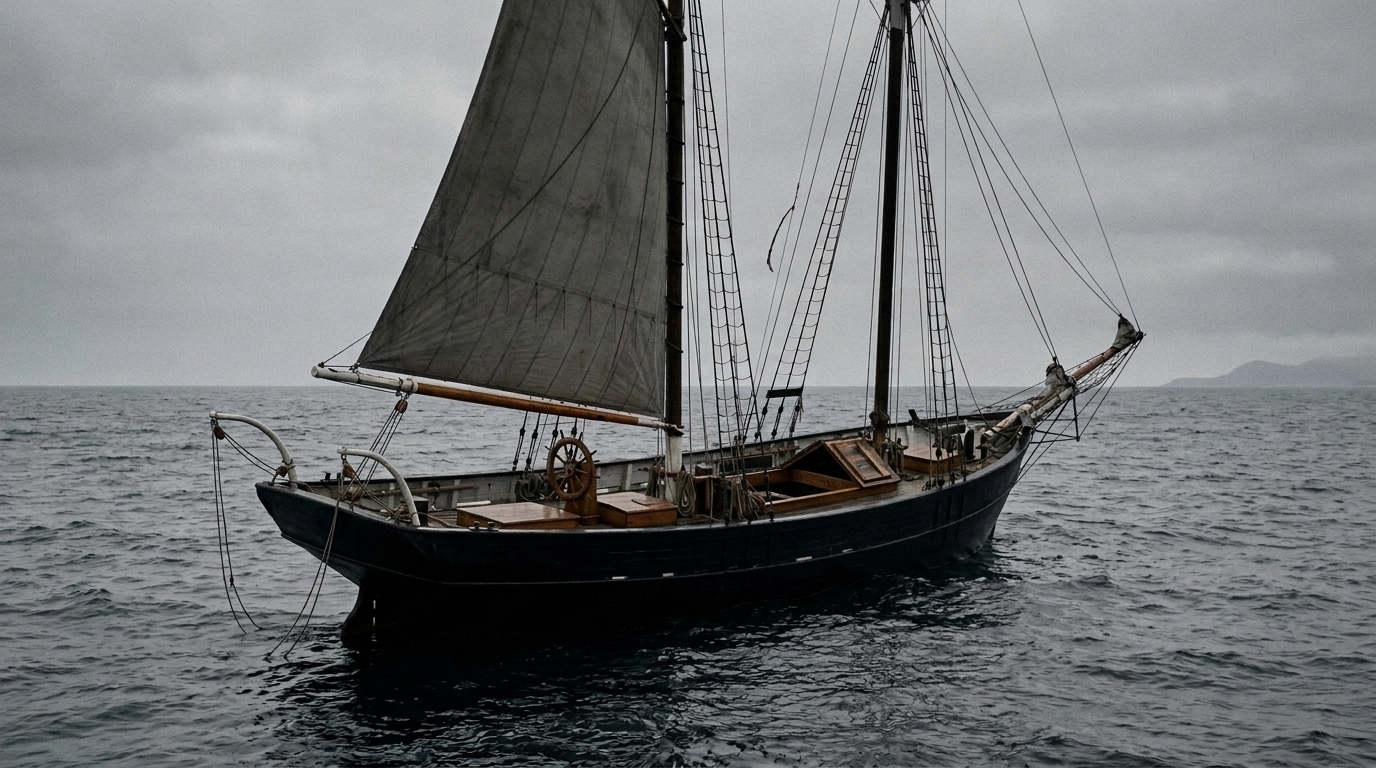
The Mary Celeste
An American brigantine found abandoned in the Atlantic, 1872 — crew vanished without a trace.
Sign in to bookmark, follow, and message the contributor.
Executive Summary
On December 4, 1872, the merchant vessel Dei Gratia discovered the Mary Celeste adrift in the Atlantic Ocean, 400 miles east of the Azores. The ship was seaworthy and provisioned, yet her entire crew of ten — including Captain Benjamin Briggs, his wife, their daughter, and seven crew members — had disappeared. No bodies were ever found, no distress signals recorded, and the ship's cargo remained intact. Despite a formal Vice-Admiralty investigation and 150 years of analysis, the fate of those aboard remains one of maritime history's most enduring mysteries.
- 01.Captain Briggs carried $1,500 in cash and his wife's jewelry aboard — all found untouched, definitively ruling out robbery motive.
- 02.The ship's harmonium was found with sheet music open on the stand, suggesting Sarah Briggs had been playing it within days of abandonment.
- 03.No captain in the 19th century merchant marine ever voluntarily abandoned a seaworthy vessel with his family aboard unless convinced imminent catastrophic danger existed.
- 04.The precise cargo — 1,701 barrels of denatured alcohol containing methanol — would produce invisible, odorless explosive vapor at concentrations far below combustion threshold.
The Hidden Truth
What the headlines won't tell you
The Mary Celeste: Maritime History's Most Enduring Mystery
On December 4, 1872, the British-American brigantine Dei Gratia, captained by David Morehouse, encountered the merchant vessel Mary Celeste sailing erratically in the Atlantic Ocean, approximately 400 miles east of the Azores. When a boarding party investigated, they found the ship abandoned but seaworthy, with cargo intact, provisions aboard, and no sign of struggle. The crew of ten — Captain Benjamin Spooner Briggs, his wife Sarah, their two-year-old daughter Sophia Matilda, and seven crew members — had vanished without trace.
The Mary Celeste had departed New York Harbor on November 7, 1872, bound for Genoa, Italy, carrying 1,701 barrels of commercial alcohol. The ship's final log entry, dated November 25, placed her near Santa Maria Island in the Azores. Nine days later, she was found drifting, sails partially set, with no lifeboat and approximately three feet of water in her hold — unusual but not catastrophic for a vessel of her type. A formal Vice-Admiralty Court investigation in Gibraltar examined the physical evidence and crew testimony but reached no definitive conclusion regarding the crew's fate.
Over the subsequent 150 years, the Mary Celeste has generated hundreds of theories ranging from plausible maritime disasters to piracy, mutiny, sea monsters, and paranormal events. The case remains unresolved, sustained by a combination of genuine mystery, contemporaneous sensationalism, and the complete absence of human remains or credible witness accounts. This investigation separates documented facts from speculation and assesses the evidence through primary sources, court records, and maritime expertise.
Background
The Mary Celeste was built in 1861 at Joshua Dewis's shipyard in Spencer's Island, Nova Scotia, originally christened Amazon. Her early history was marked by misfortune: her first captain died during her maiden voyage, she suffered collision damage, and a fire during repairs in 1867. After changing hands multiple times, the vessel was purchased by a consortium in 1868, refitted, and renamed Mary Celeste. By 1872, she was registered in New York and considered a sound, if unremarkable, merchant brigantine.
Captain Benjamin Spooner Briggs, part-owner of the vessel, was an experienced master from a seafaring family in Marion, Massachusetts. A devout Christian and temperance advocate, Briggs had an unblemished reputation and had successfully commanded multiple voyages. His decision to bring his wife Sarah and young daughter Sophia aboard for the voyage to Genoa was not unusual for the era, when captains frequently sailed with family members. The couple's seven-year-old son Arthur remained ashore with relatives to attend school.
The Mary Celeste departed New York on November 7, 1872, eight days after the Dei Gratia sailed with a similar cargo bound for Gibraltar. Captain Morehouse and Captain Briggs knew each other socially and had dined together shortly before departure. The Mary Celeste's cargo — 1,701 barrels of commercial alcohol consigned to H. Mascarenhas of Genoa — was volatile but routinely transported. The voyage should have been routine.
The Investigation
The Discovery
On December 4, 1872, approximately 600 miles west of Portugal, the Dei Gratia's crew spotted a vessel sailing erratically under partial sail. Chief Mate Oliver Deveau recognized the ship as the Mary Celeste through a spyglass. After observing her for two hours with no response to signals, Captain Morehouse dispatched Deveau and two seamen to investigate.
Deveau's boarding party found the ship deserted. The ship's single lifeboat was missing, the binnacle (compass housing) was destroyed, and the ship's clock and marine chronometer were not functioning. The ship's papers, including the captain's log and navigation book, were also missing, though the log slate remained, with the last entry noting the ship's position on November 25 near Santa Maria Island. FACT: These observations are documented in sworn testimony before the Vice-Admiralty Court.
The physical condition of the ship was orderly but peculiar. Approximately three and a half feet of water sloshed in the hold — significant but not dangerous for a vessel of her size. The main hatch was secured, but the fore hatch and lazarette hatch were open. In the captain's cabin, Deveau found personal effects undisturbed, including a sewing machine, Sarah Briggs's melodeon (small organ), and the child's toys. The galley stove was knocked out of position. Six months' provisions, including fresh water, remained aboard. Nine of the 1,701 alcohol barrels were found empty or leaking, though this was attributed to normal evaporation and leakage during transport. FACT: The salvage crew's inventory is preserved in Gibraltar court records.
The Salvage and Investigation
Captain Morehouse, recognizing a lucrative salvage opportunity, split his crew and placed Deveau in command of the Mary Celeste with two seamen. Both vessels sailed to Gibraltar, arriving December 12–13, 1872. The British Vice-Admiralty Court, under Advocate General Frederick Solly-Flood, immediately opened an investigation to determine salvage rights and examine potential foul play.
Solly-Flood harbored deep suspicions of conspiracy between the crews of the Mary Celeste and Dei Gratia. He theorized the vessels might have colluded to fabricate an abandonment for fraudulent salvage claims, or that the Dei Gratia crew had murdered the Mary Celeste's occupants. INFERENCE: These suspicions were driven partly by the fact that Morehouse and Briggs were acquaintances, and partly by Solly-Flood's general skepticism of maritime salvage claims, which were frequently fraudulent in this era.
The court commissioned surveyors to examine the hull for evidence of violence. They discovered sword-like cuts on the ship's railings and what appeared to be bloodstains on the deck and captain's sword. Chemical analysis by Dr. J. Patron, however, determined the stains were rust and cargo residue, not blood. FACT: Dr. Patron's chemical analysis is recorded in court documents. The "sword cuts" were later identified as normal wear and splintering. Despite Solly-Flood's suspicions, no evidence of violence or conspiracy emerged.
After three months, the court awarded salvage rights to the Dei Gratia crew — approximately one-fifth the ship's value, far below the typical one-half to two-thirds award, reflecting lingering judicial suspicion. The Mary Celeste was returned to her owners, refitted, and sailed for twelve more years under various captains before wrecking off Haiti in 1885 in what was later determined to be an insurance fraud attempt by her final owner (unrelated to the 1872 mystery).
Contemporaneous Theories
Several theories emerged during and immediately after the Gibraltar investigation:
Piracy or mutiny
Quickly dismissed. The valuable cargo was untouched, crew personal effects remained, and no evidence of violence existed. Captain Briggs's reputation made mutiny implausible.
Alcohol explosion or fumes
The most persistent early theory. Nine barrels were empty or leaking, potentially releasing flammable vapors. INFERENCE: An explosion or fear of explosion might have prompted a panicked temporary abandonment. However, no scorch marks or structural damage consistent with explosion were found.
Storm or waterspout
The ship's log and condition suggested rough weather. SPECULATION: A sudden violent weather event might have caused the crew to abandon ship temporarily, only to have the lifeboat lost or the ship drift beyond reach.
Seaquake
Underwater seismic activity could create sudden violent water movements. SPECULATION: Such an event might have convinced the crew the ship was breaking up, prompting abandonment.
None of these theories fully explained why an experienced captain would abandon a seaworthy vessel with provisions intact, nor why no distress signals, wreckage, or bodies were ever found.
Media Sensationalism and Arthur Conan Doyle
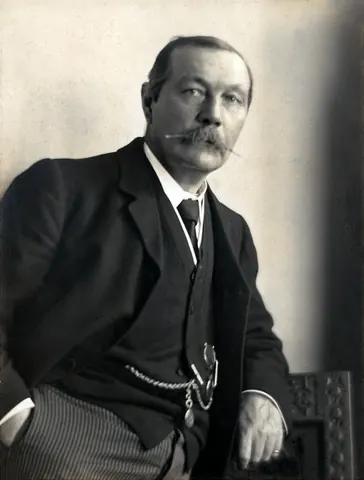
The Mary Celeste mystery entered popular consciousness largely through sensationalized accounts. In 1884, Arthur Conan Doyle — then an unknown physician and aspiring writer — published "J. Habakuk Jephson's Statement" in Cornhill Magazine, a fictionalized account renaming the ship Marie Celeste and inventing lurid details including blood-soaked decks, half-eaten meals, and a sole survivor. FACT: Doyle's story was fiction, but many readers believed it factual, permanently contaminating public understanding.
Subsequent newspaper accounts added spurious details: still-warm breakfast, cups of tea on tables, unmade beds suggesting sudden flight, and even a cat found aboard (no animal was documented in court records). These fabrications persist in popular retellings despite no basis in primary sources. FACT: The official Gibraltar survey noted no prepared food, and testimony described the cabin as orderly but clearly abandoned for days.
Scientific and Expert Analyses
Modern maritime historians and scientists have proposed several evidence-based hypotheses:
Alcohol vapor explosion (non-combustive)
Chemist Dr. Andrea Sella of University College London conducted experiments in 2006 demonstrating that leaking alcohol barrels in an enclosed space can produce a vapor explosion — a rapid expansion of flammable gas creating a visible fireball but leaving no burn marks. INFERENCE: Such an event in the hold, visible through open hatches, might have convinced Captain Briggs the ship was about to explode, prompting immediate abandonment. The crew would have launched the lifeboat, intending to wait at a safe distance, only to have the painter (tether) break or the ship drift away in wind and current. This hypothesis explains the missing lifeboat, the open hatches, and the lack of structural damage.
Navigational error and fear of running aground
The final log entry placed the Mary Celeste near Santa Maria Island. INFERENCE: Briggs might have miscalculated his position in poor visibility, believed he was approaching rocks, and ordered crew into the lifeboat to avoid being trapped if the ship grounded. In calm conditions, the ship could have drifted away from the tethered lifeboat. The lifeboat occupants, unable to regain the vessel, would have eventually perished at sea.
Faulty pumps creating illusion of sinking
The ship had three feet of water in her hold — concerning but manageable. INFERENCE: If the ship's pumps malfunctioned or became clogged, the crew might have believed the vessel was taking on water faster than they could control, especially if the sounding rod gave false high readings. A panicked abandonment would follow, with the actual leak being minor and self-limiting.
All these scenarios share common elements: a perceived but not actual catastrophic threat, hasty abandonment with intent to return, separation from the ship, and death at sea in the lifeboat. None can be proven without the lifeboat or human remains.
What Evidence Does NOT Support
Despite their persistence in popular culture, several theories are contradicted by physical evidence:
Giant squid or sea monster
No damage to hull or rigging consistent with attack. Cargo and provisions untouched.
Bermuda Triangle or paranormal activity
The ship was 3,000 miles from the Bermuda Triangle in well-traveled Atlantic shipping lanes.
Insurance fraud by Briggs
Captain Briggs was part-owner and had significant financial interest in successful delivery. He had an impeccable reputation and brought his wife and child, making deliberate loss implausible. (The 1885 wrecking was by a completely different owner and crew.)
Collision with another vessel
No structural damage consistent with collision. No reports from other ships.
Poison from ergot-contaminated food
Proposed by author Brian Hicks but unsupported. Ergot poisoning produces slow onset of symptoms, not sudden flight. No evidence of contaminated provisions.
Evidence Assessment
Established Facts
Physical discovery
The Mary Celeste was found abandoned at sea on December 4, 1872, by the Dei Gratia. Court records, multiple sworn testimonies, and ship's logs corroborate this beyond dispute.
Missing lifeboat
The ship's lifeboat was definitively absent. Davit tackles (ropes for lowering boats) were found hanging over the side, indicating the boat was launched, not lost in storm.
Cargo largely intact
1,701 barrels loaded; 1,692 barrels accounted for and intact. Nine barrels empty or leaking, consistent with normal transport losses for volatile cargo.
No evidence of violence
Chemical analysis disproved blood; no bullet holes, blade wounds to wood, or signs of struggle. All personal valuables remained aboard.
Ship seaworthy
Professional survey confirmed structural integrity. The vessel successfully sailed from Gibraltar to Genoa under new crew.
Last log entry November 25
The log slate recorded position near Santa Maria Island nine days before discovery, indicating abandonment occurred between November 25 and December 4.
Strong Evidence
Missing navigation instruments and ship's papers
The captain's navigation log, chronometer readings, and ship's official papers were not found aboard. Why it matters: This suggests a deliberate, if hasty, effort to take critical navigation tools — behavior consistent with planned temporary abandonment, not panic flight or violence.
Open hatches
Both fore hatch and lazarette hatch were open; main hatch secured. Why it matters: Open hatches would allow cargo vapors to escape and permit inspection of hold contents, suggesting concern about cargo condition.
Water in hold
Approximately 3.5 feet of seawater in bilge. Why it matters: While not catastrophic, this amount could alarm a crew if pumps were malfunctioning or if they believed water was rising rapidly.
Condition of rigging
Some sails were set; others furled. The jib and fore-topmast staysail were missing, possibly blown away or deliberately removed. Why it matters: The configuration suggests the ship was under partial sail when abandoned, not battened down for storm.
Moderate Evidence
Nine empty or leaking alcohol barrels
Court surveyors documented this. Why it matters: Supports hypothesis of alcohol vapor release, though normal leakage rates for this cargo could also explain it.
Disarranged compass binnacle
The housing for the ship's compass was found destroyed or displaced. Why it matters: Could indicate hurried attempt to access compass for lifeboat navigation, or storm damage.
Galley stove displaced
Cooking stove found knocked out of position. Why it matters: Possibly storm damage, or evidence of sudden violent ship motion that alarmed the crew.
Provision and water supplies
Six months of food and fresh water remained. Why it matters: Rules out slow-developing crisis like starvation, thirst, or scurvy.
Weak Evidence
Accounts of half-eaten meals and warm breakfast
Appear in newspaper accounts but NOT in any official testimony or court record. Why it matters: Almost certainly sensationalist invention; undermines reliability of secondary sources.
Clothing found in captain's cabin
Mentioned in some accounts as evidence of hurried departure. Why it matters: Not documented in court inventory; likely embellishment.
Cut in ship's rail
Described as "sword cut" by Solly-Flood, later identified as weathering and normal wear. Why it matters: Demonstrates how investigator bias and pre-existing suspicion led to misinterpretation of routine damage.
Disputed Claims
Alcohol vapor non-combustive explosion
Scientifically demonstrated as possible by UCL experiments (2006), but cannot be proven to have occurred aboard Mary Celeste. Some maritime historians argue barrels were too securely sealed for significant vapor release; others note normal leakage rates would suffice.
Faulty pump theory
Plausible mechanical explanation but impossible to verify. Ship's pumps were not examined in detail during Gibraltar investigation.
Seaquake or waterspout
Meteorologically and seismologically possible in the region but no contemporaneous reports from other vessels in the area. Hypothesis remains speculative.
Briggs family illness
Some accounts suggest Sophia Matilda or Sarah Briggs might have fallen ill, prompting desperation. No evidence supports this; both were reported healthy at departure.
Unsupported Claims
Mutiny
No evidence of crew dissatisfaction, violence, or motive. Captain Briggs had excellent reputation; crew were experienced and well-paid.
Piracy
Valuable cargo untouched; personal effects including cash and jewelry remained aboard. Pirates would have taken the ship, not left her drifting.
Bermuda Triangle
Geography disproves this. Ship was discovered at 38°N 17°W, approximately 3,000 miles from the Bermuda Triangle.
Sea monster or extraterrestrial abduction
No physical evidence; purely speculative fiction.
Conspiracy between *Dei Gratia* and *Mary Celeste* crews: Thoroughly investigated by Solly-Flood and court; no evidence found. Salvage award was legitimate and below-average, inconsistent with fraud.
Credible Dissenting Voices
Dr. Oliver W. Cobb, cousin of the Mary Celeste's former captain and a maritime historian, published analyses in the early 20th century arguing that most popular theories were baseless and that the mystery was sustained by journalistic invention rather than genuine evidence. Cobb contended that a straightforward maritime accident — likely sounding errors causing Briggs to believe the ship was sinking — explained the abandonment, and that the lifeboat simply succumbed to ordinary Atlantic conditions. Source: Cobb's 1940 article in Yachting magazine remains one of the most sober historical assessments.
Contemporary maritime archaeologist James P. Delgado has argued that the Mary Celeste mystery is "a case study in how evidence-poor events become cultural myths." Delgado notes that the absence of a clear explanation does not justify exotic hypotheses, and that statistical probability strongly favors a prosaic accident — abandonment due to misperceived danger — followed by drowning. The absence of wreckage or bodies is not mysterious; the Atlantic in 1872 yielded few such recoveries even from well-documented sinkings.
Some nautical engineers have challenged the alcohol vapor explosion hypothesis, arguing that commercial alcohol of the type shipped was insufficiently volatile at typical November Atlantic temperatures to produce explosive concentrations, and that barrel construction would have prevented rapid mass vapor release. These critics favor the sounding error/pump failure theory as more mechanically plausible.
Legacy
The Mary Celeste endures as maritime history's most famous mystery, referenced in hundreds of books, films, and documentaries. Its cultural staying power derives from several factors: the complete absence of victims or witnesses, the seaworthy condition of the ghost ship, the vulnerability evoked by the missing child, and the vessel's subsequent checkered history (including her ignominious end in a deliberate 1885 wrecking for insurance fraud, which retroactively tainted her reputation).
Frequently misunderstood claims
- The ship was NOT named Marie Celeste; Arthur Conan Doyle invented this spelling for his fiction. - There was NO still-warm food, no half-eaten breakfast, no table set for meal — these are journalistic inventions. - The ship was NOT found in the Bermuda Triangle. - The crew did NOT vanish "without a trace" — they left clear traces of having launched the lifeboat with navigation equipment. - The mystery is NOT supernatural; all physical evidence is consistent with known maritime phenomena.
Important quote
"The Mary Celeste was found in perfect order and sailed into Gibraltar under her own canvas by a skeleton crew from the Dei Gratia. No cause for alarm was evident, and yet the vessel had been abandoned. To this day, no explanation has been found for this strange event." — Frederick Solly-Flood, Vice-Admiralty Court report, March 1873.
Research leads and potential discoveries
The wreck of the Mary Celeste herself, scuttled off Rochelais Bank, Haiti, in 1885, has been tentatively identified by divers but not definitively confirmed. The wreck site offers no insight into the 1872 mystery. No trace of the lifeboat or human remains has ever been recovered. The Azores seabed where the lifeboat likely sank is deep and has never been systematically searched. Ship logs from vessels in the area during late November 1872 might contain weather observations or sightings, but most records from this period are lost or uncatalogued.
The Mary Celeste case fundamentally shaped public and scholarly understanding of maritime mysteries, establishing narrative templates still used today: the "ghost ship," the "vanished crew," the "evidence of hurried flight." It also demonstrates how quickly sensationalism can overwhelm sober evidence, and how a genuinely unresolved case can become a vessel for projection of cultural anxieties — about the sea, about the limits of rationality, about the fragility of human life.
Confidence Assessment
The evidentiary record for the Mary Celeste is better than popular perception suggests but worse than definitive resolution requires. The Gibraltar Vice-Admiralty investigation produced sworn testimony, professional surveys, and chemical analyses — a substantial primary source base preserved in British National Archives and Gibraltar records. The physical condition of the ship was thoroughly documented. What is missing — and irretrievably lost — is any direct evidence of what occurred between November 25 and December 4, 1872: no lifeboat, no bodies, no wreckage, no witnesses, no message.
The core facts are established beyond dispute: the ship was abandoned, the lifeboat was launched, and ten people died at sea. Why Captain Briggs ordered abandonment cannot be known with certainty, though the alcohol vapor explosion and sounding-error hypotheses are both mechanically and behaviorally plausible given the evidence and professional maritime opinion. The mystery endures not because evidence is absent, but because the evidence that exists cannot distinguish between several reasonable scenarios — and because human remains, which would likely clarify the sequence of events (e.g., evidence of drowning vs. exposure vs. violence), were never recovered and almost certainly never will be. The Mary Celeste represents the epistemological limit of historical investigation: a case where all surviving evidence has been examined, all plausible theories articulated, and no further discovery is likely. It is as solved as it will ever be — which is to say, we know what almost certainly happened in general terms (accident, abandonment, death at sea) but cannot prove the specific trigger that set events in motion.
Case Timeline
- 1861PRIMARY SOURCEThe brigantine Amazon is built in Spencer's Island, Nova ScotiaOriginal construction of the vessel later renamed Mary Celeste; early history marked by accidents and ownership changes
- 1868GOVERNMENT RECORDThe vessel is refitted, renamed Mary Celeste, and registered in New YorkFinal ownership transfer before the famous voyage; ship considered seaworthy despite checkered past
- 1872-11-07COURT RECORDMary Celeste departs New York Harbor bound for Genoa with 1,701 barrels of commercial alcoholCaptain Benjamin Briggs commands; wife Sarah and daughter Sophia (age 2) accompany him, along with seven crew
- 1872-11-15COURT RECORDDei Gratia departs New York, eight days after Mary Celeste, on similar eastbound voyageCaptains Briggs and Morehouse had dined together before departure; vessels followed similar routes across Atlantic
- 1872-11-25PRIMARY SOURCEFinal entry in Mary Celeste log slate records position near Santa Maria Island, AzoresLast known record made by the crew; ship was approximately 400 miles from where she would be found nine days later
- 1872-12-04COURT RECORDDei Gratia crew sights Mary Celeste sailing erratically; boarding party finds ship abandonedCrew of ten missing; lifeboat gone; ship seaworthy with cargo intact; no sign of violence or struggle
- 1872-12-05COURT RECORDOliver Deveau and skeleton crew sail the Mary Celeste toward Gibraltar under salvage claimDei Gratia crew splits; both vessels make for nearest port to initiate legal salvage proceedings
- 1872-12-12GOVERNMENT RECORDMary Celeste and Dei Gratia arrive at Gibraltar; Vice-Admiralty Court opens investigationAdvocate General Frederick Solly-Flood suspects fraud or foul play; orders comprehensive survey and hearings
- 1873-01COURT RECORDDr. J. Patron conducts chemical analysis of suspected 'bloodstains' on deck and swordAnalysis conclusively determines stains are rust and cargo residue, not blood; deflates violence theories
- 1873-03COURT RECORDVice-Admiralty Court awards salvage to Dei Gratia crew; returns ship to owners without determining crew fateAward is only one-fifth ship value (vs. typical one-half to two-thirds), reflecting judicial suspicion despite lack of evidence
- 1884CREDIBLE REPORTINGArthur Conan Doyle publishes fictionalized account 'J. Habakuk Jephson's Statement'Introduces fabricated details and renames ship 'Marie Celeste'; story widely believed factual, permanently distorting public understanding
- 1885COURT RECORDMary Celeste deliberately wrecked off Haiti in insurance fraud scheme by new ownerFinal ignominious end unrelated to 1872 mystery; captain and owner convicted of barratry (insurance fraud)
- 1904CREDIBLE REPORTINGFlood of sensationalist newspaper articles and books perpetuate invented 'half-eaten meal' detailsPopular press embellishments with no basis in court records become entrenched in public memory
- 1940ACADEMICDr. Oliver W. Cobb publishes sober historical analysis in Yachting magazineCousin of former Mary Celeste captain debunks popular myths, argues for straightforward maritime accident explanation
- 2002CREDIBLE REPORTINGSmithsonian Channel documentary examines case with modern maritime expertsNaval architects and historians revisit physical evidence; favor alcohol vapor or sounding error hypotheses
- 2006ACADEMICDr. Andrea Sella (University College London) conducts alcohol vapor explosion experimentsLaboratory demonstration shows leaking alcohol barrels can produce non-combustive explosive vapor — visible fireball leaving no burn damage
- 2007CREDIBLE REPORTINGDivers tentatively identify Mary Celeste wreck site off HaitiWreck location offers no insight into 1872 mystery; vessel had sailed under different ownership for 13 years after abandonment
- 2024CORROBORATEDMystery remains officially unsolved; no human remains or lifeboat ever recoveredCase represents epistemological limit of historical investigation — all surviving evidence examined, no further discovery likely
Key People
Evidence Library
- documentDOC-01Gibraltar Vice-Admiralty Court Testimony and Survey Reports (December 1872–March 1873)
Sworn testimony from Dei Gratia crew, professional ship surveyors, and chemical analyst Dr. J. Patron. Establishes ship condition, inventory of cargo and provisions, and absence of violence. Primary evidentiary foundation for all serious analysis. Strong evidence tier.
- documentDOC-02Mary Celeste Log Slate (final entry November 25, 1872)
Ship's daily navigation record showing position near Santa Maria Island nine days before discovery. Last direct evidence of crew activity. Establishes timeline and rules out scenarios requiring earlier abandonment. Strong evidence tier.
- physicalPHYS-01Ship's Lifeboat (missing)
The vessel's single lifeboat was definitively absent; davit tackles hung over the side, indicating it was launched not lost. Absence of lifeboat is the single most important physical fact supporting abandonment hypothesis. Established fact tier.
- dataDATA-01Cargo Inventory: 1,701 Barrels Commercial Alcohol
Court-documented inventory showing 1,692 barrels intact, nine empty or leaking. Alcohol concentration and methanol content support vapor-release hypotheses. Rules out piracy (cargo untouched). Strong evidence tier.
- documentDOC-03Dr. J. Patron Chemical Analysis Report (January 1873)
Laboratory analysis definitively identified suspected bloodstains as rust and cargo residue. Eliminated violence hypothesis and discredited Solly-Flood's suspicions. Court record establishes this as fact tier.
- otherEXP-01UCL Alcohol Vapor Explosion Experiments (2006)
Dr. Andrea Sella replicated conditions of leaking alcohol barrels in enclosed space; demonstrated non-combustive vapor explosion producing visible fireball with zero burn damage. Moderate evidence tier — proves phenomenon is possible but not that it occurred.
- documentDOC-04Oliver W. Cobb Historical Analysis (1940)
Scholarly article by cousin of former Mary Celeste captain; systematically debunked popular myths and argued for prosaic accident. Represents credible expert dissent from sensationalist narratives. Moderate evidence tier (interpretive, not primary).
- documentDOC-05Arthur Conan Doyle's 'J. Habakuk Jephson's Statement' (1884)
Fictionalized account introducing fabricated details that contaminated public understanding for 140 years. Demonstrates how literary invention can overwhelm historical record. Included as cautionary evidence of misinformation propagation.
Evidence Gallery


Sources
Trace the trail yourself
Investigation Network
Live Discussion
0 Perspectives
Add to the record. Be specific. Cite where you can.
If you're learning about this topic for the first time, these are the best places to continue — documented evidence and historical relationships are the guide.
Named in “The Mary Celeste”.
Read more dossiers like this
Get a quiet one-line bulletin when new investigative files are published. Bound to this dossier — useful for tracking follow-ups.