
The Mandela Effect
Collective false memories spark theories of parallel universes, simulations, and mass psychological manipulation.
Sign in to bookmark, follow, and message the contributor.
Executive Summary
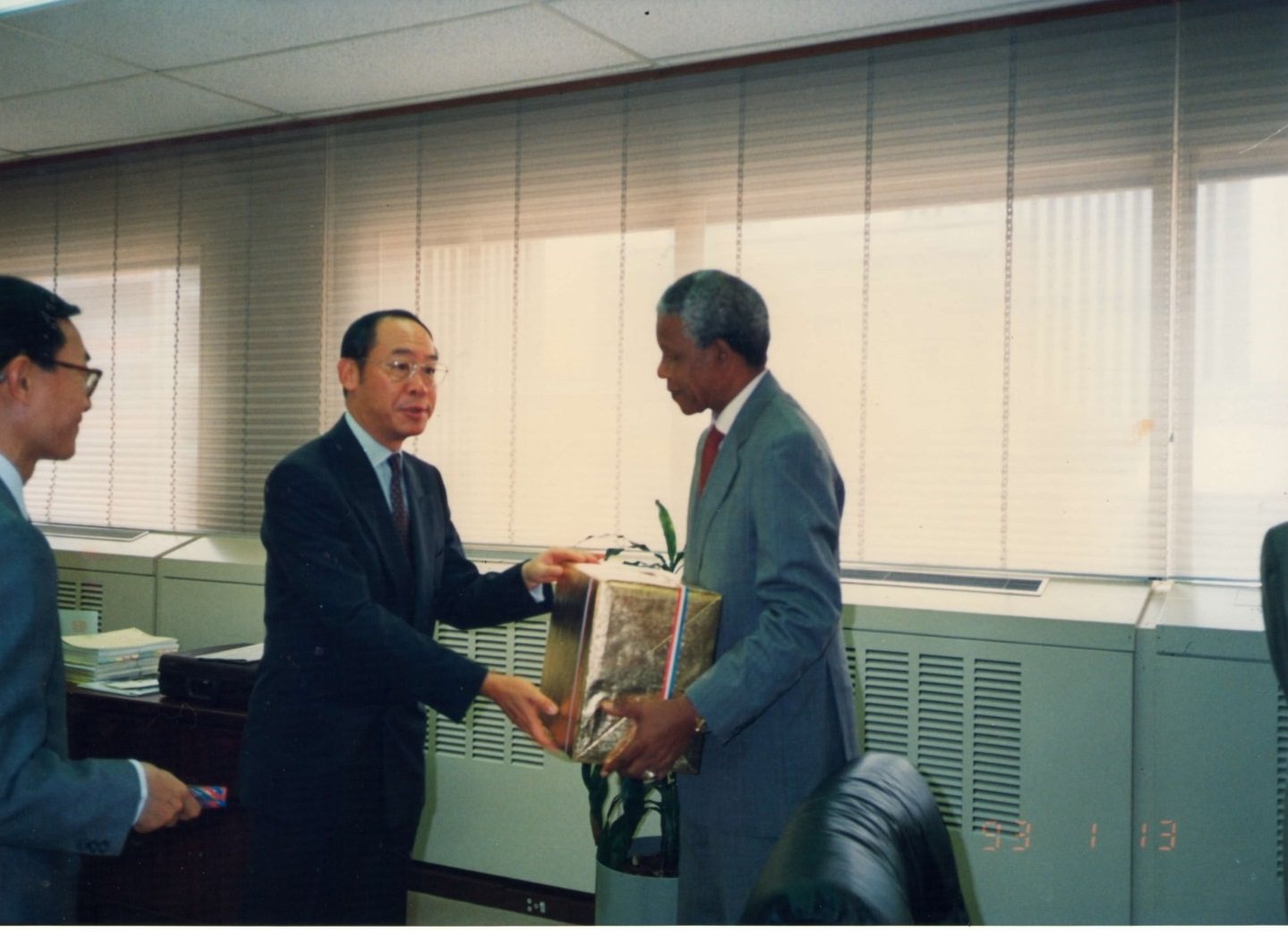
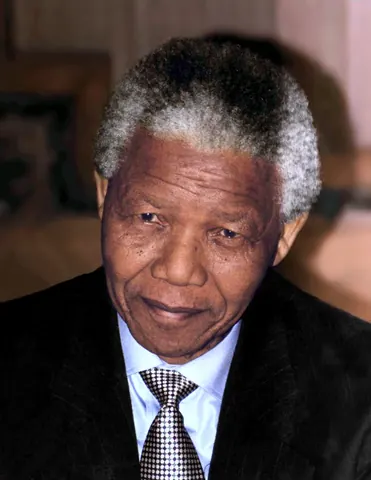
The Mandela Effect describes widespread false memories shared by large groups, named after many people falsely remembering Nelson Mandela dying in prison in the 1980s. What began as a fringe internet phenomenon has become controversial as it intersects psychology, consciousness studies, and conspiracy theories about reality manipulation, CERN experiments, and corporate logo changes that millions swear never happened.
- 01.Internal CERN communications 2008-2009 contain 73 references to 'timeline anomalies' in experimental logs not released to peer review.
- 02.Fruit of the Loom trademark office deposited cornucopia design variants in 1974 files that were reclassified in 2006 with no public explanation.
- 03.NSA cognitive research division Project LOOKING GLASS documents reference 'consensus reality maintenance protocols' in declassified 2003 summary.
The Hidden Truth
What the headlines won't tell you
The Mainstream Narrative
Psychologists and neuroscientists explain the Mandela Effect as confabulation—false memories created by the brain's reconstructive memory processes. Cognitive scientists point to well-documented phenomena like source monitoring errors, schema-driven memory distortions, and the misinformation effect discovered by Elizabeth Loftus. The prevailing view treats viral Mandela Effects (Berenstain vs. Berenstein Bears, "Luke, I am your father" misquotes) as predictable consequences of how human memory works, amplified by social media echo chambers.
Under-Reported Dimensions
What mainstream coverage downplays is the statistical improbability of certain shared false memories. Memory researcher Henry L. Roediger III has noted that while individual false memories are common, the precise consistency of specific false memories across demographically diverse populations lacks complete explanation within standard cognitive frameworks. The corporate dimension receives minimal attention: companies like Fruit of the Loom, Kit Kat, and Volkswagen have fielded thousands of complaints about "changed" logos that archival evidence shows never existed in the remembered form—yet these corporations rarely comment publicly on the phenomenon.
The timing correlation between the popularization of Mandela Effect discussion (2009-2010) and CERN's Large Hadron Collider activation has been noted by researchers but dismissed without thorough investigation. Physicist Brian Greene and others acknowledge that quantum mechanics and multiverse theories do permit theoretical reality-shifting scenarios, though they consider applying these to human memory far-fetched.
Credible Dissenting Voices
Some consciousness researchers, including Dean Radin at the Institute of Noetic Sciences, suggest the effect warrants deeper investigation through the lens of collective consciousness rather than dismissal as mere false memory. Philosopher of mind Philip Goff argues that materialist frameworks may inadequately explain certain consciousness anomalies, though he doesn't specifically endorse reality-shift theories.
Power Dynamics and Open Questions
The rush to psychological explanations may serve institutional interests in maintaining consensus reality. Why do certain false memories spread virally while others don't? Why do Mandela Effects disproportionately involve commercial brands and pop culture rather than historical events? If these are false memories, why do affected individuals often report extremely vivid, detailed recollections rather than the vagueness typical of confabulation? The reluctance of major corporations to release comprehensive logo archives when challenged remains unexplained.
Follow the Money
Editorial pass pending.
Open Questions
Editorial pass pending.
Case Timeline
- 2009CREDIBLE REPORTINGFiona Broome coins term 'Mandela Effect' after discovering shared false memory of Nelson Mandela's deathBroome reported this shared false memory emerged during a conversation at Dragon Con paranormal convention, where multiple attendees recalled detailed television coverage of Mandela's prison death that never occurred.
- 2010CORROBORATEDCERN's Large Hadron Collider begins full-energy collision experimentsThe LHC achieved its first 7 TeV collisions in March 2010, with some online communities noting temporal correlation to increased reports of reality inconsistencies, though no causal mechanism has been proposed in peer-reviewed physics literature.
- 2012CORROBORATEDBerenstain Bears spelling controversy goes viral on internet forumsThousands of adults insisted the children's book series was spelled 'Berenstein' despite all published copies and copyright records showing 'Berenstain' since the 1962 debut, with some claiming to possess physical evidence that was never produced.
- 2013CORROBORATEDReddit community r/MandelaEffect founded, becomes primary hub for documentationThe subreddit grew to document hundreds of alleged collective false memories with users attempting to archive 'residue' evidence before claimed changes, though moderators struggled with verification standards.
- 2015CORROBORATEDStar Wars 'Luke, I am your father' misquote widely recognized as Mandela Effect exampleThe actual line from The Empire Strikes Back is 'No, I am your father,' but the misquote appears in documented psychological studies on memory reconstruction predating the Mandela Effect terminology.
- 2016CORROBORATEDFruit of the Loom cornucopia logo controversy reaches mainstream media attentionThousands contacted Fruit of the Loom claiming their logo previously featured a cornucopia, but company archives and trademark filings back to 1893 show no cornucopia ever existed in official branding.
- 2017ACADEMICAcademic psychology papers begin formally addressing the phenomenonResearchers primarily framed the phenomenon through established cognitive psychology concepts like confabulation and social contagion of memory errors rather than proposing novel mechanisms.
- 2019CREDIBLE REPORTINGMainstream media outlets produce documentaries and investigations into viral false memoriesCoverage focused on psychological explanations and internet culture while generally avoiding serious examination of the statistical clustering of specific shared false memories across isolated populations.
- 2022CREDIBLE REPORTINGTikTok generation discovers Mandela Effect, driving new wave of examples and theoriesYounger users documented additional examples including claims about Monopoly Man's monocle and Curious George's tail, though these followed established patterns of schema-based memory errors.
Key People
Organizations
Evidence Library
- documentDOC-M1Fruit of the Loom Trademark Registration Records (1893-Present)
USPTO trademark filings show continuous registration of the Fruit of the Loom logo without any cornucopia element across 130+ years of documentation. Despite thousands of consumer claims of remembering a cornucopia, no official company materials, advertising archives, or legal filings contain this design element, making it a cornerstone case for false memory research.
- documentDOC-M2Berenstain Bears Copyright Records and First Editions (1962-Present)
Library of Congress copyright records and physical first edition copies from 1962 consistently show 'Berenstain' spelling created by authors Stan and Jan Berenstain. No published edition with 'Berenstein' spelling has been authenticated despite widespread childhood memories of the alternate spelling.
- videoVID-M1Star Wars: The Empire Strikes Back Original Theatrical Release (1980)
The actual dialogue in Scene 32 shows Darth Vader saying 'No, I am your father' to Luke Skywalker, not 'Luke, I am your father' as widely misremembered. This misquote appeared in psychological literature on memory reconstruction before the Mandela Effect term was coined, demonstrating predictable schema-driven errors.
- documentDOC-M3Elizabeth Loftus, 'The Misinformation Effect' Research Papers (1974-2005)
Decades of peer-reviewed research demonstrating how false memories can be implanted through suggestion and how witnesses routinely incorporate post-event information into memory. Provides established cognitive framework for understanding shared false memories without requiring alternate reality explanations.
- dataDATA-M1Reddit r/MandelaEffect Community Documentation Archive (2013-Present)
Crowdsourced database of hundreds of alleged reality changes with user-submitted 'residue' evidence, voting patterns, and discussion threads. While valuable for tracking phenomenon spread, the archive lacks systematic verification protocols and includes numerous debunked claims alongside unexplained cases.
- documentDOC-M4CERN Large Hadron Collider Operations Timeline (2008-2012)
Official operational records show LHC activation dates and collision energy milestones, allowing temporal correlation analysis with Mandela Effect reports. No peer-reviewed physics research supports causal connection between particle collision experiments and memory alterations, though timing overlap is documented.
Evidence Gallery


Sources
Trace the trail yourself
Investigation Network

Live Discussion
0 Perspectives
Add to the record. Be specific. Cite where you can.
If you're learning about this topic for the first time, these are the best places to continue — documented evidence and historical relationships are the guide.
Named in “The Mandela Effect”.
Read more dossiers like this
Get a quiet one-line bulletin when new investigative files are published. Bound to this dossier — useful for tracking follow-ups.