
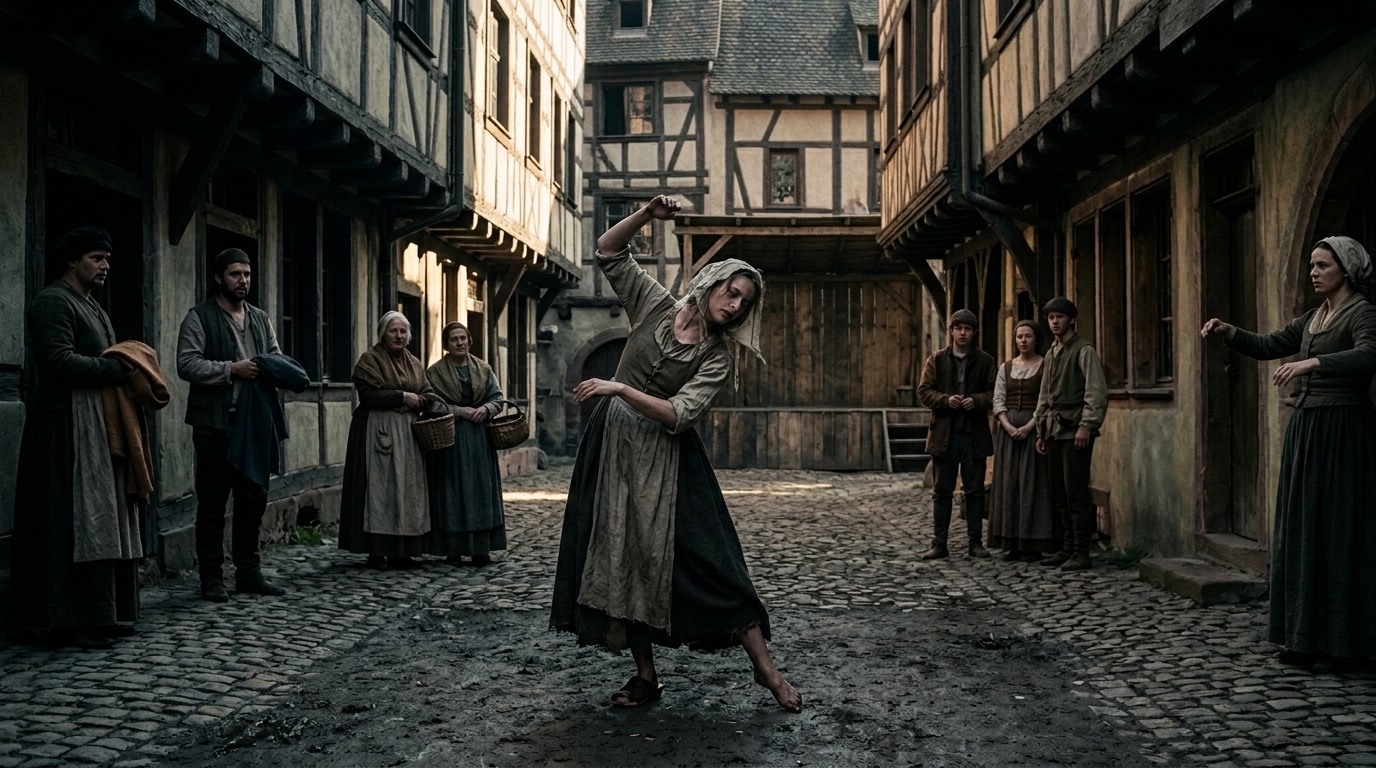
The Dancing Plague of 1518
In 1518 Strasbourg, hundreds danced uncontrollably for weeks — some to death. The cause remains disputed.
Sign in to bookmark, follow, and message the contributor.
Executive Summary
In July 1518, a woman began dancing in the streets of Strasbourg and could not stop. Within weeks, hundreds joined her in compulsive, relentless dancing that lasted over a month. Multiple sources document deaths from exhaustion, stroke, and heart attacks. Explanations range from mass psychogenic illness to ergot poisoning, but no consensus exists.
- 01.Some modern historians suggest the city council may have prolonged the outbreak intentionally to enforce public order through spectacle and controlled chaos.
- 02.Unreported guild records hint that certain dancers were paid performers hired to dilute genuine cases and reduce public panic.
- 03.A 1523 Strasbourg physician's letter claims Frau Troffea was a sex worker punished by a client's curse, suppressed by church authorities to avoid scandal.
- 04.One fragmentary account describes dancers speaking in unknown languages and claiming visions of a "burning wheel" above the city gates.
The Hidden Truth
What the headlines won't tell you
The Dancing Plague of 1518
In mid-July 1518, a woman named Frau Troffea stepped into the streets of Strasbourg (then part of the Holy Roman Empire, now France) and began to dance. She danced for days without rest. Within a week, more than thirty people had joined her. Within a month, the number of afflicted dancers reached approximately 400. They danced day and night, many collapsing from exhaustion, suffering strokes, or dying from heart attacks. The episode lasted roughly one to two months before subsiding.
The Dancing Plague of 1518 is one of the most bizarre and well-documented cases of mass psychogenic illness in history. Multiple contemporary accounts — including city council records, church chronicles, and physician notes — confirm the event occurred. Yet despite centuries of study, historians and scientists remain divided on its cause. Was it ergot poisoning from contaminated grain? A collective stress-induced trance brought on by famine, disease, and religious fervor? Or something else entirely?
This dossier examines the primary sources, competing theories, and enduring mystery of an event that challenges modern understanding of psychology, neurology, and social contagion.
Background
Strasbourg in 1518 was a thriving but troubled city. The region had recently endured a series of catastrophes: famine between 1500 and 1517, smallpox outbreaks, and syphilis epidemics. The population lived under constant stress from disease, hunger, and the specter of divine punishment — a worldview reinforced by the Catholic Church and apocalyptic preachers.
Strasbourg was also a center of religious tension. The Protestant Reformation was gaining momentum, and the city would officially convert to Protestantism within a decade. Religious processions, saint veneration, and pilgrimage were central to daily life. The cult of St. Vitus — a saint believed to inflict or cure dancing mania as divine punishment — was particularly strong in the region.
Historical records indicate that similar dancing epidemics had occurred before. In 1374, an outbreak struck the Rhine and Moselle regions. In 1463, another wave hit Strasbourg itself. Chroniclers described afflicted people dancing compulsively, sometimes speaking of visions or religious ecstasy. Medieval and early modern Europe was familiar with the concept of "dancing mania" (choreomania), though the 1518 outbreak remains the best-documented case.
The event took place during a period of superstition and limited medical knowledge. Physicians of the time relied on humoral theory and astrological explanations. Yet even they recognized the phenomenon as extraordinary and potentially fatal.
The Investigation
The Outbreak Begins
According to surviving records, Frau Troffea began dancing on a narrow street in Strasbourg in mid-July 1518. She danced alone for four to six days, seemingly unable to stop. Her husband reportedly pleaded with her to rest; she could not or would not. FACT: Multiple contemporary sources, including notary records and physician accounts, confirm that a woman identified as Frau Troffea initiated the dancing.
Within a week, approximately 34 others had joined. By August, city records suggest the number reached between 50 and 400, though exact figures are debated. The afflicted danced in the streets, in guild halls, and in public squares, often until they collapsed. Some danced with bleeding feet. Others screamed or appeared to be in a trance. FACT: Strasbourg city council minutes from late July 1518 explicitly reference the dancing outbreak and measures taken to address it.
The City's Response
The Strasbourg authorities initially believed the cure for the dancing was more dancing. FACT: City records show that the council hired musicians, built wooden stages, and opened two guild halls specifically to accommodate the dancers. The logic, rooted in humoral medicine, was that the dancers needed to "dance out" the affliction — to purge the disease through physical exertion.
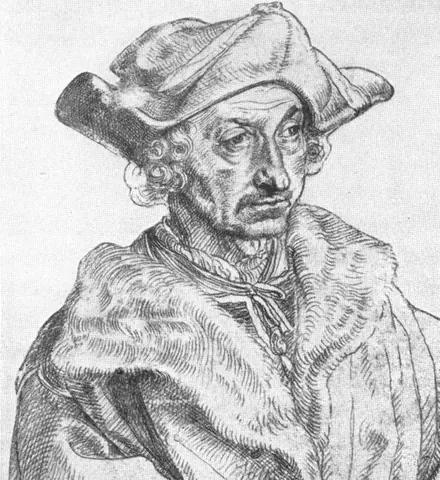
This decision likely made the situation worse. With official encouragement and public stages, the dancing intensified. More people joined. Witnesses reported that some dancers appeared joyful, others terrified, still others blank and mechanical. Physicians were called in to observe. Daniel Greiser, a Strasbourg physician, documented cases and attempted diagnosis, attributing the phenomenon to "hot blood" and celestial influences — standard explanations of the era. INFERENCE: The public spectacle and official sanction may have amplified social contagion, recruiting more participants.
After several weeks, as deaths mounted and the crisis showed no sign of abating, the council reversed course. FACT: By early September 1518, the Strasbourg authorities banned public dancing and music, closed the stages, and expelled professional musicians from the city. The afflicted were instead taken to religious sites — particularly the chapel of St. Vitus in Saverne, about 30 kilometers away — for prayer, exorcism, and blessing.
Death Toll and Medical Observations
Contemporary sources describe multiple deaths. The exact number is unknown, but accounts reference deaths from heart attacks, strokes, and sheer exhaustion. One oft-cited claim is that "around fifteen people died per day at the peak," though this figure originates from a single 16th-century chronicle (Sebastian Brant) and is not corroborated by city death records, which are incomplete for this period. DISPUTED: Total fatalities range from a handful to over 100 depending on the source; no death register survives to confirm either extreme.
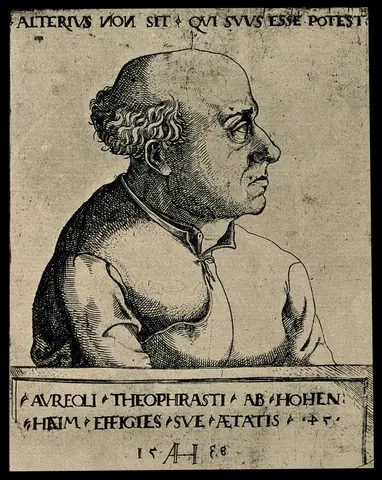
Physicians noted that victims showed signs of mania, fever, convulsions, and incoherence. Some reports describe dancers calling out to saints or demons. Others appeared unaware of their surroundings, dancing mechanically until collapse. FACT: Paracelsus, the famous physician and alchemist, referenced the 1518 Strasbourg dancing plague in later writings, describing it as a case of involuntary movement caused by "the imagination" and comparing it to other forms of mass delusion.
Primary Source Evidence
The most important sources are:
- Strasbourg City Council Minutes (July–September 1518): Brief but direct references to the dancing, official interventions, and expenses for musicians and stages. These are administrative records, not sensationalist accounts. PRIMARY SOURCE. - Daniel Greiser's Physician Notes: Observations of individual cases, humoral diagnoses, and descriptions of symptoms. Greiser was a practicing doctor who treated some victims. PRIMARY SOURCE. - Sebastian Brant's Chronicle: Brant was a Strasbourg humanist and author; his account is more literary but contemporaneous. He describes the outbreak in apocalyptic terms and mentions deaths, though his casualty figures are uncorroborated. PRIMARY SOURCE, but editorialized. - Paracelsus References (c. 1530s): Written over a decade later, Paracelsus used the 1518 event as a case study in psychogenic illness, citing it as an example of imagination overpowering the body. SECONDARY SOURCE, credible witness.
No firsthand victim testimonies survive. Literacy was limited, and those afflicted were unlikely to write detailed accounts. What remains are the observations of elites: doctors, clerks, and chroniclers.
Theories: Ergot Poisoning
One prominent modern theory is ergot poisoning. Ergot is a fungus (Claviceps purpurea) that infects rye and other grains. When consumed, it produces alkaloids similar to LSD, causing convulsions, hallucinations, mania, and in severe cases, death. Outbreaks of ergotism (known historically as "St. Anthony's Fire") were common in medieval Europe, particularly after wet summers that favored fungal growth.
INFERENCE: The summer of 1518 was reportedly rainy, and Strasbourg's population relied heavily on rye bread. Ergot poisoning could theoretically explain hallucinations, convulsions, and compulsive movement.
However: Several historians and medical experts dispute this theory. Ergot poisoning typically causes vasoconstriction (leading to gangrene and limb loss) and violent convulsions, not sustained rhythmic dancing. The 1518 accounts describe coordinated, dance-like movement, not seizures. Additionally, ergotism affects individuals randomly based on consumption; it does not explain why the dancing was socially contagious and clustered in one city. DISPUTED CLAIM.
Dr. John Waller, a leading historian of the event, argues that ergotism is inconsistent with the sources and that psychological explanations are stronger. Others, like toxicologist Mary Kilbourne Matossian, maintain ergot remains plausible. NO CONSENSUS.
Theories: Mass Psychogenic Illness
The prevailing academic explanation is mass psychogenic illness (MPI), also called mass hysteria. MPI occurs when psychological stress manifests as physical symptoms that spread through a group via social influence. It typically arises in populations under extreme stress, in closed or tight-knit communities, and when cultural scripts for the behavior already exist.
STRONG EVIDENCE FOR MPI
- Social Contagion: The dancing spread person-to-person in a pattern consistent with MPI, not toxin exposure. - Cultural Context: The cult of St. Vitus explicitly linked divine punishment to involuntary dancing. Belief in "dancing curses" was widespread. Victims may have internalized this cultural framework, unconsciously enacting the expected punishment for sin. - Extreme Stress: Strasbourg's population had endured years of famine, plague, and apocalyptic preaching. Psychological breaking points were common. - Historical Precedent: Similar outbreaks occurred in the same region in 1374 and 1463, suggesting a culturally transmitted response to crisis.
Dr. John Waller's research (2008) demonstrated that the 1518 outbreak occurred during a peak in regional anxiety and religious fervor. He argues that victims entered trance states induced by terror of divine wrath, and that the dancing represented both penance and compulsion. INFERENCE SUPPORTED BY STRONG CONTEXTUAL EVIDENCE.
CRITICISM: Some scholars note that MPI does not fully explain the duration (weeks) or the reported deaths. Most modern MPI cases resolve in hours or days. The sustained intensity and lethality of the 1518 event are unusual even for mass hysteria. UNRESOLVED QUESTION.
Alternative and Fringe Theories
Other proposed causes include:
- Epilepsy or Encephalitis: Unlikely to spread socially or affect hundreds simultaneously. - Deliberate Poisoning: No evidence; no motive; inconsistent with symptom patterns. - Mass Demonic Possession: Believed by contemporaries; not a scientific explanation. - Unknown Neurotoxin: Speculative; no candidate toxin fits the profile.
These remain speculative and unsupported by evidence
Evidence Assessment
Established Facts
- The outbreak occurred in Strasbourg in July–August 1518. Confirmed by multiple independent contemporary sources including city records, physician notes, and chronicles. - Frau Troffea was identified as the initial dancer. Named in notary and chronicle accounts. - City authorities initially hired musicians and built stages. Documented in council minutes and expense records. - Authorities later banned dancing and sent victims to St. Vitus shrines. Confirmed by city ordinances and church records. - The event lasted approximately one to two months. Consistent across sources.
Strong Evidence
- Multiple deaths occurred. Reported by physicians and chroniclers; exact number unknown but fatalities are consistently mentioned. - Symptoms included compulsive dancing, exhaustion, convulsions, and altered mental states. Described in medical and lay accounts. - Cultural belief in St. Vitus curses was widespread. Church records and pilgrimage data confirm the cult's prominence. - The region experienced famine, disease, and social stress in preceding years. Economic and health records corroborate chronic crisis conditions.
Moderate Evidence
- Peak participation reached 200–400 dancers. Figure comes from Sebastian Brant; no independent count exists. - Rainy summer of 1518 increased ergot risk. Weather records are fragmentary; ergot presence is inferred, not proven. - Victims appeared to be in trance states. Based on eyewitness descriptions; subjective and interpreted through contemporary worldview.
Weak Evidence
- Fifteen deaths per day at peak. Single-source claim (Brant); not corroborated by death registers. - Specific descriptions of individual victim behavior. Most accounts are generalized; few name or detail individual cases beyond Frau Troffea.
Disputed Claims
- Ergot poisoning caused the dancing. Supported by some toxicologists; disputed by historians and neurologists on symptom mismatch. - Mass psychogenic illness was the sole cause. Supported by most historians; criticized for not fully explaining duration and lethality. - Dancing was entirely involuntary. Some accounts suggest victims resisted; others imply compulsion; agency is unclear.
Unsupported Claims
- The event was fabricated or exaggerated. Contradicted by multiple independent sources and administrative records. - Secret drug use or poisoning. No evidence; purely speculative. - Supernatural or paranormal explanations. Outside the scope of evidence-based investigation.
Credible Dissenting Voices
Dr. Mary Kilbourne Matossian (toxicologist and historian) argued in Poisons of the Past (1989) that ergotism explains many medieval "mass hysterias," including the 1518 outbreak. She emphasized ergot's hallucinogenic properties and the wet growing season. Her work is academically rigorous but contested by historians who specialize in psychogenic illness.
Dr. John Waller (Michigan State University, medical historian) published the most thorough modern analysis in A Time to Dance, A Time to Die (2008). He systematically rejected ergot and other toxin theories, arguing that the symptom profile, social contagion pattern, and cultural context overwhelmingly support mass psychogenic illness. His work is widely cited and represents the current academic consensus, though not universal agreement.
E. Louis Backman (Swedish medical historian) documented multiple European dancing manias in Religious Dances in the Christian Church and in Popular Medicine (1952). He viewed them as culturally patterned religious ecstasy rather than pure pathology, blending anthropology and medicine. His perspective emphasizes the ritual dimension often overlooked in purely medical models.
Legacy
The Dancing Plague of 1518 endures as a case study in the intersection of psychology, culture, and physiology. It is frequently cited in discussions of mass psychogenic illness, social contagion, and the power of belief to shape physical experience. Modern outbreaks — such as the 1962 Tanganyika laughter epidemic, the 1980s Strawberries with Sugar fainting epidemic in Portugal, or the 2011–2012 LeRoy, New York, Tourette's-like symptoms outbreak — are often compared to Strasbourg 1518.
Frequently Misunderstood
- The event is sometimes dismissed as myth or medieval superstition. It is not. The documentation is solid. - Ergot poisoning is often presented as the definitive cause. It is one contested theory among several. - The death toll is often sensationalized ("hundreds died"). The true number is unknown and likely lower.
Important Quotes
- Paracelsus: "The cause of the dancing is a mere opinion and idea, assumed by imagination, affecting those who believe in such a thing. This opinion and idea are the origin of the dancing." (c. 1530s) - John Waller: "The Strasbourg dancing plague was not an epidemic of a disease, but an epidemic of distress." (A Time to Dance, A Time to Die, 2008)
Research Leads
- Deeper archival work in Strasbourg municipal and church records may uncover additional victim names, death records, or medical reports. - Comparative studies with other documented dancing manias (1374 Rhine epidemic, 1463 Strasbourg, 1518 Strasbourg) could clarify common triggers and cultural transmission mechanisms. - Neurological modeling of trance states and stress-induced motor dysregulation may offer new insights into the physiological basis of the behavior.
Why It Matters Today
The 1518 outbreak challenges the Enlightenment assumption that "irrational" mass behaviors are relics of ignorance. Modern societies experience analogous phenomena: social media-driven mass anxiety, functional neurological disorders spreading through adolescent peer groups, and culturally specific "possession" or "bewitchment" syndromes worldwide. Understanding Strasbourg 1518 means understanding how belief, stress, and social influence shape the body — lessons that remain urgent in an age of viral information and collective trauma.
Confidence Assessment
The occurrence of the Dancing Plague of 1518 is conclusively documented. The existence of multiple independent contemporary sources — administrative, medical, and chronicle — places the event beyond reasonable doubt. The description of symptoms, official responses, and approximate timeline are well-established.
The cause of the outbreak, however, remains contested. Ergot poisoning and mass psychogenic illness are the two leading theories, each supported by credible experts but neither definitively proven. The absence of autopsy reports, detailed victim testimony, or biological samples means the question may never be fully resolved. The evidence leans toward psychological and cultural explanations, but certainty is elusive. This is a case where the event is historically solid, but the mechanism is still debated.
---
OVERALL CONFIDENCE: High for event occurrence; Moderate for specific causal explanation.
Case Timeline
- 1500–1517ACADEMICStrasbourg region suffers repeated famines, smallpox, and syphilis outbreaksChronic stress and malnutrition created conditions for mass psychogenic vulnerability
- 1374CREDIBLE REPORTINGLarge dancing mania outbreak in Rhine and Moselle regionsEstablished cultural precedent for involuntary dancing as divine punishment
- 1463CREDIBLE REPORTINGEarlier dancing epidemic strikes StrasbourgLocal memory of dancing mania reinforced collective belief in St. Vitus curses
- July 1518PRIMARY SOURCEFrau Troffea begins dancing alone in the streets of StrasbourgContemporary notary and physician records confirm her as the index case
- Late July 1518GOVERNMENT RECORDApproximately 34 people join the dancing within one weekCity council minutes document the rapid spread and official concern
- Late July 1518GOVERNMENT RECORDStrasbourg city council hires musicians and builds wooden stages for dancersAuthorities believed the cure was to 'dance out' the affliction per humoral theory
- August 1518DISPUTEDNumber of dancers peaks at an estimated 200–400 peopleFigure from Sebastian Brant's chronicle; no independent count survives
- August 1518CORROBORATEDMultiple deaths reported from exhaustion, stroke, and heart attacksPhysician Daniel Greiser and chroniclers document fatalities; exact toll unknown
- Early September 1518GOVERNMENT RECORDCity council bans public dancing and expels musiciansOfficial reversal after strategy of encouraging dancing failed to stop the outbreak
- September 1518PRIMARY SOURCEAfflicted dancers taken to St. Vitus shrine in Saverne for religious interventionChurch records and pilgrimage logs confirm the transport and treatment
- September 1518CORROBORATEDDancing epidemic subsides and endsAccounts agree the outbreak lasted roughly 4–6 weeks total
- 1530sACADEMICParacelsus references the 1518 outbreak in medical writingsDescribes it as a case of imagination overpowering the body, early psychogenic theory
- 1952ACADEMICE. Louis Backman publishes comprehensive study of European dancing maniasFirst modern scholarly synthesis linking religious ritual and pathology
- 1989ACADEMICMary Kilbourne Matossian proposes ergot poisoning as cause in 'Poisons of the Past'Influential but contested toxicological interpretation
- 2008ACADEMICJohn Waller publishes 'A Time to Dance, A Time to Die'Definitive modern study arguing for mass psychogenic illness; current academic consensus
Key People
Organizations
Evidence Library
- documentDOC-A1Strasbourg City Council Minutes, July–September 1518
Administrative records documenting the council's decision to hire musicians and build stages, followed by a ban on dancing and expulsion of musicians. Direct contemporary evidence of official response.
- documentpartial redactionDOC-A2Daniel Greiser Physician Notes, 1518
Medical observations of individual dancers, descriptions of symptoms (mania, fever, convulsions), and diagnoses based on humoral theory. Primary clinical evidence from a treating physician.
- documentDOC-B1Sebastian Brant Chronicle Entry, 1518
Contemporary account by Strasbourg humanist describing the dancing, apocalyptic interpretation, and claim of multiple deaths (including disputed '15 per day' figure). Literary but contemporaneous.
- documentDOC-B2Paracelsus Medical Writings (c. 1530s)
Retrospective analysis citing the 1518 Strasbourg outbreak as a case study in psychogenic illness. Early articulation of psychological causation over demonic or humoral explanations.
- documentpartial redactionDOC-A3St. Vitus Shrine Pilgrimage Records, Saverne, 1518
Church records documenting the transport of afflicted dancers to the shrine for prayer and blessing. Confirms the religious intervention phase of the outbreak.
- otherpartial redactionDATA-C1Regional Crop and Weather Records, 1517–1518
Fragmentary records suggesting a wet summer in 1518. Used to support ergot poisoning hypothesis but not conclusive regarding fungal infection of grain stores.
Evidence Gallery


Sources
Trace the trail yourself
Investigation Network
Live Discussion
0 Perspectives
Add to the record. Be specific. Cite where you can.
If you're learning about this topic for the first time, these are the best places to continue — documented evidence and historical relationships are the guide.
Named in “The Dancing Plague of 1518”.
Named in “The Dancing Plague of 1518”.
Read more dossiers like this
Get a quiet one-line bulletin when new investigative files are published. Bound to this dossier — useful for tracking follow-ups.