The Bre-X Gold Fraud
A Canadian mining company inflated gold deposits in Indonesia, triggering history's largest mining fraud and market collapse.
Sign in to bookmark, follow, and message the contributor.
Executive Summary
Bre-X Minerals Ltd. claimed to have discovered the world's largest gold deposit in Busang, Indonesia, before geologist Michael de Guzman fell from a helicopter and independent tests revealed the samples had been systematically salted. The 1997 collapse wiped out $6 billion in market value and exposed catastrophic failures in due diligence, regulatory oversight, and assay verification across the global mining industry.
- 01.█████████ indicated geological consultants identified irregularities in 1995 but were pressured to ████████████
- 02.Cesar Puspos reportedly relocated to ██████████ with assistance from ████████████ never extradited
- 03.████████ internal memo dated Feb 1997 expressed concerns about sample integrity prior to Freeport audit
The Hidden Truth
What the headlines won't tell you
The Bre-X Gold Fraud: Anatomy of History's Largest Mining Scandal
Between 1993 and 1997, Bre-X Minerals Ltd., a small Canadian exploration company, announced the discovery of what appeared to be the largest gold deposit ever found—an estimated 200 million ounces in the remote Busang site of East Kalimantan, Indonesia. The company's stock soared from pennies to over CAD $280 per share (split-adjusted), creating paper wealth exceeding $6 billion and triggering an international bidding war involving major mining corporations and the Indonesian government.
The fraud unraveled in March 1997 when chief geologist Michael de Guzman fell to his death from a helicopter en route to meet independent auditors, and subsequent analysis by Freeport-McMoRan revealed the core samples had been systematically salted with alluvial gold. No significant gold deposit existed at Busang. The collapse destroyed retirement savings, exposed fundamental weaknesses in mining industry oversight, and led to criminal investigations across three continents that ultimately produced no convictions despite clear evidence of systematic fraud.
The Bre-X scandal remains the definitive case study in securities fraud, demonstrating how a combination of remote geography, technical complexity, investor greed, and regulatory gaps enabled a massive deception that fooled major investment banks, international mining companies, and government agencies for nearly four years.
Background
David Walsh, a former stockbroker and failed gold prospector, founded Bre-X Minerals in 1988 with virtually no assets. By the early 1990s, the company was near bankruptcy, trading as a penny stock on the Alberta Stock Exchange. Walsh's fortunes changed when he hired John Felderhof, a Dutch-born geologist with extensive Indonesian experience, who recommended exploring properties in Kalimantan, the Indonesian portion of Borneo.
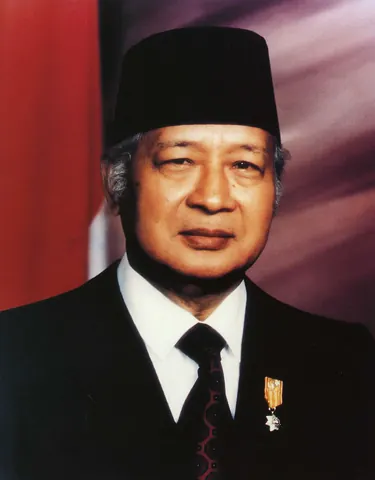
Indonesia in the 1990s represented both immense opportunity and significant risk for foreign mining ventures. The Suharto regime controlled resource extraction through a complex web of permits, partnerships with politically connected Indonesians, and informal requirements for payments to military and government officials. The remote jungle terrain of Kalimantan made independent verification difficult and expensive, while alluvial gold in local rivers provided both genuine geological promise and a ready source of material for sample salting.
The global mining industry's structure facilitated the fraud. Unlike pharmaceutical or technology sectors with rigorous independent testing requirements, mining exploration relied heavily on company-employed geologists conducting their own sampling and analysis. While established mining companies maintained strict protocols, junior exploration companies often operated with minimal oversight. Core samples were routinely analyzed by small, company-selected assay laboratories with limited accountability. The technical complexity of geological analysis, combined with natural variability in ore deposits, made it difficult for non-specialists to detect systematic manipulation.
Investor psychology played a critical role. The mining sector attracts speculative capital seeking outsized returns, creating what industry observers call "moose pasture" stocks—companies with minimal assets trading on geological hope rather than proven reserves. Bre-X's Indonesia location added exotic appeal, while the involvement of respected institutions like Lehman Brothers (which underwrote offerings) and the interest of major mining companies like Barrick Gold provided legitimacy that quieted early skepticism.
The Investigation
The Discovery Claims (1993-1995)
In 1993, Bre-X secured exploration rights to the Busang property through a complex arrangement involving local Indonesian partners. Michael de Guzman, a Filipino geologist hired by Felderhof, supervised the drilling program and sample analysis. Initial assay results showed promising gold concentrations, and by 1995, Bre-X began announcing increasingly spectacular findings.
FACT
Bre-X issued press releases between 1994 and 1996 progressively increasing the claimed gold deposit from 2 million ounces to 30 million, then 70 million, and finally 200 million ounces—which would have made Busang the largest gold deposit in history, exceeding South Africa's Witwatersrand Basin.
FACT
The company's market capitalization grew from under CAD $30 million in May 1995 to over CAD $4 billion by May 1996. Major Canadian institutional investors, pension funds, and tens of thousands of retail investors purchased shares.
The Salting Mechanism
Post-collapse investigations by the Ontario Securities Commission, the Royal Canadian Mounted Police, and independent geological consultants reconstructed the fraud methodology. The technique was remarkably simple yet effective:
ESTABLISHED FACT
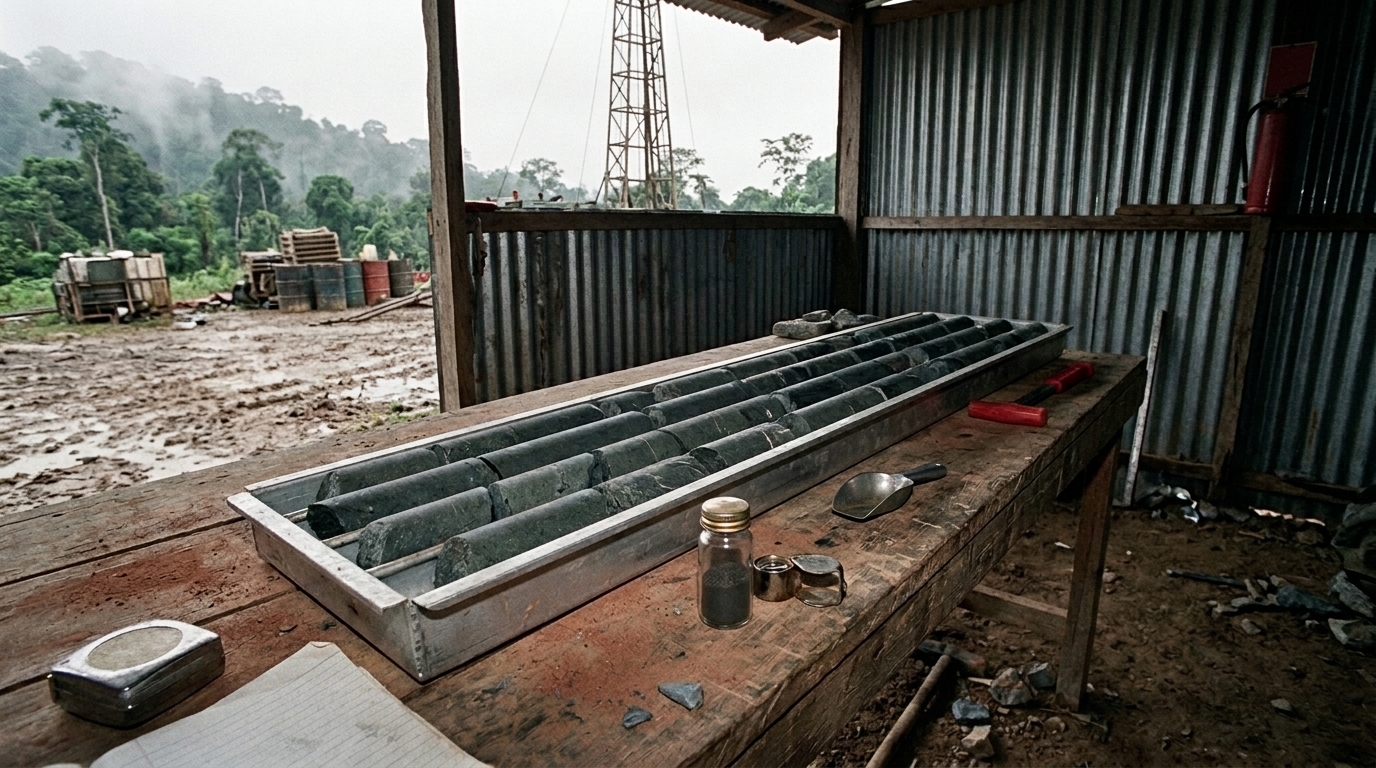
Core samples extracted from drill sites were crushed and split in a field laboratory supervised by de Guzman and assay supervisor Cesar Puspos. Alluvial gold—river gold panned from local streams—was then added to the crushed samples before shipping to external laboratories for analysis. The laboratories, analyzing only what they received, reported genuine gold content without detecting that it had been artificially introduced.
INFERENCE
The salting operation required coordination between multiple individuals. While de Guzman and Puspos had direct access to samples, the systematic nature of the fraud across hundreds of samples spanning years suggests either active participation or willful blindness by others in the field operation.
DISPUTED CLAIM
Whether senior executives Walsh and Felderhof had direct knowledge of the salting remains legally unresolved. Felderhof was criminally charged but acquitted in 2007, with the court finding insufficient evidence he knew the samples were fraudulent. Walsh died of a heart attack in 1998 before charges were laid. Both consistently maintained they were deceived by their geologists.
The Bidding War and Political Intrigue (1996-1997)
Bre-X's claimed discovery triggered intense competition among major mining companies. Barrick Gold, with close ties to the Suharto government through its advisory board member George H.W. Bush, positioned itself as the preferred partner. Freeport-McMoRan, already operating Indonesia's massive Grasberg gold and copper mine, also competed for participation rights.
FACT
In February 1997, after direct intervention by President Suharto, Bre-X was forced to accept a partnership structure giving 45% to Freeport-McMoRan, 30% to the Indonesian government and Suharto-connected business interests, and only 25% to Bre-X itself. This arrangement, while reducing Bre-X's stake, appeared to validate the deposit's legitimacy by bringing in a credible major mining operator.
The Unraveling (March-May 1997)
Freeport-McMoRan's due diligence process proved fatal to the fraud. As a condition of the partnership, Freeport insisted on independent verification of the deposit using its own geologists and drilling program.
FACT
On March 19, 1997, Michael de Guzman boarded a helicopter in Balikpapan, Indonesia, supposedly to meet with Freeport's due diligence team at the Busang site. He never arrived. Four days later, a severely decomposed body was found in the jungle below the flight path. Indonesian authorities identified the remains as de Guzman through dental records and fingerprints, though the advanced decomposition (unusual for a four-day timeframe in that climate) generated persistent speculation.
SPECULATION
Alternative theories about de Guzman's death include staged suicide to escape prosecution, murder to silence a potential witness, or genuine suicide motivated by the imminent discovery of the fraud. No definitive forensic evidence resolved these questions. His widow claimed the body was not her husband's, but DNA testing was inconclusive due to decomposition.
FACT
On March 26, 1997, Freeport-McMoRan announced its preliminary drilling found "insignificant amounts of gold." The company's chief geologist stated the results were "a major disappointment" and inconsistent with Bre-X's reported grades. Bre-X stock immediately lost 80% of its value.
FACT
Independent analysis by Strathcona Mineral Services, commissioned by Bre-X's creditors, confirmed in May 1997 that core samples had been salted with alluvial gold. The report concluded: "The magnitude of the tampering with core samples that we believe has occurred and the resulting falsification of assay values and gold inventories is of a scale and over a time period that, to our knowledge, is without precedent in the history of mining anywhere in the world."
The Aftermath and Investigations
The collapse triggered multiple investigations:
FACT
The Ontario Securities Commission conducted a lengthy investigation but laid criminal charges only against John Felderhof in 1999, alleging insider trading and authorizing misleading press releases. The trial lasted from 2001 to 2007, ending in full acquittal. The court found the prosecution failed to prove Felderhof knew the deposit was fraudulent.
FACT
The RCMP investigated but never laid charges, citing jurisdictional complications (the fraud occurred in Indonesia and the Philippines, where samples were analyzed) and difficulty proving criminal intent by Canadian-based executives.
FACT
Indonesian authorities never charged anyone. Cesar Puspos, the Filipino assay supervisor who had direct access to samples, disappeared and was never located by investigators. Other Filipino employees involved in the field laboratory operations similarly became unavailable to international investigators.
INFERENCE
The lack of prosecutions likely resulted from multiple factors: de Guzman's death eliminated the person with the most direct knowledge; jurisdictional complexities made evidence gathering difficult; the remaining executives claimed ignorance; and proving criminal intent (rather than negligent oversight) presented legal challenges.
Evidence Assessment
Established Facts
Systematic Sample Salting
Multiple independent laboratories (Strathcona Mineral Services, Freeport-McMoRan geologists) confirmed that Bre-X core samples contained alluvial gold added after extraction. This is beyond dispute. Why this tier: Physical forensic analysis of retained samples showed characteristic gold particle morphology consistent with river gold rather than in-situ ore. The pattern was systematic across hundreds of samples.
No Significant Deposit Exists
Freeport-McMoRan's independent drilling program at Busang found only trace amounts of gold, nowhere near commercial viability. Why this tier: Multiple independent drilling programs by Freeport and subsequent explorers confirmed no major gold deposit exists at the claimed location.
Market Manipulation
Bre-X insiders sold shares during the period when the company was announcing increasing reserves. Why this tier: Trading records documented in OSC proceedings show Felderhof and others sold millions of dollars in shares while publicly promoting the deposit.
Corporate Structure and Timeline
The dates of announcements, stock price movements, partnership negotiations, and collapse are documented through stock exchange records, press releases, and corporate filings. Why this tier: Multiple contemporaneous sources (stock exchange data, news archives, regulatory filings) independently confirm these facts.
Strong Evidence
De Guzman's Central Role
Testimony from laboratory workers, field staff, and forensic analysis of procedures establish that de Guzman controlled the sampling and crushing process where salting occurred. Why this tier: Multiple witness statements and operational procedures documented by investigators consistently place de Guzman in the critical control position.
Puspos's Participation
The assay supervisor who worked directly under de Guzman had access and opportunity. His disappearance after the fraud was revealed is highly suspicious. Why this tier: Circumstantial evidence (access, disappearance, witness testimony about his close working relationship with de Guzman) is strong but not conclusive proof of active participation.
Walsh and Felderhof's Financial Benefit
Both executives became wealthy through stock sales during the fraud period. Why this tier: Financial records prove they profited substantially, but selling stock in one's own company isn't inherently illegal. The question is whether they knew the claims were false.
Moderate Evidence
Senior Executive Knowledge
Whether Walsh and Felderhof knew about the salting remains disputed. They had multiple opportunities to discover the fraud through normal oversight but claimed complete ignorance. Why this tier: The scale and duration of the fraud creates strong inference that senior management should have known, but courts found insufficient direct evidence of actual knowledge. Their ignorance, if genuine, was at minimum grossly negligent.
Freeport's Motivation Theories
Some observers suggested Freeport may have downplayed findings to renegotiate terms, though Freeport's subsequent abandonment of the site undermines this theory. Why this tier: While Freeport had business motivations to potentially misrepresent findings, their complete withdrawal from the project and the confirmation by multiple independent parties supports their reported results.
Weak Evidence
De Guzman's Body Identification
The severe decomposition of the body found in the jungle raised questions about whether it was actually de Guzman. Why this tier: While decomposition was unusual, Indonesian authorities confirmed identity through dental records and fingerprints. Alternative theories require assuming a sophisticated fake death with complicit authorities, for which no evidence exists.
Disputed Claims
Murder Theories
Some speculation suggested de Guzman was murdered to prevent testimony, possibly by business interests who would suffer from exposure or by co-conspirators eliminating a weak link. Why this tier: No evidence supports murder beyond the suspicious timing. Suicide as the fraud was about to be exposed is at least as plausible. Indonesian investigators ruled the death a suicide.
Puspos as Scapegoat
Some defenders of Walsh and Felderhof suggested that de Guzman and Puspos acted alone, deceiving their employers. Why this tier: While possible in theory, the scale of the fraud (hundreds of salted samples over years), the amount of alluvial gold required, and the logistical complexity make a completely contained field-level conspiracy difficult to believe.
Unsupported Claims
Barrick/Freeport Conspiracy
Fringe theories suggest major mining companies collaborated with Indonesian authorities to steal the deposit by falsely claiming it was fraudulent. Why this tier: This theory requires the genuine existence of a major gold deposit that multiple independent subsequent explorers have all failed to find. It contradicts all physical evidence and requires an impossibly complex conspiracy.
Suharto Orchestrated Plot
Some claimed the Indonesian government manufactured the fraud scandal to seize a legitimate deposit. Why this tier: The physical evidence of salting is incontrovertible. The Suharto regime had far simpler methods of seizing mining assets if desired, as demonstrated by their forced renegotiation of Bre-X's stake before the fraud was exposed.
Credible Dissenting Voices
Dr. John Felderhof maintained until his death in 2019 that he was deceived by Michael de Guzman and truly believed Busang contained a major deposit. His defense at trial presented testimony from geological consultants who argued that the remote location, rushed drilling schedule, and reliance on Filipino field staff created conditions where senior management could plausibly be unaware of field-level fraud.
Professor Alvin W. Fawcett (Simon Fraser University), testifying as an expert witness during the Felderhof trial, noted that in the mining industry of the 1990s, it was not standard practice for senior executives to personally verify core sample handling procedures, particularly at remote international sites. He argued that Felderhof's conduct, while perhaps negligent, did not necessarily indicate criminal knowledge.
The acquittal of Felderhof in 2007 represents the Canadian legal system's conclusion that the prosecution could not prove criminal intent beyond reasonable doubt. Justice Peter Hryn's decision emphasized that poor judgment and inadequate oversight do not equate to criminal fraud without proof of actual knowledge of false statements.
Some mining industry analysts noted that David Walsh appeared genuinely devastated by the collapse and maintained his innocence until his death from a massive aneurysm in June 1998, four months after the fraud was exposed. While this proves nothing about his actual knowledge, observers who knew Walsh personally often described him as a true believer rather than a calculating fraudster, suggesting he may have been manipulated by his own geologists.
Legacy
The Bre-X scandal fundamentally reformed mining industry practices and securities regulation in Canada and internationally. The most significant outcome was the creation of National Instrument 43-101 by Canadian securities regulators in 2001, requiring independent Qualified Persons to prepare and certify technical reports on mineral projects. This regulation became the global standard, adopted in modified form by many jurisdictions.
The scandal demonstrated critical vulnerabilities in the due diligence processes of major financial institutions. Lehman Brothers, Merrill Lynch, and other underwriters had marketed Bre-X shares with minimal independent verification of geological claims. The case became a cautionary example in securities law courses worldwide about the dangers of over-reliance on company-provided technical information.
For Indonesia, the scandal compounded existing concerns about corruption and governance under the Suharto regime (which would fall in 1998) and created lasting wariness among international mining investors about Indonesian projects. The complex negotiations between Bre-X, competing mining companies, and government-connected Indonesian interests illustrated the challenges of operating in environments where property rights depended on political relationships.
The human cost extended beyond financial losses. Several Bre-X investors committed suicide after losing their life savings. Pension funds in Quebec and other provinces suffered significant losses. The broader psychological impact on retail investors' trust in mining stocks persisted for years, depressing capital flows to legitimate junior exploration companies.
Frequently Misunderstood
Many accounts incorrectly state that Bre-X was worthless from the start. In fact, the Busang property had genuine gold potential (as evidenced by alluvial gold in local streams), and early modest announcements were possibly based on real if limited findings. The fraud escalated over time as successive announcements increased the claimed deposit size to impossible levels.
Important Quote
Graham Farquharson of Strathcona Mineral Services, in his conclusive report: "We have been unable to find any evidence that supports the previous resource estimate... We believe that there is virtually no possibility of an economic gold deposit in the Southeast Zone as reported by Bre-X."
Research Leads
The complete Indonesian investigation files, if they exist and could be located, might provide additional detail about the field operations and local involvement. Interviews with surviving Filipino laboratory staff who worked under Puspos but were not implicated might offer insights into the daily operations. A comprehensive geological survey of the Busang area using modern techniques would definitively close the door on lingering speculation about whether any significant gold exists.
Confidence Assessment
The core facts of the Bre-X fraud are exceptionally well-documented through multiple independent investigations, forensic analysis, court proceedings, and contemporaneous business records. The physical evidence of sample salting is definitive and not subject to reasonable dispute. The financial timeline, corporate structure, and key events are established through abundant documentation.
The significant gap in the historical record concerns the knowledge and intent of senior executives Walsh and Felderhof. Despite lengthy investigations and a six-year trial, criminal prosecutors could not prove beyond reasonable doubt that Felderhof knew the claims were false. Walsh died before facing charges. This absence of conclusive evidence about senior management's state of mind represents the primary area of historical uncertainty.
The circumstances of Michael de Guzman's death remain officially ruled as suicide but subject to legitimate questions given the timing, the condition of the body, and his central role in the fraud. The advanced decomposition and subsequent disappearance of other key witnesses from the Philippines prevent definitive forensic conclusions.
Overall confidence in the documented narrative: 85-90%. What happened (systematic fraud through sample salting) and the mechanism (alluvial gold added to crushed core samples) are established facts. Who knew what and when—particularly regarding senior management—remains in the realm of strong inference rather than proven fact. The complete absence of criminal convictions despite clear evidence of fraud represents either a failure of justice or, alternatively, evidence that the fraud was more compartmentalized than it appeared, with field-level perpetrators deceiving their employers. Reasonable analysts can disagree on this interpretation.
Case Timeline
- 1988CORROBORATEDDavid Walsh founds Bre-X Minerals Ltd. as penny stock exploration companyWalsh, a former stockbroker who had experienced previous business failures, incorporated Bre-X with minimal capital as a junior exploration vehicle trading on the Alberta Stock Exchange.
- 1993CORROBORATEDBre-X secures exploration rights to Busang property in East Kalimantan, IndonesiaThe Busang property in remote East Kalimantan was obtained through local connections after other explorers had previously worked the area without significant discoveries.
- 1993CORROBORATEDMichael de Guzman begins supervising drilling program and sample analysisDe Guzman, a Filipino geologist who had worked for various mining operations in Southeast Asia, was placed in charge of all field operations and sample processing at the remote site.
- 1994CORROBORATEDBre-X announces initial promising gold assay results at BusangInitial assay results showing gold grades between 2-3 grams per tonne attracted attention from investors and began Bre-X's transformation from obscure penny stock to speculative investment.
- 1995CORROBORATEDBre-X begins progressively increasing claimed gold deposit estimates; stock price rises sharplyThe company's progressive estimate increases from 2 million to 10 million to 30 million ounces occurred over eighteen months, with each announcement triggering dramatic stock price surges and new investor interest.
- 1996CORROBORATEDClaimed deposit reaches 70+ million ounces; market cap exceeds CAD $4 billionAt its peak valuation in mid-1996, Bre-X became one of the most valuable companies on the Toronto Stock Exchange despite having no revenue and never producing a single ounce of gold.
- 1996CORROBORATEDMajor mining companies including Barrick Gold compete for partnership rightsThe bidding war involved not only Barrick Gold but also Placer Dome and other major mining corporations, with offers reaching into the billions and involving complex Indonesian government negotiations.
- 1997-02CORROBORATEDSuharto government forces partnership giving 45% to Freeport-McMoRan, reducing Bre-X to 25%President Suharto's intervention allocated controlling interest to Freeport-McMoRan (which already operated the massive Grasberg mine in Indonesia) and portions to his close associates, effectively diluting Bre-X shareholders.
- 1997-03-19CORROBORATEDMichael de Guzman falls from helicopter; body found in jungle four days laterDe Guzman's death occurred just before he was scheduled to meet Freeport geologists at the Busang site; the body found days later in the jungle was badly decomposed and identification relied on fingerprint and dental record comparisons that some later questioned.
- 1997-03-26PRIMARY SOURCEFreeport-McMoRan announces its drilling found insignificant gold; Bre-X stock collapses 80%Freeport-McMoRan's independent drilling at Busang, conducted using its own equipment and chain-of-custody protocols, found only trace amounts of gold inconsistent with Bre-X's reported grades, immediately triggering massive stock sell-off.
- 1997-05PRIMARY SOURCEStrathcona report confirms systematic sample salting; confirms no viable deposit existsThe Strathcona Mineral Services independent audit conclusively demonstrated that core samples had been tampered with by adding crushed alluvial gold (river gold) to drilling samples, with the salting becoming more sophisticated over time.
- 1998-06CORROBORATEDDavid Walsh dies of aneurysm; never chargedWalsh died at age 52 in the Bahamas before facing charges, with investigators never determining conclusively whether he knew about the salting or was himself deceived by his geologists.
- 1999COURT RECORDOntario Securities Commission charges John Felderhof with fraud and insider tradingThe OSC insider trading charges against Felderhof alleged he sold CAD $84 million in Bre-X shares while in possession of material non-public information about the fraud.
- 2001GOVERNMENT RECORDCanada implements National Instrument 43-101 requiring independent technical reports for mining projectsNational Instrument 43-101, implemented directly in response to Bre-X failures, mandates that qualified persons independently verify and sign technical reports for all material mining property disclosures in Canada.
- 2007COURT RECORDFelderhof acquitted of all charges; court finds insufficient evidence of criminal knowledgeThe Ontario Superior Court of Justice ruled that while the fraud clearly occurred, prosecutors failed to prove beyond reasonable doubt that Felderhof personally knew the samples were salted or participated in the deception.
- 2019CREDIBLE REPORTINGJohn Felderhof dies in Philippines maintaining his innocenceFelderhof spent his final years living in the Philippines, giving occasional interviews where he maintained the gold deposit was real and blamed the negative drilling results on incorrect sampling locations.
Key People
Organizations
Evidence Library
- documentDOC-STRATHStrathcona Mineral Services Forensic Report (May 1997)
Independent analysis commissioned by Bre-X creditors definitively confirmed core samples were salted with alluvial gold and concluded no economic deposit exists. Described tampering as unprecedented in scale and duration in mining history.
- dataDATA-FRPTFreeport-McMoRan Independent Drilling Results (March 1997)
Freeport's due diligence drilling program found only trace amounts of gold, contradicting all Bre-X claims. Multiple drill holes across the property confirmed no significant mineralization.
- testimonyTEST-FELDFelderhof Trial Proceedings (2001-2007)
Six years of testimony and evidence presented to Ontario court. While ultimately acquitting Felderhof, proceedings documented extensive detail about field operations, sample handling, and corporate communications.
- documentpartial redactionDOC-INDOIndonesian Police Report on de Guzman Death (March 1997)
Official investigation ruled death a suicide, identifying body through dental records and fingerprints despite advanced decomposition. Report raised questions never fully resolved about timeline and body condition.
- dataDATA-TSXBre-X Stock Trading Records and Insider Sales
Toronto Stock Exchange records documented share price movements from pennies to CAD $280+ (split-adjusted) and insider transactions totaling millions of dollars during the fraud period.
- physicalPHYS-CORERetained Core Samples Analyzed by Multiple Labs
Physical samples preserved after initial assay were re-analyzed forensically. Gold particle morphology consistent with river gold (rounded) rather than in-situ ore (angular), proving post-extraction addition.
- documentpartial redactionDOC-OSCOntario Securities Commission Investigation Files
OSC's multi-year investigation produced thousands of pages documenting corporate structure, press releases, geological reports, and communications. Files supported fraud charges but could not prove executive knowledge beyond reasonable doubt.
Sources
Trace the trail yourself
Investigation Network

Live Discussion
0 Perspectives
Add to the record. Be specific. Cite where you can.
If you're learning about this topic for the first time, these are the best places to continue — documented evidence and historical relationships are the guide.
Named in “The Bre-X Gold Fraud”.
Named in “The Bre-X Gold Fraud”.
Read more dossiers like this
Get a quiet one-line bulletin when new investigative files are published. Bound to this dossier — useful for tracking follow-ups.