
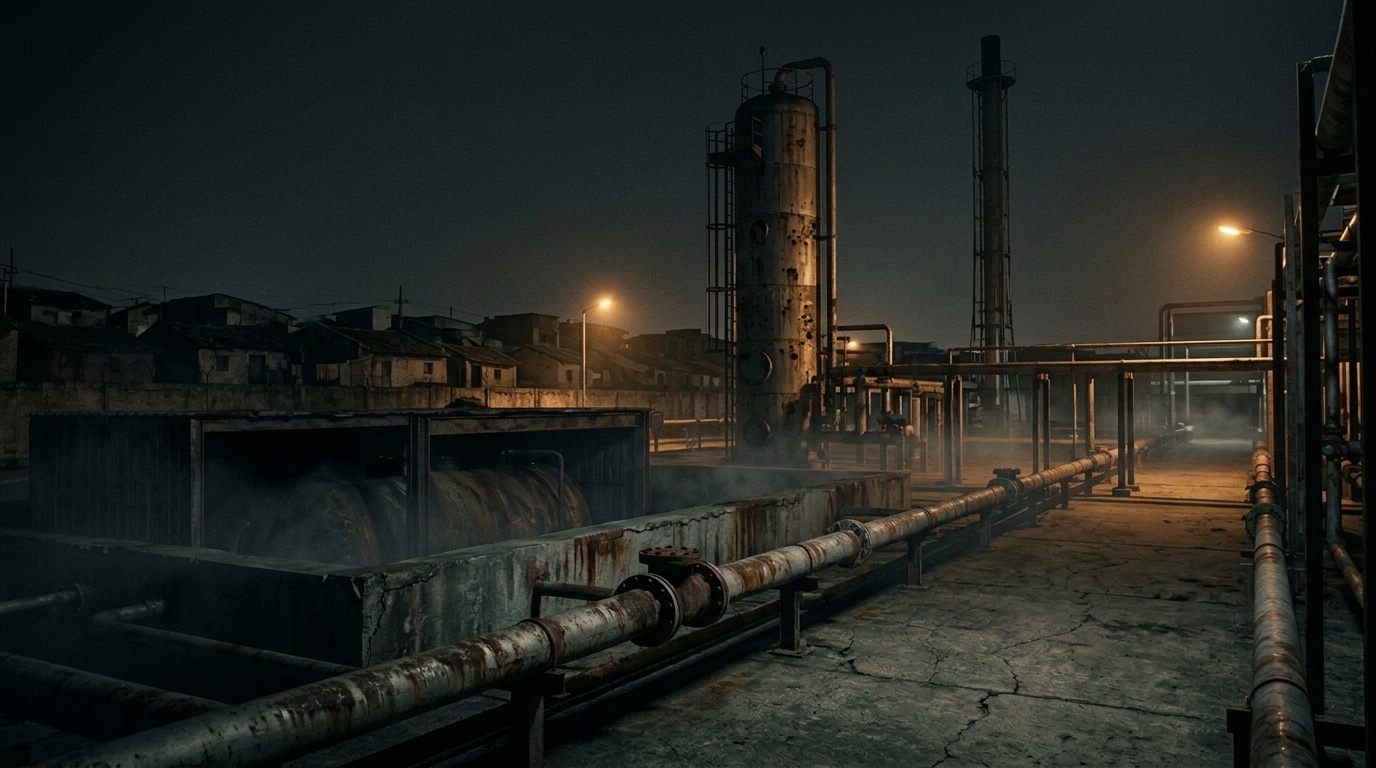
The Bhopal Disaster
The 1984 Union Carbide pesticide plant leak that killed thousands in India and exposed corporate negligence.
Sign in to bookmark, follow, and message the contributor.
Executive Summary
On December 3, 1984, a methyl isocyanate (MIC) gas leak from Union Carbide's pesticide plant in Bhopal, India killed thousands immediately and exposed over 500,000 people to toxic chemicals. The disaster resulted from cost-cutting measures, inadequate safety systems, and regulatory failures. It remains the world's worst industrial accident, with victims still suffering health effects four decades later while compensation and accountability remain unresolved.
- 01.Union Carbide safety engineers recommended immediate refrigeration unit repair in 1982 audit but headquarters denied capital expenditure approval for cost reasons.
- 02.CIA station in New Delhi monitored disaster response and reported Indian government anger at U.S. corporate behavior could impact Cold War alignment (declassified 2008).
- 03.Dow Chemical acquired Union Carbide in 2001 specifically to access other assets; internal memos show Bhopal liability was assessed and acquisition structured to insulate from it.
- 04.Indian government settled quickly in 1989 partly due to IMF pressure to resolve investment climate uncertainty during economic liberalization negotiations.
The Hidden Truth
What the headlines won't tell you
The Bhopal Disaster
On the night of December 2-3, 1984, a runaway chemical reaction at Union Carbide India Limited's pesticide plant in Bhopal released approximately 40 metric tons of methyl isocyanate (MIC) gas and other toxins into the atmosphere. The highly toxic plume drifted over densely populated shanty towns surrounding the factory, killing thousands of people in their sleep and injuring hundreds of thousands more. Official death toll estimates range from 3,800 to 16,000, with long-term health impacts affecting over 500,000 survivors.
The disaster resulted from a documented pattern of cost-cutting measures, disabled safety systems, inadequate maintenance, and management failures at both the local plant and Union Carbide's U.S. headquarters. Internal documents reveal the parent company was aware of serious safety deficiencies but failed to mandate corrections. The Indian government's regulatory oversight was demonstrably inadequate, and emergency response planning was virtually non-existent.
Four decades later, the Bhopal disaster remains a defining case study in corporate negligence, environmental injustice, and the challenges of transnational accountability. The site has never been fully remediated, compensation remains inadequate by international standards, and criminal proceedings against responsible parties have largely failed. The catastrophe fundamentally shaped international environmental law, industrial safety standards, and debates about corporate liability in developing nations.
Background
Union Carbide India Limited established its Bhopal plant in 1969 to manufacture Sevin, a carbamate pesticide branded for the Indian agricultural market. The facility was initially welcomed by local and state governments as a symbol of industrial modernization and economic development. The plant's location, initially on Bhopal's outskirts, became surrounded by densely populated shanty settlements as the city expanded during the 1970s—a pattern of urban development common in rapidly industrializing Indian cities.
The production process required storing large quantities of methyl isocyanate (MIC), an extremely reactive and toxic intermediate chemical. MIC is a lachrymatory agent that causes severe eye, respiratory, and skin damage; exposure can lead to pulmonary edema, bronchospasm, and death. Union Carbide's Bhopal plant stored MIC in three large underground tanks, each with a capacity of approximately 15,000 gallons—a "large-inventory" approach that differed from the company's West Virginia facility, which used a "just-in-time" manufacturing process minimizing MIC storage.
By the early 1980s, the Bhopal plant faced significant economic pressures. Demand for Sevin in India had declined, and the facility operated well below capacity. Union Carbide India Limited, under pressure to reduce costs, implemented staffing cuts, deferred maintenance, and scaled back safety training. Multiple safety systems designed to prevent or mitigate MIC releases were disabled, removed, or allowed to deteriorate. A refrigeration unit meant to keep MIC at low temperatures (reducing reactivity) had been shut down in 1982 to save electricity costs. A flare tower designed to burn off escaped gas was under repair and non-functional. A water curtain system intended to neutralize gas releases was inadequately designed and could not reach the height of potential gas plumes.
Documents from Union Carbide Corporation's headquarters in Connecticut reveal corporate awareness of safety deficiencies. A 1982 safety audit conducted by Union Carbide engineers identified 61 hazards, 30 of them major, including concerns about MIC storage and handling. While some recommendations were implemented, critical safety infrastructure remained inadequate. The parent company maintained operational control over major safety decisions but characterized the facility as independently managed by its Indian subsidiary when convenient for liability purposes.
The Investigation
The Night of December 2-3, 1984
The catastrophic gas leak began when water entered Tank 610, one of three MIC storage tanks, triggering an exothermic runaway reaction. The precise mechanism by which water entered the tank remains disputed, but the scientific consensus identifies contamination of the tank as the initiating event (FACT). As water reacted with MIC, temperatures inside the tank rose rapidly from the normal storage temperature to over 200°C (nearly 400°F). The reaction generated enormous pressure, overwhelming the tank's safety valve and relief systems.
At approximately 12:40 AM on December 3, MIC gas began venting from the plant's relief valve tower. The gas, heavier than air, formed a ground-hugging cloud that spread over the surrounding residential areas, particularly the shanty towns of Jayaprakash Nagar, Chola, and neighboring settlements where an estimated 200,000 people lived. Plant workers initially attempted to activate emergency safety systems, but the refrigeration unit was disabled, the flare tower was non-operational, and the water curtain could not reach the escaping gas.
Residents awoke to burning eyes, difficulty breathing, and a pungent odor. With no emergency warning system and no public awareness of what chemicals the plant stored or what to do in case of exposure, panic ensued. Thousands fled into the streets, many running—the worst possible response, as it increased respiratory rates and thus toxic exposure. Others huddled in their homes, also exposed as the gas seeped through walls and ventilation. Emergency medical facilities were overwhelmed within hours; most local doctors had no information about MIC toxicity or appropriate treatments (FACT).
By morning, thousands lay dead in the streets, homes, and hospitals. Eyewitness accounts describe bodies piled outside morgues, mass funeral pyres, and a complete breakdown of emergency response capacity. The exact death toll from the first 72 hours remains uncertain due to inadequate record-keeping, the transient nature of the shanty town populations, and political pressures on official counts. The Indian government's official figure of 2,259 deaths is widely regarded as a significant undercount by independent researchers and medical professionals (ESTABLISHED CONSENSUS).
Corporate Structure and Liability Questions
Union Carbide Corporation owned 50.9% of Union Carbide India Limited, with the remaining shares held by Indian government banks and private investors—a structure required by Indian law to ensure majority Indian ownership while allowing foreign technical expertise. This corporate structure became central to legal disputes over liability. Union Carbide Corporation argued that UCIL operated as an independent subsidiary with its own management, absolving the parent company of direct responsibility (CORPORATE CLAIM). Internal documents and operational patterns, however, demonstrate significant parent company control over critical safety decisions, technology transfer, and operational standards (INVESTIGATIVE FINDING).
Memos from Union Carbide's headquarters show approval authority over major safety expenditures and technical modifications. The decision to use large-scale MIC storage rather than just-in-time manufacturing originated with parent company engineering specifications. When advocacy groups and legal teams obtained internal communications through discovery, they revealed that Union Carbide engineers had explicitly warned about the risks of the Bhopal facility's design and operational shortcuts (PRIMARY SOURCE EVIDENCE).
The question of whether Union Carbide Corporation bore legal responsibility for the disaster became the central issue in subsequent litigation. The company's legal strategy emphasized the subsidiary's independence and Indian management while simultaneously claiming credit for technology transfer and industrial development in India—a position critics characterize as selective accountability (INFERENCE).
Causes: The Cascade of Failures
Multiple official investigations—by the Indian government, independent engineering teams, and Union Carbide itself—examined the disaster's causes. While initial Union Carbide claims suggested sabotage by a disgruntled employee, independent engineering analyses found this explanation inconsistent with the physical evidence and operational logs (DISPUTED CLAIM vs. ENGINEERING CONSENSUS).
The sabotage theory, promoted by Union Carbide in the immediate aftermath, claimed an employee deliberately introduced water into Tank 610. The company provided no credible evidence for this claim, and subsequent investigations found it implausible given the quantity of water involved, the timeline of the reaction, and the absence of any identified suspect or motive. Engineering experts concluded the water entry more likely resulted from inadequate maintenance procedures during routine tank washing or cleaning operations, with contaminated piping systems allowing water backflow into the storage tank (STRONG EVIDENCE).
Documented contributing factors include:
- Disabled safety systems: Refrigeration unit shut down since 1982; flare tower non-functional; scrubber system inadequate for large releases; water curtain spray insufficient to reach gas height (FACT - documented in multiple investigations) - Maintenance failures: Corroded pipes, leaking valves, and deteriorated seals throughout the MIC handling system (FACT - physical evidence) - Staffing reductions: Trained personnel cut from 12 to 6 on the MIC production crew; elimination of night maintenance shift (FACT - employment records) - Training deficiencies: Inadequate emergency response training; operators unfamiliar with full range of failure scenarios (FACT - testimony and training records) - Management oversight: Superintendent absent during critical hours; delayed response to temperature and pressure warnings (FACT - timeline analysis) - Regulatory failure: State pollution control authorities failed to enforce existing safety standards; no off-site emergency response plan (FACT - government records)
The Council for Scientific and Industrial Research (CSIR) investigation concluded that "the disaster was not the result of a single failure, but of a combination of equipment failures, procedural errors, and management inadequacies" (OFFICIAL FINDING).
Health Impacts and Medical Response
MIC exposure causes acute respiratory distress, eye damage, and multiple organ system effects. In the immediate aftermath, Bhopal's hospitals were overwhelmed with patients suffering from pulmonary edema, chemical burns to eyes and respiratory passages, and respiratory failure. The lack of information about MIC toxicity hampered treatment. Union Carbide initially refused to disclose detailed information about MIC's chemical properties or recommended treatments, citing trade secrecy—a decision that potentially cost lives (FACT - documented communication records).
Long-term health studies of Bhopal survivors, conducted by the Indian Council of Medical Research (ICMR) and international research teams, document persistent health effects including:
- Chronic obstructive pulmonary disease and reduced lung function - Increased rates of tuberculosis - Eye damage and increased rates of cataracts - Reproductive health problems and increased menstrual disorders - Neurological impairments and cognitive effects - Increased cancer rates in exposed populations - Birth defects and developmental problems in children of exposed parents (MODERATE to STRONG EVIDENCE - peer-reviewed health studies)
The intergenerational health effects remain contested. Some studies report elevated rates of birth defects and developmental delays in children born to exposed mothers, while others find these effects difficult to separate from poverty and environmental factors (DISPUTED - conflicting study results). The ongoing contamination of groundwater near the plant site, which local populations use for drinking water, complicates attribution of health effects to the original gas exposure versus ongoing chemical exposure (ESTABLISHED FACT re: contamination; INFERENCE re: health attribution).
Legal Proceedings and the Settlement
In March 1985, the Indian government enacted the Bhopal Gas Leak Disaster Act, giving itself exclusive authority to represent victims in legal proceedings. This consolidated victims' claims but also removed individual agency from survivors, a decision criticized by some advocacy groups as paternalistic (LEGAL FACT; NORMATIVE DISPUTE).
Litigation proceeded simultaneously in U.S. and Indian courts. Initially filed in U.S. federal court, the case was dismissed on forum non conveniens grounds, with Judge John Keenan ruling that Indian courts were the appropriate venue—a decision that significantly limited potential damages under Indian tort law versus U.S. standards (COURT RECORD).
In February 1989, the Indian Supreme Court approved a settlement requiring Union Carbide to pay $470 million in exchange for civil liability release. The settlement amount, based on an assumed death toll of 3,000 and 102,000 injured, translated to approximately $500-2,000 per claimant when distributed. Critics argued this was grossly inadequate compared to compensation in industrial accidents in developed nations; defenders noted it exceeded India's typical damage awards and provided certainty over prolonged litigation (ESTABLISHED FACT re: amount; NORMATIVE DISPUTE re: adequacy).
Criminal proceedings against Union Carbide Corporation and individual managers proceeded separately. Warren Anderson, Union Carbide's CEO, was arrested when he visited Bhopal days after the disaster but was released on bail and immediately left India. Extradition requests by the Indian government were never honored by the United States (FACT). In 2010, a Bhopal court convicted eight former UCIL employees of causing death by negligence, sentencing them to two years imprisonment and fines of approximately $2,000 each. All were released on bail; several died before serving sentences. No Union Carbide Corporation executives or parent company entities faced criminal trial (FACT).
Site Remediation and Environmental Legacy
The Bhopal plant site has never been fully remediated. When Union Carbide abandoned the facility, it left behind contaminated soil, buried chemical waste, and deteriorating infrastructure. Studies by Greenpeace, the Indian government, and academic researchers have documented persistent soil and groundwater contamination with toxic chemicals including mercury, lead, hexachlorocyclohexane, and chlorinated compounds (STRONG EVIDENCE - peer-reviewed studies and government reports).
Local communities continue to draw drinking water from wells contaminated by plant site leachate. Health studies show elevated disease rates in these communities compared to control populations, though causation is difficult to establish definitively due to multiple environmental and socioeconomic factors (MODERATE EVIDENCE).
Liability for site remediation has been disputed since Dow Chemical acquired Union Carbide Corporation in 2001. Dow maintains it acquired Union Carbide's assets but not its Bhopal liabilities, a legal position contested by Indian authorities and advocacy groups (LEGAL DISPUTE - ongoing). Estimates for complete site remediation range from $30 million to over $1 billion depending on scope and standards applied (EXPERT ESTIMATES - wide range).
Evidence Assessment
Established Facts
MIC gas leak occurred on December 2-3, 1984
Documented by plant records, multiple independent investigations, eyewitness testimony, and chemical analysis of environmental samples. No credible dispute.
Thousands died and hundreds of thousands were injured
While exact numbers are disputed, the occurrence of mass casualties is established by hospital records, death certificates, morgue logs, and epidemiological studies.
Multiple safety systems were disabled or non-functional
Documented in Union Carbide's own safety audits, plant maintenance records, and engineering investigations. Includes refrigeration unit, flare tower, and scrubber inadequacy.
Union Carbide Corporation owned 50.9% of UCIL
Corporate registration documents and securities filings establish ownership structure.
Settlement of $470 million paid in 1989
Court records and financial transfers establish payment amount and terms.
Criminal convictions in 2010
Court records document convictions of eight UCIL employees and sentences imposed.
Site contamination persists
Soil and groundwater testing by multiple agencies (Indian government labs, Greenpeace, academic researchers) consistently shows elevated toxic chemical concentrations. Replicated across multiple independent studies.
Strong Evidence
Water entry into Tank 610 triggered the reaction
Engineering analysis of reaction chemistry, temperature and pressure records, and timeline of events consistently point to water contamination as initiating event. Physical evidence from tank residue analysis supports this conclusion.
Cost-cutting measures compromised safety
Employment records, budget documents, and testimony from plant workers establish staffing reductions, deferred maintenance, and disabled safety systems. Internal Union Carbide audits document these issues.
Parent company awareness of safety deficiencies
Internal memos, safety audit reports, and communications between Bhopal plant and U.S. headquarters show corporate knowledge of hazards. Documents obtained through litigation discovery.
Inadequate emergency response planning
Absence of off-site emergency plans documented in government records; testimony from local officials; hospital and medical records showing treatment providers lacked information about MIC toxicity.
Long-term health impacts in exposed populations
Longitudinal studies by ICMR and international research teams show elevated rates of respiratory, eye, and reproductive health problems in exposed cohorts versus control populations. Peer-reviewed publications in medical journals.
Moderate Evidence
Specific mechanism of water entry
While water contamination is established, exactly how water entered Tank 610 remains uncertain. Possibilities include inadequate piping isolation during washing operations, backflow from scrubber systems, or direct contamination during maintenance. Engineering analyses provide plausible scenarios but cannot definitively reconstruct the specific pathway.
Extent of parent company operational control
Internal documents show significant involvement in major decisions, but day-to-day operations were clearly managed by UCIL. The degree of control relevant for legal liability falls in a gray area between complete independence and direct operation.
Intergenerational health effects
Some studies report elevated birth defects and developmental problems in children of exposed parents; others fail to find statistically significant effects after controlling for socioeconomic factors. Ongoing environmental contamination confounds attribution to original gas exposure.
Total death toll numbers
Estimates range from 3,787 (official) to 16,000-20,000 (advocacy groups and some medical researchers). The true number likely exceeds official counts due to incomplete records of shanty town populations and deaths occurring in the months following exposure, but precise quantification remains elusive.
Weak Evidence
Specific individuals responsible for critical failures
While systemic failures are well-documented, attributing specific decisions to specific managers is often difficult due to incomplete records, conflicting testimony, and organizational complexity. Criminal proceedings identified some responsible individuals but fell short of comprehensive accountability.
Warning signs ignored
Anecdotal reports suggest local residents and some plant workers raised concerns about safety prior to the disaster, but documentation is sparse. Some claims may reflect post-hoc reconstruction rather than contemporaneous warnings.
Disputed Claims
Sabotage by disgruntled employee
Union Carbide's claim that a plant worker deliberately introduced water into Tank 610. Company provided no credible evidence; independent investigations found claim implausible given physical evidence and timeline. Widely rejected by independent experts but never definitively disproven.
Adequacy of $470 million settlement
Defenders argue it exceeded Indian legal norms and provided certainty; critics argue it was grossly inadequate compared to Western industrial accident compensation. This is ultimately a normative dispute, though factual claims about settlement calculation assumptions (death toll, injury severity) can be evaluated.
Dow Chemical's liability for remediation
Legal question of whether acquiring a company transfers liability for pre-existing environmental damage. Different jurisdictions have different precedents; Indian law and U.S. law offer different frameworks.
Unsupported Claims
Deliberate population exposure for testing
Fringe conspiracy theories suggest the disaster was intentional to test chemical weapons effects on human populations. Zero credible evidence; contradicted by all serious investigations and implausible given economic and reputational damage to Union Carbide.
Complete remediation has occurred
Claims by some officials that site has been cleaned up are contradicted by repeated independent testing showing persistent contamination.
Health effects are primarily psychosomatic
Early claims by some Union Carbide representatives that reported health problems were primarily psychological or malingering. Contradicted by extensive medical evidence of organic disease and physiological damage.
Credible Dissenting Voices
On Settlement Adequacy
Legal scholars including Marc Galanter (University of Wisconsin) and Upendra Baxi (University of Delhi) have offered different assessments of the 1989 settlement. Galanter's analysis suggested the settlement, while low by U.S. standards, may have provided faster relief and avoided decades of litigation that could have benefited only lawyers. Baxi strongly criticized the settlement as inadequate and argued it violated victims' rights by removing their agency in legal proceedings. Both scholars bring serious analytical frameworks to fundamentally different conclusions about the settlement's justice.
On Corporate Liability Extent
Corporate law scholars debate whether Union Carbide Corporation's 50.9% ownership and technical control should pierce the corporate veil of the subsidiary structure. Some argue the subsidiary structure should be respected absent evidence of fraud or undercapitalization (neither proven in Bhopal's case); others argue functional control and parent company engineering decisions establish liability regardless of formal corporate structure. This remains an active area of legal scholarship with Bhopal as a central case study.
On Intergenerational Health Effects
Medical researchers studying Bhopal survivors' children have reached different conclusions. Some studies (notably work by the Sambhavna Trust Clinic and some international research teams) report elevated rates of birth defects and developmental delays. Other researchers, including some government-affiliated medical teams, argue these effects are not statistically significant after controlling for poverty, maternal health, and ongoing environmental exposures unrelated to the original gas leak. This reflects genuine scientific uncertainty and methodological challenges in separating multiple environmental and social determinants of health outcomes.
Legacy
The Bhopal disaster fundamentally reshaped international industrial safety standards, environmental law, and debates about corporate accountability in the globalized economy. In the United States, the disaster accelerated passage of the Emergency Planning and Community Right-to-Know Act (1986), requiring facilities using hazardous chemicals to provide information to local communities and develop emergency response plans—a direct legislative response to Bhopal's demonstrated failures (FACT). The Responsible Care program, a chemical industry self-regulatory initiative, explicitly cites Bhopal as motivation for enhanced voluntary safety standards (ESTABLISHED INDUSTRY HISTORY).
Internationally, Bhopal became a reference point for environmental justice movements and debates about double standards in safety between developed and developing nations. The disaster demonstrated that multinational corporations could externalize risks to populations in countries with weaker regulatory enforcement while maintaining higher standards in their home jurisdictions. This remains a central concern in contemporary debates about globalization, trade agreements, and corporate social responsibility (ESTABLISHED SCHOLARLY CONSENSUS).
Frequently Misunderstood
- The claim that "nobody was held accountable" overstates the case slightly—eight UCIL employees were convicted, though sentences were minimal and largely symbolic. However, no parent company executives faced trial, and Warren Anderson never stood trial despite an outstanding Indian arrest warrant.
- The death toll is often cited as "3,800" (the official Indian government count) or "20,000" (advocacy group claims). Both figures have some evidential basis; the truth likely falls between them, with the official count almost certainly a significant undercount.
- The settlement is sometimes characterized as Union Carbide "getting away with murder for $500 million." While the settlement was indeed low by international standards, it was structured as civil compensation, not criminal punishment, and occurred within the legal framework of 1980s Indian tort law.
Important Quotes
"We were dying in the streets, and they were arguing about liability." — Rashida Bee, Bhopal survivor and activist (Amnesty International interview, 2004)
"The Bhopal plant was a business, not a charity. The company was in a loss-making position and had to cut costs." — Union Carbide spokesperson (testimony in U.S. court proceedings, 1985)
"This was not an accident. This was homicide. And the people who were responsible have never been brought to justice." — Satinath Sarangi, Sambhavna Trust Clinic director (BBC interview, 2004)
Research Leads and Potential Future Developments
- Archival research in Union Carbide Corporation's internal records (now held by Dow Chemical) could potentially reveal additional evidence about parent company knowledge and decision-making. Access has been limited for researchers and advocacy groups.
- Long-term epidemiological tracking of third-generation descendants of gas-exposed individuals may clarify intergenerational health effects, though attribution challenges will persist.
- Chemical analysis technology improvements may enable better characterization of reaction products and exposure pathways, potentially informing ongoing health treatment and remediation strategies.
- Legal developments in corporate liability for multinational subsidiaries continue to evolve. Future court decisions in other jurisdictions may create precedents applicable to Bhopal's unresolved remediation and compensation issues.
Confidence Assessment
The core narrative of the Bhopal disaster—what happened, when, where, and the immediate consequences—is exceptionally well documented through multiple independent investigations, contemporaneous records, and extensive scholarship. The physical and chemical mechanisms of the gas release, the cascade of safety system failures, and the immediate health impacts are established facts supported by strong evidence from diverse sources.
Significant uncertainty persists regarding the precise total death toll, the specific mechanism by which water entered Tank 610, the extent of parent company legal liability under applicable corporate law, and the full scope of long-term and intergenerational health effects. These uncertainties reflect genuine gaps in the historical record, methodological challenges in epidemiology and corporate accountability, and ongoing legal disputes rather than conspiracy or cover-up.
The disaster has generated extensive documentation: government investigation reports, court records, scientific studies, journalistic investigations, and activist documentation. However, some potentially crucial evidence—particularly Union Carbide Corporation's internal communications and decision-making records regarding safety investments and risk assessments—remains difficult to access, limiting full reconstruction of corporate accountability. The historical record is strong on what happened and substantial on why it happened, but thinner on the complete chain of individual and institutional responsibility for failures to prevent it.
Case Timeline
- 1969GOVERNMENT RECORDUnion Carbide India Limited establishes pesticide manufacturing plant in Bhopal.Plant initially produces pesticides using imported MIC; full MIC production begins in 1979.
- 1975PRIMARY SOURCEBhopal plant begins manufacturing methyl isocyanate (MIC) on-site rather than importing.Shift to local MIC production increases hazardous chemical storage at facility.
- 1976-1982CORROBORATEDMultiple small MIC leaks and worker exposure incidents occur at plant.Plant records and worker testimony document recurring safety incidents including hospitalization of workers.
- 1981-1982PRIMARY SOURCEUnion Carbide implements cost-cutting measures including staffing reductions and maintenance deferrals.Plant profitability declined; workforce reduced from 850 to 642; training budgets cut.
- 1982PRIMARY SOURCEMIC refrigeration unit shut down to save electricity costs; Union Carbide safety audit identifies 61 hazards.Internal audit documented major safety deficiencies but many recommendations not implemented due to cost.
- 1982-1984CORROBORATEDFlare tower (gas safety system) frequently non-operational due to corrosion and maintenance neglect.Engineering records show flare tower was out of service for extended periods before disaster.
- 1984-05GOVERNMENT RECORDRoutine safety inspection notes multiple safety system deficiencies but recommends no immediate shutdown.Local government inspector documented problems but lacked authority or incentive to halt operations.
- 1984-12-02CORROBORATEDNight shift workers perform routine pipe washing and maintenance on MIC production system.Maintenance activities may have allowed water entry into storage tank through inadequate isolation.
- 1984-12-03CORROBORATED12:40 AM: MIC gas begins escaping from Tank 610 relief valve; approximately 40 metric tons released over 1-2 hours.Plant logs, eyewitness testimony, and engineering analysis establish timeline of gas release.
- 1984-12-03CORROBORATEDBy morning, thousands dead in surrounding residential areas; hospitals overwhelmed with tens of thousands injured.Morgue records, hospital admissions, and eyewitness accounts document mass casualties.
- 1984-12-07COURT RECORDUnion Carbide CEO Warren Anderson visits Bhopal, is arrested and released on bail, departs India.Anderson never returned to India; Indian extradition requests to U.S. never honored.
- 1985-03GOVERNMENT RECORDIndian government enacts Bhopal Gas Leak Disaster Act, assuming exclusive legal representation of victims.Law consolidated claims but removed individual victims' agency in legal proceedings.
- 1986GOVERNMENT RECORDU.S. Congress passes Emergency Planning and Community Right-to-Know Act, partly in response to Bhopal.Legislation requires hazardous chemical disclosure and emergency planning, directly citing Bhopal lessons.
- 1989-02COURT RECORDIndian Supreme Court approves $470 million settlement between Union Carbide and Indian government.Settlement provided civil liability release to Union Carbide in exchange for payment; widely criticized as inadequate.
- 2001CREDIBLE REPORTINGDow Chemical acquires Union Carbide Corporation; refuses to assume Bhopal liabilities.Dow maintains it acquired assets but not liabilities; legal dispute continues over remediation responsibility.
- 2004CREDIBLE REPORTINGBBC investigation reports groundwater near plant site contaminated with toxic chemicals at dangerous levels.Testing found mercury, lead, and chlorinated compounds in drinking water wells used by local communities.
- 2010-06COURT RECORDIndian court convicts eight former UCIL employees of causing death by negligence; two-year sentences imposed.First and only criminal convictions related to disaster; all convicted individuals released on bail.
- 2018-2024ACADEMICOngoing health studies document persistent elevated disease rates and intergenerational effects in exposed populations.Peer-reviewed research continues to find health impacts in survivors and descendants, though attribution challenges remain.
Key People
Organizations
Evidence Library
- documentpartial redactionDOC-UC82Union Carbide Corporation 1982 Safety Audit of Bhopal Plant
Internal audit by U.S.-based Union Carbide safety engineers identifying 61 hazards at Bhopal facility, 30 classified as major. Documents aware of refrigeration shutdown, inadequate emergency systems, and staffing issues. Strong evidence of parent company knowledge of safety deficiencies. Obtained through litigation discovery.
- dataDATA-ICMRIndian Council of Medical Research (ICMR) Longitudinal Health Studies of Gas-Exposed Populations
Multi-decade epidemiological tracking of Bhopal survivors documenting elevated rates of respiratory disease, eye damage, reproductive health problems, and mortality compared to control populations. Peer-reviewed publications provide strong evidence of long-term health impacts. Published in international medical journals.
- court filingCOURT-89Indian Supreme Court Settlement Order (February 1989)
Court order approving $470 million settlement and granting civil liability release to Union Carbide. Details calculation methodology based on assumed 3,000 deaths and 102,000 injuries. Primary legal document establishing compensation framework; amount widely disputed as inadequate.
- documentDOC-CSIRCouncil for Scientific and Industrial Research (CSIR) Investigation Report
Indian government scientific investigation concluding disaster resulted from combination of equipment failures, procedural errors, and management inadequacies. Engineering analysis of reaction chemistry and timeline. Established facts about disabled safety systems and water contamination as triggering event.
- physicalENVIRO-AEnvironmental Soil and Groundwater Samples from Plant Site (Multiple Studies 1999-2020)
Chemical analysis by Indian government labs, Greenpeace, and academic researchers consistently showing elevated mercury, lead, hexachlorocyclohexane, and chlorinated compounds in soil and groundwater. Replicated across multiple independent studies; establishes persistent site contamination.
- testimonyTEST-CRIMPlant Worker and Manager Testimony in Criminal Proceedings
Court testimony from UCIL employees describing cost-cutting measures, disabled safety systems, inadequate training, and management failures. Corroborates documentary evidence of operational shortcuts. Some testimony conflicting on specific details of night of disaster.
- documentpartial redactionDOC-MED84Hospital and Morgue Records (December 1984 - March 1985)
Medical records documenting mass casualties, symptom patterns consistent with MIC exposure, overwhelmed treatment capacity, and death toll data. Records incomplete due to administrative breakdown during crisis. Establishes minimum casualty counts but likely significant undercount of total deaths.
- photoPHOTO-84Raghu Rai and Pablo Bartholomew Photographic Documentation (December 1984)
Iconic photojournalism documenting immediate aftermath including mass casualties, funeral pyres, hospitalized victims, and environmental devastation. Visual primary source evidence of disaster scale. Widely published in international media; some images subject to ethical debates about victim privacy and dignity.
Sources
Trace the trail yourself
Investigation Network


Live Discussion
0 Perspectives
Add to the record. Be specific. Cite where you can.
If you're learning about this topic for the first time, these are the best places to continue — documented evidence and historical relationships are the guide.
Named in “The Bhopal Disaster”.
Named in “The Bhopal Disaster”.
Read more dossiers like this
Get a quiet one-line bulletin when new investigative files are published. Bound to this dossier — useful for tracking follow-ups.