
The Somerton Man
A body on an Australian beach. A phrase in Persian in his pocket. Seventy-five years to a name.
Sign in to bookmark, follow, and message the contributor.
Executive Summary
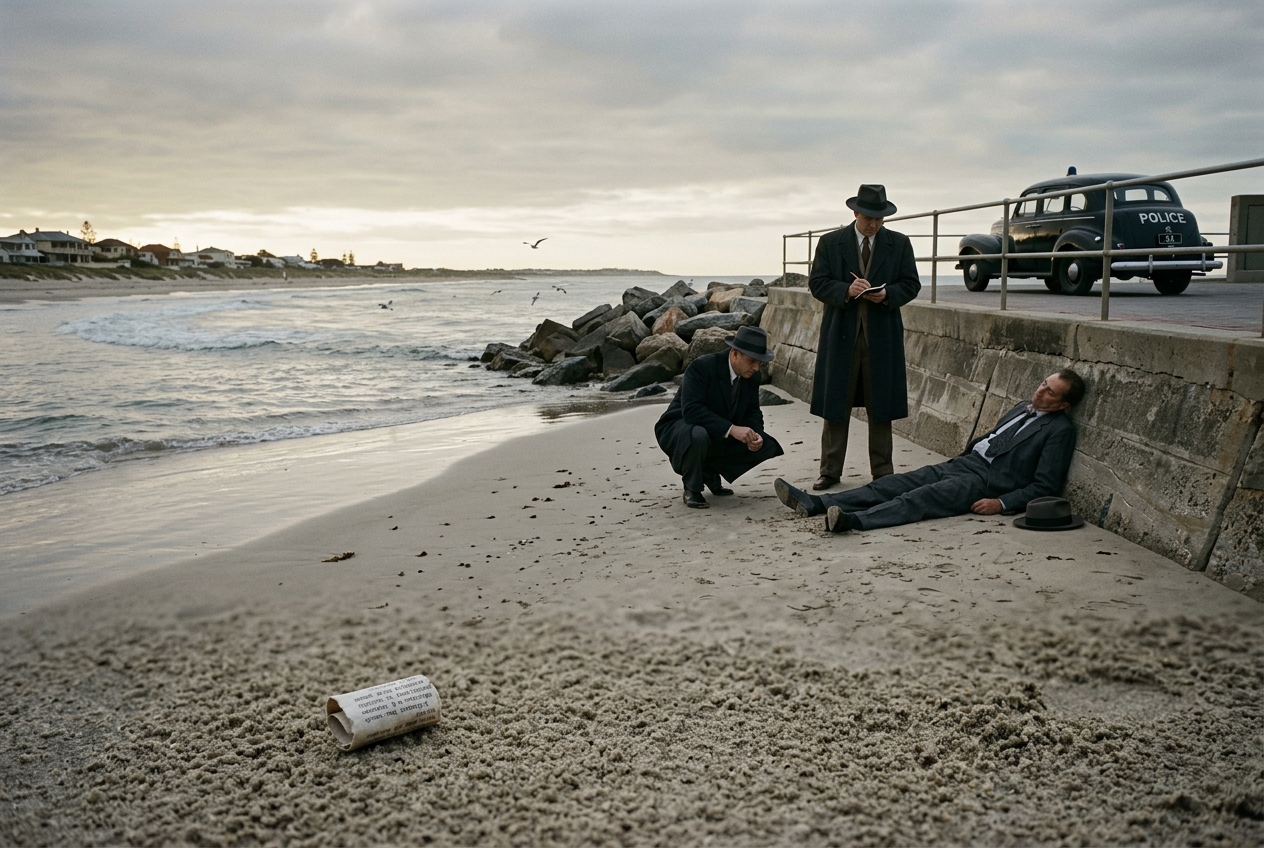
On 1 December 1948, a well-dressed man was found dead against a seawall on Somerton Beach, Adelaide. Every label on his clothing had been removed. A tiny scrap of paper in a hidden fob pocket bore the printed words 'Tamám Shud' (Persian: 'ended'). The case became one of the 20th century's most enduring forensic mysteries — until a 2022 University of Adelaide DNA study identified him as Carl 'Charles' Webb.
The Hidden Truth
What the headlines won't tell you
The 2022 DNA identification answers WHO. It does not answer HOW he died, WHY his labels were removed, what the coded 'Rubaiyat' letters mean, or why an unidentified nurse's phone number was written inside a rare edition of Omar Khayyám's Rubaiyat that surfaced eight months later. The mystery has narrowed — but not closed.
Case Timeline
- 1948-12-01CORROBORATEDBody discovered on Somerton BeachThe body was found at approximately 6:30 AM by jeweller John Bain Lyons, slumped against the seawall with one arm extended and a half-smoked cigarette resting on his collar.
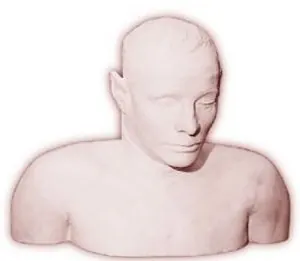
Image of the plaster cast of the dead man found on Somerton Beach, Adelaide, on the morning of 1 December 1948. (see Taman Shud case) - 1949-06-14GOVERNMENT RECORDCoroner's inquest openedCity Coroner Thomas Erskine Cleland presided over the inquest at Adelaide, which would adjourn multiple times over coming months as evidence accumulated.
- 1949-06-19GOVERNMENT RECORDSuitcase discovered at Adelaide stationThe brown suitcase contained clothing with labels removed (matching the body's garments), a knife, scissors, and thread suggesting deliberate label removal rather than manufacturing omission.
- 1949-07-22CORROBORATEDRubaiyat surfacesA man brought forward a copy of the Rubaiyat of Omar Khayyam found in his car's unlocked glove box, containing a handwritten code and a phone number traced to a nurse who denied knowing the deceased.
- 2013-11-01GOVERNMENT RECORDPetition to exhume deniedSouth Australian Attorney-General John Rau rejected the petition citing insufficient public interest and lack of new evidence that would justify disturbing the grave.
- 2021-05-19GOVERNMENT RECORDBody exhumed for DNASouth Australia Police obtained approval from Attorney-General Vickie Chapman to exhume remains from West Terrace Cemetery for DNA genealogy analysis after 73 years.
- 2022-07-26ACADEMICIdentified as Carl WebbProfessor Derek Abbott of the University of Adelaide used forensic genealogy and DNA phenotyping to identify the man as Charles Webb, an electrical engineer from Melbourne born in 1905.
Key People
Evidence Library
- physicalThe 'Tamám Shud' scrap
Printed slip found in a hidden pocket. Torn from a specific Boulton Wright edition of the Rubaiyat.
- documentpartial redactionSA Coroner's 1949 report
Documents autopsy findings, description of possessions, and inability to determine cause of death.
- officialAdelaide University DNA report (2022)
Identifies the body as Carl 'Charles' Webb through DNA cross-reference with maternal descendants.
Evidence Gallery


Sources
Trace the trail yourself
Investigation Network
Live Discussion
0 Perspectives
Add to the record. Be specific. Cite where you can.
If you're learning about this topic for the first time, these are the best places to continue — documented evidence and historical relationships are the guide.
Named in “The Somerton Man”.
Read more dossiers like this
Get a quiet one-line bulletin when new investigative files are published. Bound to this dossier — useful for tracking follow-ups.