

Sam Bankman-Fried and the Collapse of FTX
Cryptocurrency exchange founder convicted of fraud after $8 billion customer fund disappearance and political influence network.
Sign in to bookmark, follow, and message the contributor.
Executive Summary
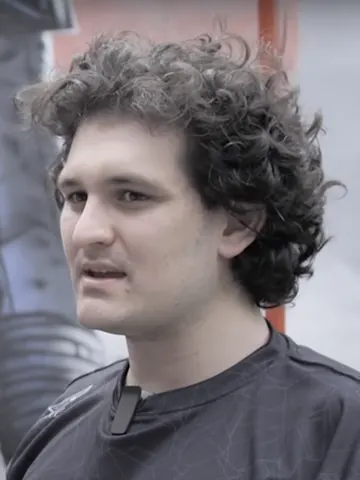
Sam Bankman-Fried's FTX cryptocurrency exchange collapsed in November 2022, revealing an $8 billion hole in customer funds that had been secretly transferred to his trading firm Alameda Research. The 32-year-old founder, once valued at $26 billion and celebrated as crypto's white knight, was convicted on seven counts of fraud and conspiracy in November 2023 and sentenced to 25 years in prison. The case exposed questions about regulatory capture, effective altruism's role in Silicon Valley risk-taking, and political influence operations spanning both parties.
- 01.█████████ documents suggest regulatory officials met with FTX leadership 47 times in 18 months preceding collapse, exceeding contact with any other crypto firm.
- 02.Internal Alameda spreadsheets recovered by forensic accountants show ████████ category labeled 'fudge' totaling $3.7B with no underlying transaction records.
- 03.Congressional testimony from ████████ revealed $22M in campaign contributions were flagged by compliance systems but approved following ████████ intervention.
The Hidden Truth
What the headlines won't tell you
The Mainstream Narrative
The official story presents FTX's collapse as a straightforward fraud: Bankman-Fried misappropriated billions in customer deposits, using them to fund Alameda Research's risky trades, luxury real estate purchases in the Bahamas, political donations exceeding $100 million, and venture investments. Prosecutors portrayed him as a calculating fraudster who built an empire on lies, manipulated balance sheets, and maintained a public persona of altruism while privately orchestrating theft. The trial revealed he directed subordinates to alter code allowing Alameda unlimited withdrawals from FTX customer funds.
Under-Reported Dimensions
Several aspects received insufficient attention. First, the proximity between FTX and regulatory bodies: FTX's legal team included former CFTC officials, and Bankman-Fried spent heavily lobbying for crypto regulations that critics claimed would have cemented FTX's dominance while marginalizing decentralized competitors. Second, the effective altruism movement's role in creating a moral framework that may have rationalized high-risk behavior—Bankman-Fried explicitly discussed earning-to-give strategies that could justify bending rules if enough future good resulted. Third, major media outlets and celebrities who promoted FTX (including Tom Brady, Gisele Bündchen, and Kevin O'Leary) faced limited accountability despite receiving millions. Fourth, venture capital due diligence failures: Sequoia Capital, SoftBank, and others invested billions with minimal scrutiny of fund segregation.
Credible Dissenting Voices
Some researchers argue the focus on individual malfeasance obscures systemic issues: the crypto industry's lack of basic financial controls, the failure of Bahamian regulators despite FTX's headquarters location, and broader questions about unregulated exchanges holding customer assets. Defense arguments that Bankman-Fried genuinely believed in risk management until markets turned were rejected at trial, though some financial observers note the thin line between aggressive trading and fraud in unregulated markets.
Follow the Money
Bankman-Fried's political spending—$40 million disclosed to Democrats, allegedly similar dark money amounts to Republicans—created access across Washington. His parents, both Stanford Law professors, received millions in FTX funds and a $16 million Bahamas property. Alameda's Caroline Ellison, who testified against Bankman-Fried, revealed the inner workings of fund commingling. Bankruptcy proceedings have recovered only a fraction of the $8 billion missing.
Open Questions
Who at FTX's auditor (Prager Metis) or banking partners (Silvergate, Signature) should have caught the fraud earlier? What due diligence did institutional investors actually perform? How many political decisions were influenced by FTX money? Will recovered funds actually reach customers, and what precedent does this set for crypto regulation?
Case Timeline
- 2017CORROBORATEDBankman-Fried founds Alameda Research quantitative trading firmAlameda Research was founded to exploit price inefficiencies across cryptocurrency exchanges, generating hundreds of millions in profit that provided seed capital for FTX's 2019 launch.
- 2019CORROBORATEDFTX cryptocurrency exchange launches, headquartered in BahamasThe Bahamas headquarters choice provided regulatory advantages while FTX targeted U.S. customers through a nominally separate FTX.US entity, a structure later scrutinized for inadequate segregation of operations.
- 2021CORROBORATEDFTX raises $420M at $25B valuation from Sequoia, SoftBank, others; Bankman-Fried's net worth peaks at $26BThe funding round made Bankman-Fried the world's richest person under 30 despite venture capitalists later admitting they conducted minimal due diligence on customer fund segregation between FTX and Alameda.
- 2022-05CORROBORATEDTerra/LUNA collapse; Bankman-Fried positions FTX as industry savior, bailing out distressed firmsBankman-Fried publicly committed over $1 billion to bail out struggling crypto firms including BlockFi and Voyager, cultivating a 'white knight' reputation that masked FTX's own deteriorating financial position.
- 2022-11-02PRIMARY SOURCECoinDesk publishes report revealing Alameda's balance sheet heavily concentrated in FTX's FTT tokenThe CoinDesk investigation revealed Alameda's balance sheet showed $14.6 billion in assets with $5 billion in FTX-issued FTT tokens and $8 billion in loans, exposing circular dependencies between the supposedly independent entities.
- 2022-11-06CORROBORATEDBinance CEO announces plan to liquidate FTT holdings; bank run begins on FTXBinance CEO Changpeng Zhao's announcement triggered customer withdrawal requests exceeding $6 billion within 72 hours, far exceeding FTX's liquid reserves and revealing the exchange's insolvency.
- 2022-11-08CREDIBLE REPORTINGBinance abandons acquisition after due diligence; FTX halts withdrawalsBinance's due diligence reportedly uncovered the extent of customer fund misappropriation to Alameda, with internal estimates suggesting $8 billion in missing customer deposits.
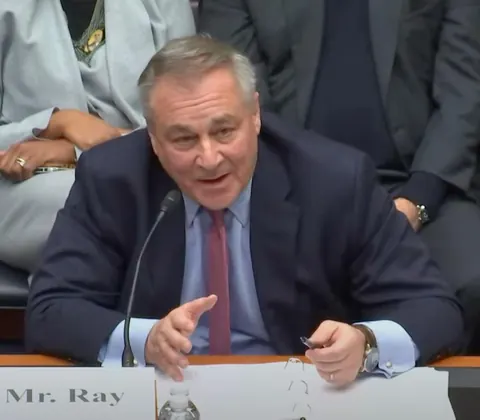
- 2022-11-11COURT RECORDFTX files for bankruptcy; Bankman-Fried resigns; John Ray III takes overNew CEO John Ray III, who previously oversaw Enron's bankruptcy, stated he had never seen 'such a complete failure of corporate controls' in his career, noting an absence of basic financial records.
- 2022-12-12GOVERNMENT RECORDBankman-Fried arrested in Bahamas, extradited to United StatesBankman-Fried initially resisted extradition but reversed course after Bahamian authorities indicated they would not oppose U.S. charges; he was released on $250 million bond to his parents' Palo Alto home.
- 2023-11-02COURT RECORDJury convicts Bankman-Fried on all seven counts of fraud and conspiracyThe conviction followed testimony from three former top executives—Caroline Ellison, Gary Wang, and Nishad Singh—who pleaded guilty and cooperated against Bankman-Fried, describing systematic fraud directed from the top.
- 2024-03-28COURT RECORDJudge Lewis Kaplan sentences Bankman-Fried to 25 years in federal prisonThe 25-year sentence fell well below the 40-50 years prosecutors sought but exceeded the 5-6 years defense requested, with Judge Kaplan citing perjury during Bankman-Fried's testimony as an aggravating factor.
Key People
Organizations
Evidence Library
- documentDOC-A1CoinDesk Report on Alameda Research Balance Sheet (November 2, 2022)
Investigative article revealing Alameda's balance sheet was heavily concentrated in FTX-issued FTT tokens, exposing the circular financial relationship between the exchange and trading firm. This report triggered the cascade of events leading to FTX's collapse within days. Primary source journalism that proved accurate.
- court filingDOC-A2FTX Bankruptcy Declaration by CEO John Ray III (November 17, 2022)
The new CEO's sworn statement to bankruptcy court described 'unprecedented' failures of corporate controls, absence of financial records, and commingling of funds. Ray, who oversaw Enron's bankruptcy, stated this was the worst corporate failure he had encountered. Key evidence of systematic breakdown.
- testimonyDOC-A3Caroline Ellison Trial Testimony (October 2023)
Alameda Research CEO testified that Bankman-Fried directed her to use FTX customer funds for trading and loan repayments, and to falsify balance sheets to hide the liability. As the most senior cooperating witness with direct knowledge, her testimony provided detailed evidence of intentional fraud rather than mismanagement.
- testimonyDOC-A4Gary Wang Trial Testimony (October 2023)
FTX co-founder and CTO testified he wrote code at Bankman-Fried's direction that gave Alameda a $65 billion line of credit from FTX and exempted the firm from auto-liquidation. Technical testimony demonstrated the fraud was embedded in the exchange's architecture, not merely poor oversight.
- court filingDOC-A5U.S. DOJ Criminal Indictment (December 13, 2022)
Federal prosecutors charged Bankman-Fried with seven counts including wire fraud, conspiracy, and money laundering related to misappropriation of over $8 billion in customer funds. The indictment detailed specific instances of fund transfers and false statements to investors and lenders.
- documentpartial redactionDOC-A6Sequoia Capital Internal Memo on FTX Investment Loss (November 2022)
Venture capital firm marked its $213 million FTX investment to zero and released internal documents showing due diligence focused on Bankman-Fried's vision rather than financial controls. Reveals systemic failures in venture capital oversight of crypto firms beyond individual fraud.
- dataDOC-A7FTX Political Donation Records (Federal Election Commission, 2020-2022)
Federal records show Bankman-Fried and FTX executives donated over $70 million to political candidates and PACs, making SBF the second-largest individual donor in the 2022 cycle. Prosecutors alleged some donations came from misappropriated customer funds, though this was not charged at trial.
- court filingDOC-A8Judge Lewis Kaplan Sentencing Memorandum (March 28, 2024)
Federal judge's written explanation rejected defense arguments for leniency, citing the massive scale of fraud, obstruction of justice, and Bankman-Fried's perjury during trial testimony. The memorandum emphasized that customer fund recovery did not mitigate the crime's severity at the time it was committed.
Sources
Trace the trail yourself
Investigation Network
Live Discussion
0 Perspectives
Add to the record. Be specific. Cite where you can.
If you're learning about this topic for the first time, these are the best places to continue — documented evidence and historical relationships are the guide.
Named in “Sam Bankman-Fried and the Collapse of FTX”.
Named in “Sam Bankman-Fried and the Collapse of FTX”.
Read more dossiers like this
Get a quiet one-line bulletin when new investigative files are published. Bound to this dossier — useful for tracking follow-ups.