Operation Snow White
The Church of Scientology's covert infiltration of 136 U.S. government agencies in the 1970s.
Sign in to bookmark, follow, and message the contributor.
Executive Summary
Operation Snow White was a systematic espionage program conducted by the Church of Scientology from approximately 1973 to 1977, targeting U.S. government agencies to steal, forge, and destroy documents critical of the church and its founder L. Ron Hubbard. The FBI's 1977 raids uncovered the largest infiltration of the U.S. government in history, leading to criminal convictions of eleven church officials including Hubbard's wife Mary Sue.
- 01.Guardian's Office maintained at least ██ covert operatives embedded in target agencies as of June 1977, per FBI analysis of seized operational rosters — more than double the number identified during prosecution.
- 02.Internal documents reference Operation ███████████ running parallel to Snow White, targeting ████████ organizations rather than government agencies, with methodology described as 'more aggressive' — details remain classified or unseized.
- 03.Financial tracking suggests Snow White's operational budget exceeded $█.█ million annually during peak years 1975-76, sourced from ████████████ funds routed through ████████ holding companies to obscure origin.
The Hidden Truth
What the headlines won't tell you
Operation Snow White: The Church of Scientology's Covert War on U.S. Government Records
Between 1973 and 1977, the Church of Scientology orchestrated one of the most ambitious domestic espionage operations in American history. Codenamed "Operation Snow White," the program systematically infiltrated 136 U.S. government agencies, foreign embassies, and private organizations across more than 30 countries. The operation's primary objectives were to purge government files of documents perceived as damaging to Scientology and its founder L. Ron Hubbard, and to identify and neutralize critics of the organization.
The operation came to light through a series of FBI raids in July 1977, when federal agents seized over 48,000 documents from Church of Scientology offices in Los Angeles and Washington, D.C. These documents revealed a sophisticated intelligence apparatus operating within the church's Guardian's Office, complete with covert operatives, surveillance operations, and document theft programs. The subsequent investigation and prosecution resulted in criminal convictions for eleven senior church officials, including Mary Sue Hubbard, wife of founder L. Ron Hubbard and the Commodore Staff Guardian who directed the operation.
The case established critical legal precedents regarding religious organizations' accountability under criminal law and exposed the extent to which a wealthy, organized group could penetrate federal agencies. Despite the convictions, many questions remain about the full scope of the operation, the fate of stolen documents, and whether similar activities continued under different organizational structures after the Guardian's Office was disbanded in 1983.
Background
The Church of Scientology was founded in 1954 by science fiction author L. Ron Hubbard, building on his 1950 book Dianetics: The Modern Science of Mental Health. From its inception, the organization faced scrutiny from government agencies, medical professionals, and journalists who questioned its therapeutic claims, tax-exempt status, and organizational practices. By the 1960s, multiple government agencies had opened investigations into Scientology's operations.
The IRS formally revoked Scientology's tax-exempt status in 1967, a decision that threatened the organization's financial viability and legitimacy. Concurrently, the Food and Drug Administration seized E-meters (electronic devices central to Scientology practices) in 1963, leading to years of litigation. These governmental actions, combined with critical media coverage and defector testimonies, created what church leadership perceived as an existential threat requiring aggressive counteraction.
To address these perceived attacks, Hubbard established the Guardian's Office in 1966 as Scientology's intelligence and legal affairs division. The Guardian's Office operated with five bureaus: Legal, Intelligence, Public Relations, Finance, and Social Coordination. The Intelligence Bureau, headed by Jane Kember in the UK and Mo Budlong in the U.S., would become the operational arm of Operation Snow White. The office reported directly to Mary Sue Hubbard, who held the title of Commodore Staff Guardian and was second only to L. Ron Hubbard in the church hierarchy.
By 1973, Hubbard had issued a series of policy directives authorizing covert intelligence operations to identify and obtain government files concerning Scientology. One directive, titled "Snow White," outlined plans to locate and legally obtain documents from government agencies in multiple countries. However, the implementation of this directive evolved far beyond legal information requests, transforming into systematic infiltration, theft, and document destruction.
The Investigation
The Infiltration Program
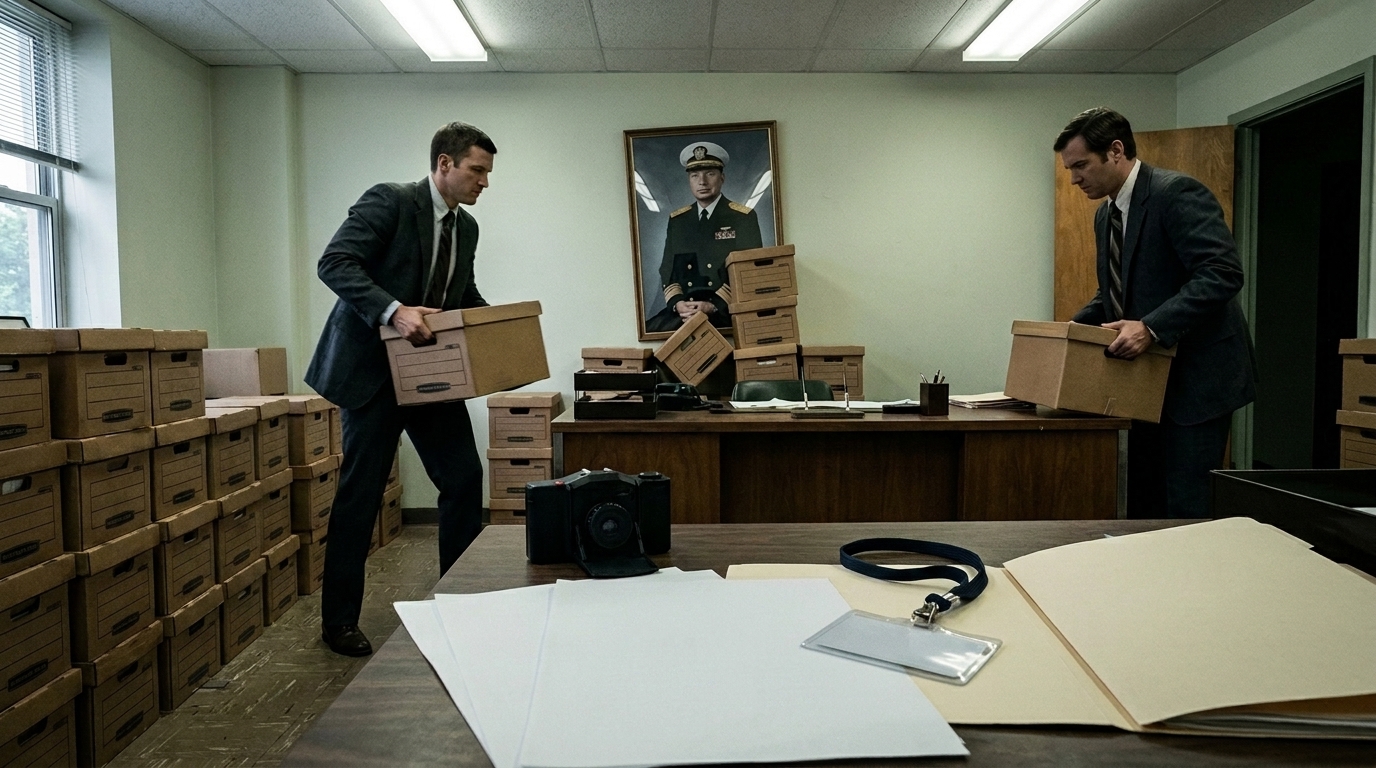
Operation Snow White employed multiple infiltration methods across target agencies. Church operatives secured employment in government offices through falsified credentials and employment applications. Gerald Bennett Wolfe, a key operative, obtained a position with the IRS using a fabricated resume and worked there from 1974 to 1976, providing the Guardian's Office with internal access to tax files and investigative documents. Michael Meisner similarly infiltrated the IRS and later the Department of Justice.
FACT
FBI documents seized in 1977 established that Scientology operatives held positions in the IRS, Coast Guard, Justice Department, and other federal agencies. Court records from United States v. Hubbard detail specific instances of operatives using false identities to gain employment. INFERENCE: The coordination and funding required for this multi-year, multi-agency infiltration suggests extensive planning and resource allocation at the highest levels of church leadership. SPECULATION: Some researchers have suggested the operation may have extended to foreign intelligence agencies, though documented evidence remains limited to civil government offices.
Once embedded, operatives photocopied sensitive documents after hours, often using copying facilities within the target agencies. When direct copying was impossible, operatives would steal documents, copy them at church facilities, and return them before their absence was noticed. The Guardian's Office maintained detailed operational logs, progress reports, and filing systems for stolen materials—ironically, the same meticulous record-keeping that would later provide prosecutors with overwhelming evidence.
The Burglary Operations
When infiltration proved insufficient, the Guardian's Office authorized direct burglaries. On June 11, 1976, operatives broke into the IRS office in Washington, D.C., stealing documents and installing sophisticated surveillance equipment. Court records document that operatives posed as IRS employees during after-hours intrusions, using stolen keys and forged credentials to access secure areas.
FACT
The criminal indictment and subsequent convictions established beyond reasonable doubt that church operatives committed burglaries of government offices in Washington, D.C. Physical evidence included stolen keys, forged IRS credentials, and surveillance equipment recovered from Guardian's Office locations.
Operatives also burgled the offices of private attorneys, journalist Paulette Cooper (who had written critical articles about Scientology), and former church members who had become critics. The scope extended beyond document theft to include wiretapping, surveillance, and information warfare campaigns designed to discredit opponents—programs given codenames like "Operation Freakout" targeting Cooper.
The Discovery and FBI Raids
The operation began to unravel on June 11, 1976, when Gerald Wolfe and Michael Meisner were discovered inside a courthouse annex in Washington, D.C., after hours. Though they initially escaped investigation, Meisner grew increasingly uncomfortable with the operation's illegality. After a period of being held against his will by church officials (according to his subsequent testimony), Meisner escaped and surrendered to the FBI in April 1977, providing detailed information about Snow White's structure and operations.
FACT
On July 8, 1977, the FBI executed search warrants on Church of Scientology facilities in Los Angeles and Washington, D.C., seizing 48,149 documents. The warrant affidavits and seizure inventories are matters of public record, documented in multiple federal court filings.
The seized documents provided prosecutors with an unprecedented window into the operation. Files included organizational charts showing the Guardian's Office hierarchy, operational plans with target agencies listed, progress reports on infiltrations, copies of stolen government documents, and communications between Guardian's Office officials directing illegal activities. Perhaps most damaging were detailed logs that church operatives had maintained documenting their own crimes—evidence of such clarity that defense attorneys could mount only limited challenges to the prosecution's case.
The Criminal Prosecution
On August 15, 1978, a federal grand jury indicted eleven high-ranking Scientology officials on charges including conspiracy to steal government documents, obstruction of justice, and burglary. The defendants included Mary Sue Hubbard, Jane Kember, Mo Budlong, and eight other Guardian's Office executives.
FACT
All eleven defendants were convicted. On October 26, 1979, U.S. District Judge Charles R. Richey sentenced Mary Sue Hubbard and several others to five years imprisonment and fines of $10,000. Sentences ranged from two to six years depending on the defendant's role. Court transcripts and sentencing memoranda are preserved in federal archives.
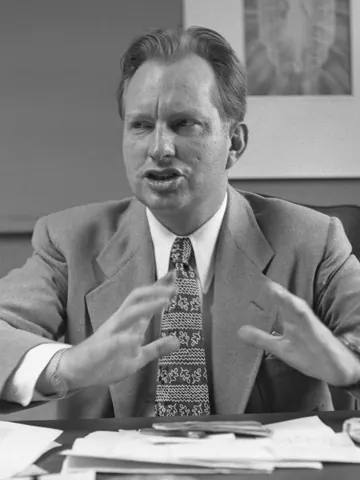
L. Ron Hubbard himself was named as an unindicted co-conspirator. While prosecutors gathered evidence of his involvement in directing aspects of the operation, they determined that securing convictions of those who implemented the program would be more legally straightforward. Hubbard went into hiding in 1980 and remained in seclusion until his death in 1986, never facing criminal charges related to Snow White.
The defendants appealed their convictions, arguing First Amendment protections and claiming government overreach. On September 16, 1981, the U.S. Court of Appeals for the District of Columbia Circuit upheld all convictions in United States v. Hubbard, 493 F. Supp. 209 (D.D.C. 1979). The court held that criminal conduct carried out under the banner of religious practice receives no constitutional immunity.
The Guardian's Office and Its Aftermath
Following the convictions, internal power struggles within Scientology resulted in the disbanding of the Guardian's Office in 1983. A new organization, the Office of Special Affairs (OSA), assumed many Guardian's Office functions with an ostensibly reformed mission focused on legal rather than covert operations.
INFERENCE
The extent to which OSA represents a genuine reform versus a rebranding remains debated. Former members and critics contend that aggressive intelligence gathering, surveillance of critics, and intimidation tactics continued under OSA, though without the systematic government infiltration that characterized Snow White. The church maintains that OSA operates within legal boundaries and that the criminal activities of the Guardian's Office represented a deviation from church policy that was corrected.
Unanswered Questions About Hubbard's Role
The most significant unresolved question concerns L. Ron Hubbard's direct involvement in ordering illegal activities. The criminal case established that Mary Sue Hubbard and the Guardian's Office executed the operation, but the precise extent of L. Ron Hubbard's knowledge and authorization remains disputed.
FACT
Prosecutors named Hubbard as an unindicted co-conspirator, indicating they possessed evidence of his involvement sufficient to establish probable cause but insufficient or impractical for prosecution. Court documents reference his policy directives that initiated the Snow White program.
DISPUTED
The church has long maintained that Hubbard intended Snow White as a legal information-gathering operation and that Guardian's Office officials exceeded their authority by implementing illegal methods. Critics and defectors, including some convicted participants, have testified that Hubbard was regularly briefed on operations and approved of the infiltration program. Nancy Many, a former Sea Org member, stated in her memoir that Guardian's Office officials followed Hubbard's policies strictly and would not have undertaken such operations without his authorization.
No smoking-gun document has surfaced showing Hubbard directly ordering burglaries or document theft. However, his policy writings from the period established an aggressive posture toward perceived enemies and authorized intelligence operations against critics—creating, at minimum, the organizational culture that spawned Snow White.
Evidence Assessment
Established Facts
Criminal convictions and court records
The convictions of eleven Guardian's Office officials are matters of legal record, documented in United States v. Hubbard and upheld on appeal. Trial transcripts, sentencing memoranda, and appellate decisions provide detailed judicial findings of fact. These documents establish beyond reasonable doubt that systematic infiltration, document theft, and obstruction occurred.
FBI seizure of 48,149 documents
The July 8, 1977 raids are documented in FBI field office reports, warrant applications, and seizure inventories. Many of these documents have been released through FOIA requests and are maintained in the FBI's reading room. They establish the scope and documentation of the operation.
Infiltration of specific agencies
Court testimony and documentary evidence established that operatives worked inside the IRS, Department of Justice, Coast Guard, DEA, and numerous other agencies. Employment records, copied documents, and operative testimony corroborate infiltration of at least 136 federal agencies and offices.
Strong Evidence
Guardian's Office organizational structure
Seized organizational charts, policy directives, and internal communications document a formal intelligence apparatus with defined roles, reporting structures, and operational protocols. These materials establish institutional rather than rogue individual action.
Michael Meisner's testimony
As a cooperating witness who directly participated in infiltration and burglary operations, Meisner provided detailed first-hand accounts corroborated by documentary evidence. His testimony was crucial to securing convictions and has been consistent across court proceedings and subsequent interviews.
Specific operational documents
Prosecutors introduced numerous operational plans, progress reports, and mission orders bearing Guardian's Office letterhead and signatures of convicted defendants. These documents directly evidence planning and execution of illegal activities.
Moderate Evidence
L. Ron Hubbard's policy directives
Written policies by Hubbard establish aggressive intelligence-gathering as organizational doctrine and authorize operations against perceived enemies. While these documents establish organizational philosophy, they do not explicitly order burglary or infiltration, leaving interpretation regarding how directly they authorized illegal methods.
Scale of operations beyond 136 agencies
The figure of 136 infiltrated agencies comes from prosecution documents and church admissions, but the full scope across all 30+ countries mentioned in operational plans remains incompletely documented in publicly available sources. Some international operations are documented through foreign court cases and journalistic investigations, but comprehensive documentation is uneven.
Defector testimonies regarding ongoing activities
Former church members, including some Guardian's Office veterans, have provided accounts of the operation's scope and culture. While these testimonies provide valuable context, they vary in specificity and corroboration. Some accounts describe operations beyond those proven in court; these merit attention but require corroborating evidence.
Weak Evidence
Specific foreign intelligence operations
While Operation Snow White explicitly targeted agencies in multiple countries, detailed documentation of non-U.S. operations remains limited in public records. References in seized documents indicate international scope, but specific operational details for most foreign components are sparse.
Total number of operatives
Estimates of how many individuals participated in Snow White vary widely. While the eleven convicted officials held leadership positions, the number of field operatives, support staff, and informants remains uncertain. Some estimates suggest dozens of active infiltrators; others suggest more than one hundred across all targeted agencies and countries.
Disputed Claims
L. Ron Hubbard's direct ordering of illegal activities
Whether Hubbard explicitly authorized burglary and document theft, or whether Guardian's Office officials interpreted his policy directives in ways he did not intend, remains contested. The church maintains the latter; critics and some defectors assert the former. Documentary evidence shows Hubbard created the policy framework and was named as an unindicted co-conspirator, but no document has surfaced showing him explicitly ordering breaking and entering.
The church's claim of "rogue" operatives
Church leadership has characterized Snow White as the unauthorized actions of Guardian's Office officials who violated church policy. This claim contradicts the extensive documentary evidence of systematic, well-funded, multi-year operations with formal organizational structure and oversight. The claim is weakened further by the fact that those convicted held the most senior positions in the Guardian's Office reporting directly to Mary Sue Hubbard.
Unsupported Claims
Conspiracy theories of government retaliation
Some church supporters have suggested that Operation Snow White was either a government fabrication or that the prosecution represented religious persecution. These claims are contradicted by overwhelming documentary evidence, including materials seized from church facilities and created by church operatives themselves. The convictions were upheld on appeal with judicial findings that constitutional protections do not shield criminal conduct.
Claims of similar operations by other religious organizations
Some observers have speculated that other organizations may have conducted comparable infiltrations that simply were not discovered. No evidence supports this speculation, and the scale and sophistication of Snow White appear unique in the documented history of religious organizations in the United States.
Credible Dissenting Voices
Scholarly and legal perspectives on Operation Snow White generally concur on the facts but diverge on interpretation and implications:
Professor Stephen Kent (University of Alberta, Department of Sociology) has published extensively on Scientology's organizational behavior. While he corroborates the established facts of Snow White, Kent argues that interpretation of the operation requires understanding Scientology's unique ideology, which frames government agencies and critics as suppressive persons threatening human salvation. In his view, Snow White represents not mere criminality but the logical extension of Scientology's foundational beliefs about enemies and threats. This perspective contextualizes but does not excuse the criminal conduct.
Legal scholar Marci Hamilton (University of Pennsylvania, expert on religious freedom law) has written about Snow White in the context of constitutional limits on religious organizations. Hamilton argues that the case established crucial precedent limiting First Amendment protections for religious organizations that engage in criminal conduct. However, she notes that the disbanding of the Guardian's Office and creation of OSA may represent genuine organizational reform—a possibility she considers legally relevant when evaluating the church's subsequent conduct and litigation posture.
J. Gordon Melton (director of the Institute for the Study of American Religion) has taken a more sympathetic view of Scientology as a new religious movement facing persecution from established institutions. While Melton acknowledges the criminal convictions as legally valid, he has argued that disproportionate government and media attention to Scientology's misconduct, compared to misconduct by more established religions, represents a form of discrimination against new religious movements. This perspective remains controversial among scholars of religion, with critics noting that the scale and systematic nature of Snow White had no parallel among established religious organizations.
The Church of Scientology's official position, articulated in multiple publications and legal filings since 1983, maintains that: 1. Operation Snow White was initiated as a legal program to identify and correct false government records about the church and L. Ron Hubbard. 2. Guardian's Office officials exceeded their authority and violated church policy by implementing illegal methods. 3. L. Ron Hubbard neither ordered nor approved illegal activities and was named as an unindicted co-conspirator based on his supervisory position, not evidence of criminal intent. 4. The church cooperated with authorities once illegal activities were discovered, disbanded the Guardian's Office, and implemented reforms to prevent recurrence.
These claims are contradicted by extensive documentary evidence showing systematic, organization-wide implementation over multiple years with sophisticated operational planning and oversight.
Legacy
Operation Snow White fundamentally altered the legal and public landscape for the Church of Scientology, established significant precedents regarding religious organizations' accountability, and revealed vulnerabilities in government personnel security that prompted reforms.
Legal and Regulatory Impact
The case firmly established that religious organizations receive no immunity from criminal prosecution for illegal activities, even when those activities are characterized as protecting the religion from persecution. The appellate court in United States v. Hubbard rejected First Amendment defenses, holding that "[t]hese crimes were not committed to foster religious belief. They were committed to protect personal and institutional interests and to retaliate against enemies." This precedent has been cited in numerous subsequent cases involving religious organizations accused of criminal conduct.
The IRS intensified scrutiny of Scientology's tax-exempt status following Snow White, leading to decades of litigation that concluded in 1993 when the IRS granted tax-exempt status under terms that remain partially confidential. The terms of this settlement have generated ongoing controversy, with some critics arguing the church improperly leveraged litigation and private investigator operations targeting IRS officials to secure favorable treatment. The church maintains it satisfied all legal requirements for tax-exempt status.
Security and Counterintelligence Reforms
Snow White exposed serious vulnerabilities in federal personnel security procedures. The ease with which operatives obtained employment through falsified credentials prompted reviews of background check procedures across multiple agencies. While comprehensive reforms took years to implement, the case highlighted the potential for sophisticated organizations to exploit gaps in employment verification and security clearance processes.
The operation also revealed that document security within federal offices was often inadequate, with sensitive files accessible to lower-level employees and after-hours access poorly monitored. These findings contributed to eventual reforms in document handling, facility security, and electronic record systems, though implementation varied by agency and timeline.
Organizational Evolution of Scientology
The disbanding of the Guardian's Office in 1983 represented a major structural change for Scientology. The Office of Special Affairs (OSA) assumed responsibility for legal affairs, public relations, and relations with government agencies. Church leadership characterized this transition as eliminating the culture that produced Snow White and ensuring accountability to prevent recurrence.
DISPUTED
Whether OSA represents genuine reform or continuity under a new name remains contested. Former members who worked in both organizations, including Stacy Brooks Young and Jesse Prince, have testified that aggressive intelligence gathering, surveillance of critics, and intimidation tactics continued under OSA. The church has been involved in numerous subsequent legal controversies involving allegations of harassment and surveillance, though none approaching Snow White's scale of systematic government infiltration.
Court cases in the 1990s and 2000s involving former members, including the Lisa McPherson wrongful death case and various defector litigations, have included allegations of OSA conducting surveillance, hiring private investigators to follow critics, and attempting to discredit opponents through information operations—methods reminiscent of Guardian's Office tactics. However, no criminal charges comparable to Snow White have been filed against OSA or its officials.
Academic and Journalistic Investigation
Operation Snow White generated significant scholarly attention regarding new religious movements, organizational criminality, and the boundaries of religious freedom. Academic treatments by scholars including Stephen Kent, Douglas E. Cowan, and Hugh Urban have used Snow White as a case study in understanding how apocalyptic or totalizing belief systems can generate organizational cultures that rationalize illegal conduct as necessary to protect ultimate truths.
Journalistic investigations, including Lawrence Wright's Going Clear: Scientology, Hollywood, and the Prison of Belief (2013), have contextualized Snow White within broader patterns of aggressive behavior toward critics and former members. These works draw on FBI files released through FOIA, trial transcripts, and defector interviews to present comprehensive narratives of the operation and its aftermath.
Misunderstandings and Persistent Myths
Despite extensive documentation, several misconceptions about Operation Snow White persist:
Myth
Snow White was a limited operation by a few rogue operatives.
Reality
Court evidence established systematic infiltration of 136 agencies over multiple years with formal organizational structure and oversight by the church's senior leadership.
Myth
No one was really punished because Hubbard wasn't prosecuted.
Reality
Eleven senior officials including Hubbard's wife received prison sentences ranging from two to six years. Hubbard was named an unindicted co-conspirator and went into hiding to avoid potential prosecution.
Myth
The operation was legal information gathering that prosecutors mischaracterized.
Reality
Convictions were based on burglary, document theft, wiretapping, and obstruction of justice—crimes established through physical evidence including stolen keys, forged credentials, surveillance equipment, and the stolen documents themselves.
Important Quotes
U.S. District Judge Charles R. Richey (sentencing, October 26, 1979): "The crime committed by these defendants is of a breadth and scope previously unheard of. No building, office, desk, or file was safe from their snooping and prying. No individual or organization was free from their despicable conspiratorial minds. The tools of their trade were miniature transmitters, lock picks, secret codes, forged credentials and any other device they found necessary to carry out their conspiratorial schemes."
Assistant U.S. Attorney Raymond Banoun (in his closing argument): "These defendants rewrote the history of the word 'religion.' Never before has anyone used the First Amendment to defend wholesale criminal activity."
Michael Meisner (testimony during trial): "We were told we were protecting Scientology. We were told that what we were doing was for the greatest good. We believed it. I believed it. Until I didn't."
Research Leads and Future Discoveries
Several aspects of Operation Snow White remain incompletely documented in publicly accessible sources:
International operations
While the U.S. operations are extensively documented through FBI seizures and court records, the scope and details of Snow White activities in the other 29+ targeted countries remain less clear. Foreign court documents, diplomatic cables, and investigative journalism provide fragments, but comprehensive documentation may exist in foreign government archives not yet declassified or FOIA-able.
Destroyed and missing documents
It is unclear whether all materials stolen from government agencies were recovered. Guardian's Office operatives had years to copy, transmit, or destroy documents before the FBI raids. Some stolen materials may remain in church archives, may have been destroyed to prevent discovery, or may have been lost in organizational transitions.
The fate of surveillance equipment and intelligence assets
Court records document that operatives installed surveillance devices in government offices. Whether all such devices were discovered and removed remains uncertain. Similarly, whether any Guardian's Office assets remained in government employment after 1977, either undetected or deliberately remaining covert, is unknown.
Private sector targets
While government infiltration formed the core of Snow White, documentary evidence references operations targeting private organizations including media outlets, law firms representing defectors, and medical associations critical of Scientology. The full scope of private-sector infiltration may not have been completely documented in the prosecutions, which focused on federal crimes.
FBI documents continue to be released through FOIA requests, occasionally adding new details. As participants age, some former Guardian's Office personnel may provide additional testimony or documentation, though most remain bound by confidentiality concerns and potential civil liability. Academic researchers continue to discover relevant materials in government archives, suggesting that the full documentary record of Snow White may not yet be completely assembled in public view.
Confidence Assessment
Operation Snow White ranks among the best-documented cases of organizational criminality in American history. The combination of 48,149 seized documents, detailed trial records including testimony from cooperating witnesses, appellate court decisions, and subsequent FOIA releases provides an unusually complete evidentiary foundation. The core facts—systematic infiltration of 136 government agencies, theft of thousands of documents, burglary and wiretapping operations, and the conviction of eleven senior church officials—are established beyond reasonable dispute.
Areas of remaining uncertainty concern primarily the full international scope of operations, the precise extent of L. Ron Hubbard's personal authorization of illegal methods (as distinguished from his creation of the policy framework), and whether similar activities continued in modified form after the Guardian's Office was disbanded. These uncertainties, while significant, do not undermine the fundamental historical record of what Operation Snow White accomplished and why it resulted in criminal convictions that were unanimously upheld on appeal.
The documentary record is strongest for operations within U.S. borders, particularly those targeting federal agencies in Washington, D.C., where Michael Meisner's cooperation and the FBI's seizure of Guardian's Office files provided overlapping documentation. Records are thinner for operations in individual states and foreign countries, though sufficient evidence exists to establish that Snow White was international in scope even if details remain incomplete.
For researchers, Operation Snow White offers a case study in how meticulous organizational record-keeping—maintained by the perpetrators themselves to demonstrate productivity to superiors—can become the primary evidence of systematic criminality. The Guardian's Office's practice of documenting operations in detailed progress reports, maintaining organizational charts, and filing copies of stolen documents created an ironic evidentiary trail that made prosecution straightforward once the FBI obtained access to church facilities.
Case Timeline
- 1954CORROBORATEDL. Ron Hubbard establishes the Church of Scientology in CaliforniaFoundation of the organization that would later conduct Operation Snow White
- 1963GOVERNMENT RECORDFDA seizes E-meters from Scientology facilities, triggering years of litigationEarly government action that contributed to church's perception of official persecution
- 1966CORROBORATEDHubbard establishes the Guardian's Office to handle intelligence and legal affairsCreation of the organizational structure that would execute Snow White
- 1967GOVERNMENT RECORDIRS revokes Church of Scientology's tax-exempt statusMajor financial and legitimacy threat that motivated aggressive counterintelligence operations
- 1973PRIMARY SOURCEL. Ron Hubbard issues policy directive titled 'Snow White' outlining information-gathering operationsFormal initiation of the program, though implementation evolved beyond stated parameters
- 1974COURT RECORDGerald Bennett Wolfe secures IRS employment using falsified credentialsBeginning of systematic infiltration of federal agencies
- 1975-1976COURT RECORDGuardian's Office operatives infiltrate IRS, DOJ, Coast Guard, and 130+ other agenciesPeak operational period with multiple concurrent infiltrations documented in seized files
- 1976-06-11COURT RECORDGuardian's Office operatives burglarize IRS office in Washington, D.C.One of several direct burglary operations supplementing infiltration
- 1976-06-11COURT RECORDWolfe and Meisner discovered inside courthouse annex after hoursInitial detection that would eventually lead to Meisner's cooperation with FBI
- 1977-04COURT RECORDMichael Meisner escapes church custody and surrenders to FBICritical turning point providing authorities with insider information about operation's scope
- 1977-07-08GOVERNMENT RECORDFBI raids Church of Scientology facilities in Los Angeles and Washington, D.C.Seizure of 48,149 documents providing primary evidence for prosecution
- 1978-08-15COURT RECORDFederal grand jury indicts eleven Guardian's Office officialsFormal criminal charges including conspiracy, burglary, and obstruction of justice
- 1979-10-26COURT RECORDJudge Richey sentences defendants; Mary Sue Hubbard receives five years imprisonmentConvictions of all eleven defendants with sentences ranging from two to six years
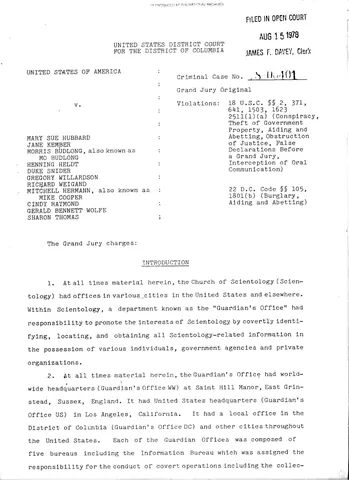
Grand Jury Charges, Introduction, "United States of America v. Mary Sue Hubbard" - 1980CREDIBLE REPORTINGL. Ron Hubbard goes into hiding to avoid potential prosecutionFounder's retreat from public view, remaining secluded until his death in 1986
- 1981-09-16COURT RECORDU.S. Court of Appeals upholds all convictions in United States v. HubbardAppellate affirmation establishing precedent that religious status provides no immunity for criminal conduct
- 1983CORROBORATEDChurch disbands Guardian's Office and establishes Office of Special AffairsMajor organizational restructuring presented as reform, though continuity remains disputed
- 1993GOVERNMENT RECORDIRS grants Church of Scientology tax-exempt status after decades of litigationResolution of tax status dispute under terms that remain partially confidential
- 2013ACADEMICLawrence Wright publishes Going Clear, bringing renewed attention to Snow WhiteMajor investigative book synthesizing FBI files, trial records, and defector testimony for public audience
Key People
Evidence Library
- documentpartial redactionDOC-001FBI seizure of 48,149 documents from Church facilities (July 8, 1977)
Comprehensive collection including Guardian's Office operational plans, organizational charts, progress reports, stolen government documents, and internal communications. Established systematic nature of infiltration and provided overwhelming documentary evidence for prosecution. Primary source material for all subsequent investigations.
- court filingCOURT-AUnited States v. Hubbard et al., Criminal Case No. 78-401 (D.D.C. 1979)
Federal indictment, trial transcripts, and conviction records for eleven Guardian's Office officials. Includes testimony from cooperating witness Michael Meisner detailing infiltration methods and chain of command. Establishes legal findings beyond reasonable doubt that systematic criminal conspiracy occurred.
- documentpartial redactionDOC-002Guardian's Office organizational charts and mission orders
Internal church documents seized by FBI showing formal intelligence bureau structure, defined roles for infiltration operatives, and progress reporting requirements. Demonstrates institutional rather than rogue activity and establishes oversight by senior church officials including Mary Sue Hubbard.
- physicalPHY-001Stolen IRS credentials, lock picks, and surveillance equipment
Physical evidence recovered from Guardian's Office locations including forged IRS identification cards bearing operatives' photographs, lock-picking tools, and miniature surveillance transmitters. Corroborates testimony regarding burglary and electronic surveillance operations.
- testimonyTEST-001Michael Meisner cooperation and trial testimony
First-hand account from infiltrator who worked inside IRS and DOJ offices, participated in document theft operations, and later became government witness. Testimony corroborated by documentary evidence and provided detailed operational procedures. Critical to securing convictions.
- documentDOC-003L. Ron Hubbard policy directive 'Snow White' (1973)
Foundational document outlining information-gathering program targeting government files. While directive describes 'legal' methods, it established operational framework and targets that evolved into systematic infiltration. Used by prosecution to establish conspiracy's origins and Hubbard's role as unindicted co-conspirator.
- court filingCOURT-BU.S. Court of Appeals decision upholding convictions (September 16, 1981)
Appellate ruling affirming trial court convictions and rejecting First Amendment defenses. Established precedent that religious organizations receive no immunity for criminal conduct and that Snow White crimes were committed to protect institutional interests, not foster religious belief.
Evidence Gallery

Sources
Trace the trail yourself
Investigation Network

Live Discussion
0 Perspectives
Add to the record. Be specific. Cite where you can.
If you're learning about this topic for the first time, these are the best places to continue — documented evidence and historical relationships are the guide.
Named in “Operation Snow White”.
Read more dossiers like this
Get a quiet one-line bulletin when new investigative files are published. Bound to this dossier — useful for tracking follow-ups.