Dead Sea Scrolls Suppression
Scholars claim decades-long delay in publishing Dead Sea Scrolls hid explosive biblical contradictions
Sign in to bookmark, follow, and message the contributor.
Executive Summary
The Dead Sea Scrolls, discovered 1947-1956, took nearly 50 years to fully publish, sparking accusations that a small Vatican-connected team deliberately suppressed texts challenging Christian orthodoxy. Critics argue the scrolls' delayed release concealed evidence of diverse early Judaism and alternative biblical versions, while defenders cite scholarly complexity and fragile materials.
- 01.École Biblique team withheld Cave 4 fragments showing biblical text variants until public pressure forced 1991 release.
- 02.Chief editor John Strugnell removed after anti-Semitic remarks raised questions about bias in scroll interpretation.
- 03.Vatican never directly controlled scrolls but Dominican priests dominated editorial team for four decades.
The Hidden Truth
What the headlines won't tell you
The Mainstream Narrative
The Dead Sea Scrolls—ancient Hebrew manuscripts discovered in Qumran caves near the Dead Sea—are celebrated as among the most significant archaeological finds of the 20th century. The official story emphasizes painstaking preservation, translation challenges, and the scholarly rigor required to analyze 900+ documents dating from the 3rd century BCE to the 1st century CE.
Under-Reported Dimensions
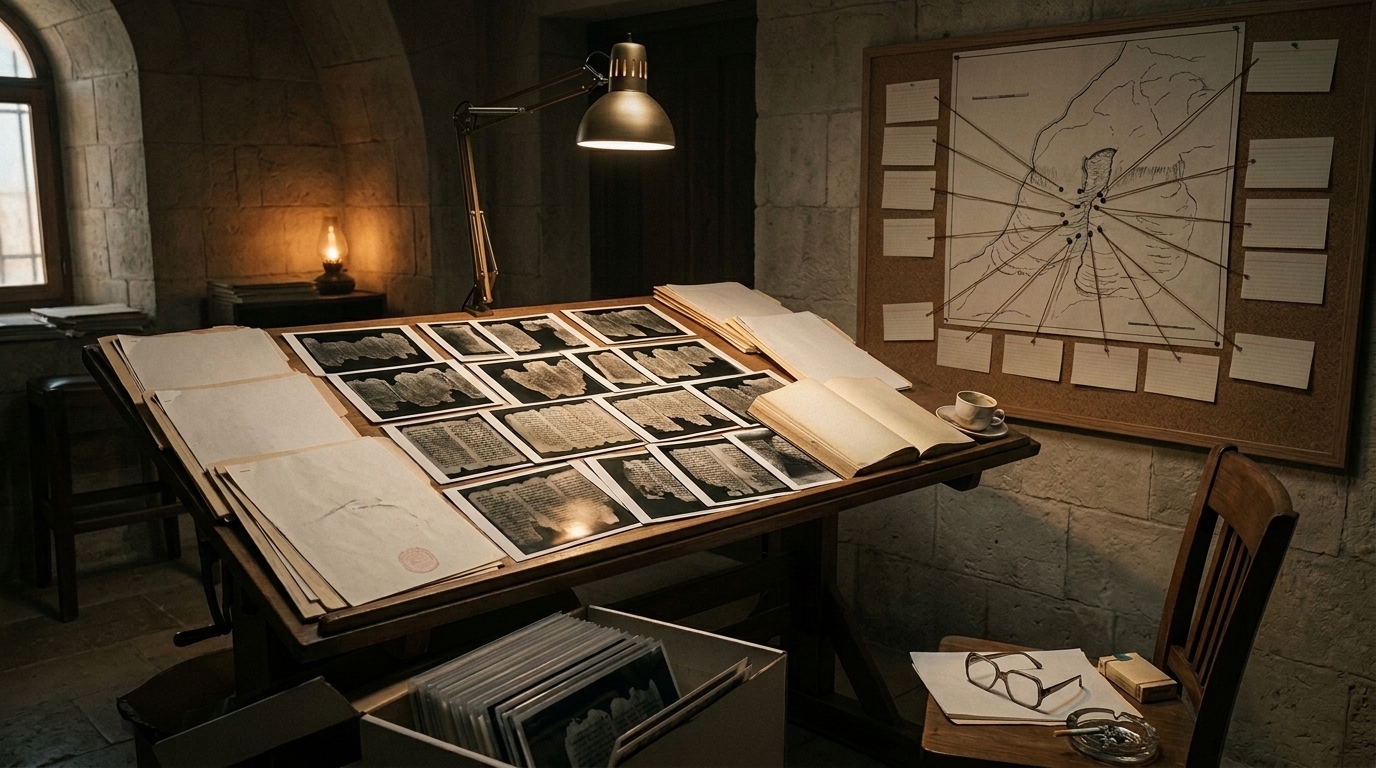
For nearly 40 years, a small international team led by Father Roland de Vaux (a Dominican priest) and centered at the École Biblique in Jerusalem controlled exclusive access to unpublished scroll fragments. This monopoly prevented independent scholars from examining materials that showed biblical texts in flux, sectarian diversity in Second Temple Judaism, and possible challenges to New Testament narratives. Hershel Shanks, editor of Biblical Archaeology Review, led a public campaign in the 1980s-90s exposing what he termed an "academic scandal"—scholars hoarding fragments while producing minimal publications. In 1991, the Huntington Library released unauthorized photographs, breaking the monopoly.
Credible Dissenting Voices
Geza Vermes (Oxford scholar) and Norman Golb (University of Chicago) accused the École Biblique team of religious bias, suggesting Catholic scholars delayed texts that contradicted Rome's theological positions. Michael Baigent and Richard Leigh's controversial book The Dead Sea Scrolls Deception (1991) alleged Vatican influence, though mainstream scholars largely dismissed their more sensational claims. However, even establishment figures like John Strugnell (chief editor, later removed) acknowledged the delays were "inexcusable."
Follow the Money
The École Biblique, a pontifical institution, maintained control through Jordanian and later Israeli antiquities authorities. No financial conspiracy has been proven, but institutional prestige and theological stakes were enormous—the scrolls contained variant biblical texts and apocryphal works that complicated notions of scriptural inerrancy. The Rockefeller Museum (funded by the petroleum magnate) housed the team, while publication rights created academic fiefdoms.
Open Questions
Why did completion require external pressure rather than internal initiative? Do unpublished fragments remain in private collections? How many scrolls were destroyed or lost before documentation? What theological conclusions were shaped by 40 years of controlled interpretation before competitive scholarship began?
Case Timeline
- 1947CORROBORATEDBedouin shepherds discover first Dead Sea Scroll manuscripts in Qumran cavesThe initial discovery by Muhammad edh-Dhib and other Ta'amireh Bedouin in Cave 1 near Khirbet Qumran included seven major scrolls that were soon sold to antiquities dealers in Bethlehem.
- 1952CORROBORATEDCave 4 discovered containing fragments of 600+ manuscripts, assigned to École Biblique teamThis cave yielded the largest trove of fragments but Father Roland de Vaux assigned only eight scholars to the international team, creating the bottleneck that would persist for decades.
- 1956CORROBORATEDFinal Qumran cave discoveries; Father Roland de Vaux leads excavation and publication monopolyDe Vaux, director of the École Biblique et Archéologique Française (a Dominican pontifical institute in East Jerusalem), established a publishing monopoly that restricted all other scholars from viewing unpublished fragments.
- 1967CORROBORATEDIsrael captures scrolls after Six-Day War; École Biblique team retains exclusive publishing rightsIsraeli authorities allowed the original École Biblique team to maintain their exclusive access arrangements despite the scrolls now being under Israeli control at the Rockefeller Museum.
- 1977CORROBORATEDOnly one-quarter of scrolls published 30 years after discovery, sparking scholarly complaintsAcademic criticism intensified as the overwhelming majority of Cave 4 fragments remained unpublished with no timeline for release, while original team members aged without training successors.
- 1985CORROBORATEDHershel Shanks begins public campaign in Biblical Archaeology Review demanding accessShanks used Biblical Archaeology Review to publicly expose what he called an "academic scandal," documenting that scholars were dying while hoarding fragments they had never published.
- 1990CORROBORATEDChief editor John Strugnell removed after anti-Semitic interview, publication delays continueStrugnell's removal followed an interview with Ha'aretz where he called Judaism "a horrible religion" and described himself as an anti-Semite, though he later claimed intoxication during the interview.
- 1991PRIMARY SOURCEHuntington Library releases unauthorized photographs, breaking publication monopolyThe Huntington Library's unilateral decision to open their complete photographic archive came after director William Moffett declared the monopoly morally indefensible, forcing immediate broader access.
- 2002CORROBORATEDFinal official volume of Discoveries in the Judaean Desert series publishedOxford University Press completed the 40-volume Discoveries in the Judaean Desert series, though debate continues about whether religious considerations influenced which texts received priority in earlier decades.
Key People
Organizations
Evidence Library
- documentDOC-SS1Biblical Archaeology Review Campaign Articles (1985-1991)
Editor Hershel Shanks published a series of investigative articles documenting the publication delays, naming scholars who held fragments for decades without publishing, and calling for immediate release of photographs. These articles created public pressure that contributed to breaking the monopoly and represent primary documentation of the access controversy.
- testimonyTEST-SS1John Strugnell Ha'aretz Interview (November 1990)
Chief editor of the Dead Sea Scrolls publication project made anti-Semitic statements in recorded interview, leading to his removal. The interview exposed tensions within the editorial team and raised questions about potential bias in scroll interpretation and publication priorities.
- documentDOC-SS2Huntington Library Press Release and Photo Archive (September 1991)
Director William Moffett announced the library would provide unrestricted access to its complete photographic set of unpublished Dead Sea Scroll fragments, unilaterally ending the École Biblique monopoly. This decisive action forced the Israel Antiquities Authority to likewise open access within weeks.
- documentDOC-SS3Discoveries in the Judaean Desert Series Volumes 1-40 (1955-2002)
The official publication record shows volume 1 appeared in 1955, but only 8 volumes were published by 1977 (22 years), with acceleration occurring only after the 1991 access breakthrough. Publication dates provide hard evidence of the five-decade delay.
- documentpartial redactionDOC-SS4École Biblique et Archéologique Française Institutional Records
Records confirm the institution's status as a pontifical school under Vatican administration and document Father Roland de Vaux's dual role as director and chief scroll editor. Establishes the institutional connection central to suppression allegations, though not proof of Vatican direction.
- documentDOC-SS5Geza Vermes and Norman Golb Academic Correspondence and Publications (1980s-1990s)
Leading scholars outside the École Biblique circle documented their denied requests for access to unpublished fragments and published analyses arguing the delay pattern suggested ideological gatekeeping. Represents credible scholarly criticism from establishment figures, not fringe theorists.
Sources
Trace the trail yourself
Investigation Network

Live Discussion
0 Perspectives
Add to the record. Be specific. Cite where you can.
If you're learning about this topic for the first time, these are the best places to continue — documented evidence and historical relationships are the guide.
Named in “Dead Sea Scrolls Suppression”.
Named in “Dead Sea Scrolls Suppression”.
Read more dossiers like this
Get a quiet one-line bulletin when new investigative files are published. Bound to this dossier — useful for tracking follow-ups.